

 Chinese
 English

When entering a procurement cycle with an international robotics manufacturer, the baseline equipment purchase agreement represents far more than a commercial transactional invoice. It functions as the legally binding operational architecture that dictates exactly who owns system risk, controls backend software environments, and absorbs down-time financial exposure.
Experienced automation buyers understand that a functional system design specification is completely meaningless if the
underlying commercial contract permits systemic liability transfers.
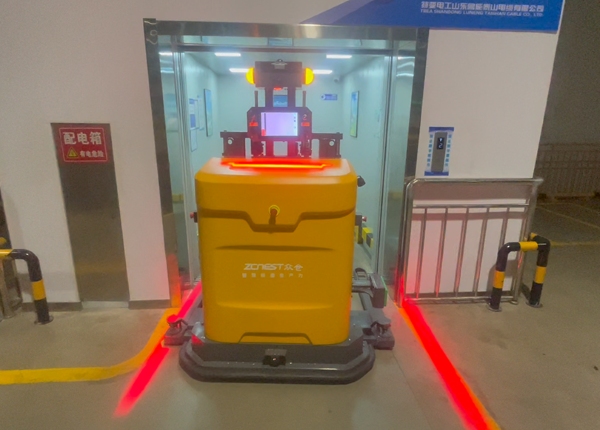
To shield an organization from mid-deployment cost escalations, procurement teams must treat technical deliverables as contractual milestones. This guide breaks down the five primary compliance vulnerabilities embedded within standard cross-border equipment contracts and contrasts common factory language with bulletproof, execution-ready clauses.
1. Scope Mapping: Separating Installation From Commissioning
The first major structural vulnerability in baseline sourcing documentation is semantic ambiguity regarding post-shipment field engineering. Manufacturers frequently bundle technical setup under sweeping, non-specific phrasing that leaves essential programming integration tasks completely unprovided for.
| Engineering Phase | Standard Standard Factory Scope | The Hidden Integration Gap |
|---|---|---|
| Physical Installation | Uncrating vehicles, positioning battery charging pods, and verifying basic localized power up. | Billed Separately: Structural anchoring, layout line calibration, and initial fleet mapping sweeps. |
| System Commissioning | Basic point-to-point path validation under dry, unladen testing conditions. | Billed Separately: WMS handshaking updates, safety PLC zone adjustments, and live API diagnostics. |
| Stabilization Support | Remote monitoring during initial system boot cycles. | Billed Separately: On-site operational oversight, field engineer day rates ($300–$1,000+), and operator retraining. |
2. Contractual Split: Red-Flag vs. Bulletproof Phrasing
To protect an organization's downstream engineering timeline, ambiguous statements must be systematically purged and replaced with clear, quantifiable metrics that assign unambiguous technical responsibility.
⚠️ Common Factory Red-Flag
"The manufacturer will provide comprehensive on-site installation and system integration support to ensure the automated guided vehicle fleet operates normally within the customer facility."
The Exposure: Phrasing like "operates normally" possesses zero engineering definition. It transfers full liability to the buyer once the machines can boot up, leaving WMS or network deadlocks unresolved.
🛡️ Secure Bulletproof Revision
"On-site commissioning is defined as full hardware integration, live WMS synchronization, and field validation. Support includes all engineering days required to achieve documented Site Acceptance Testing (SAT) metrics, independent of arbitrary time limits."
The Asset: Eliminates unexpected daily technical consulting overages by binding factory presence directly to system sign-off.
3. The Architecture Handover: Credentials and System Sovereignty
A highly restrictive operational trap involves the retention of administrative credentials and network access constraints by the supplier. Without explicit ownership provisions, the buyer acquires physical machinery but remains entirely dependent on external infrastructure for simple layout changes or API calls.
The Operational Control Matrix
The Visual Layer (UI): Highly customizable dashboards, branded diagnostic monitors, and localized control panels are standard deliverables.
The Application Layer (API): Access can be constrained by remote tokens, requiring active manufacturer verification loops to modify traffic behaviors.
The Core Control (RCS): Proprietary dispatch rules and safety PLC loops are heavily guarded. Contracts must secure local administrative control to bypass vendor lock-in.
4. Performance Benchmarking: Quantifying Acceptance Criteria
Disputes almost universally surface during the transition from Factory Acceptance Testing (FAT) to final Site Acceptance Testing (SAT). If performance criteria are evaluated under artificial, ideal facility conditions, the system will fail to perform under genuine production velocity.
Structural Navigation Precision Metrics: Final sign-off must be bound to verifiable hardware limits under full load capacities (e.g., stopping deviation limits strictly within ±10mm).
Live Cycle-Time Benchmarks: Throughput metrics must explicitly define active operational constraints, specifying required pallet moves per hour under maximum load during peak traffic intervals.
Sustained Continuous Uptime: Final validation requires running continuous, unassisted fleet cycles across a fixed timeline (e.g., 24–48 hours of live production maintaining an aggregate threshold of 95–99%).
Environmental Dependency Limits: Explicitly delineate maximum floor flatness variations, minimum Wi-Fi latency thresholds, and structural pallet tolerances to prevent unfair liability shifts.
⚠️ Common Factory Red-Flag
"The system is guaranteed to achieve design cycle times. The customer is solely responsible for ensuring the facility environment, including wireless network connectivity and floor flatness, is fully suitable for automation operations."
The Exposure: Creates a massive loophole allowing the supplier to blame local network drops or minor floor unevenness for any structural throughput failures.
🛡️ Secure Bulletproof Revision
"The fleet will consistently deliver 120 successful pallet placements per hour under peak warehouse traffic. The manufacturer audits and signs off on local floor and Wi-Fi profiles prior to deployment; once approved, environmental claims cannot be used to void throughput KPIs."
The Asset: Locks down the baseline environmental parameters early, preventing retroactive excuses regarding local infrastructure quality.
5. Enforcement Framework: Linking Payments to Performance KPIs
Without an integrated financial retention structure, marketing performance claims are legally toothless. Strategic buyers link final capital allocations directly to operational performance milestones rather than simple delivery dates.
Contracts should allocate a substantial portion of the project value (typically 15–25% via milestone payment holdbacks) exclusively to successful SAT sign-off. If a system consistently fails its defined throughput benchmarks, clear penalty structures must automatically trigger—including mandatory warranty extensions, no-cost engineering deployment interventions, and clear paths to legal resolution if performance targets remain unmet.
AGV Commercial Contract Compliance Audit
Before executing a final automation procurement agreement, verify that your legal documentation provides complete operational coverage across all core technical risk vectors: