

But for most warehouse operators, the real question is not simply “AGV or AMR—which is better?”
The better question is:
Which autonomous vehicle is the right fit for my warehouse, and what will the complete automation project cost?
The answer depends on your payload, lift height, aisle width, pallet dimensions, warehouse layout, travel distance, throughput, navigation requirements, WMS integration, and operating environment.
For pallet-intensive warehouses, high-bay storage, and narrow-aisle applications, an autonomous forklift or AGV forklift may be the better solution. For highly flexible transportation tasks, an AMR may offer greater routing flexibility.
This guide explains the key differences between AGVs and AMRs, how to choose the right solution, what affects project cost, and what information you need to request an accurate AGV/AMR quotation.
AGVs and AMRs are both used to automate material handling, but they are designed around different approaches to navigation and warehouse operation.
An AGV (Automated Guided Vehicle) is an automated vehicle designed to transport materials according to predefined tasks and routes.
Depending on the application, AGVs can use:
Laser navigation
Reflector-based navigation
Magnetic guidance
QR code navigation
Other positioning technologies
Modern AGV systems can also include advanced fleet management, obstacle detection, automatic charging, traffic control, and WMS integration.
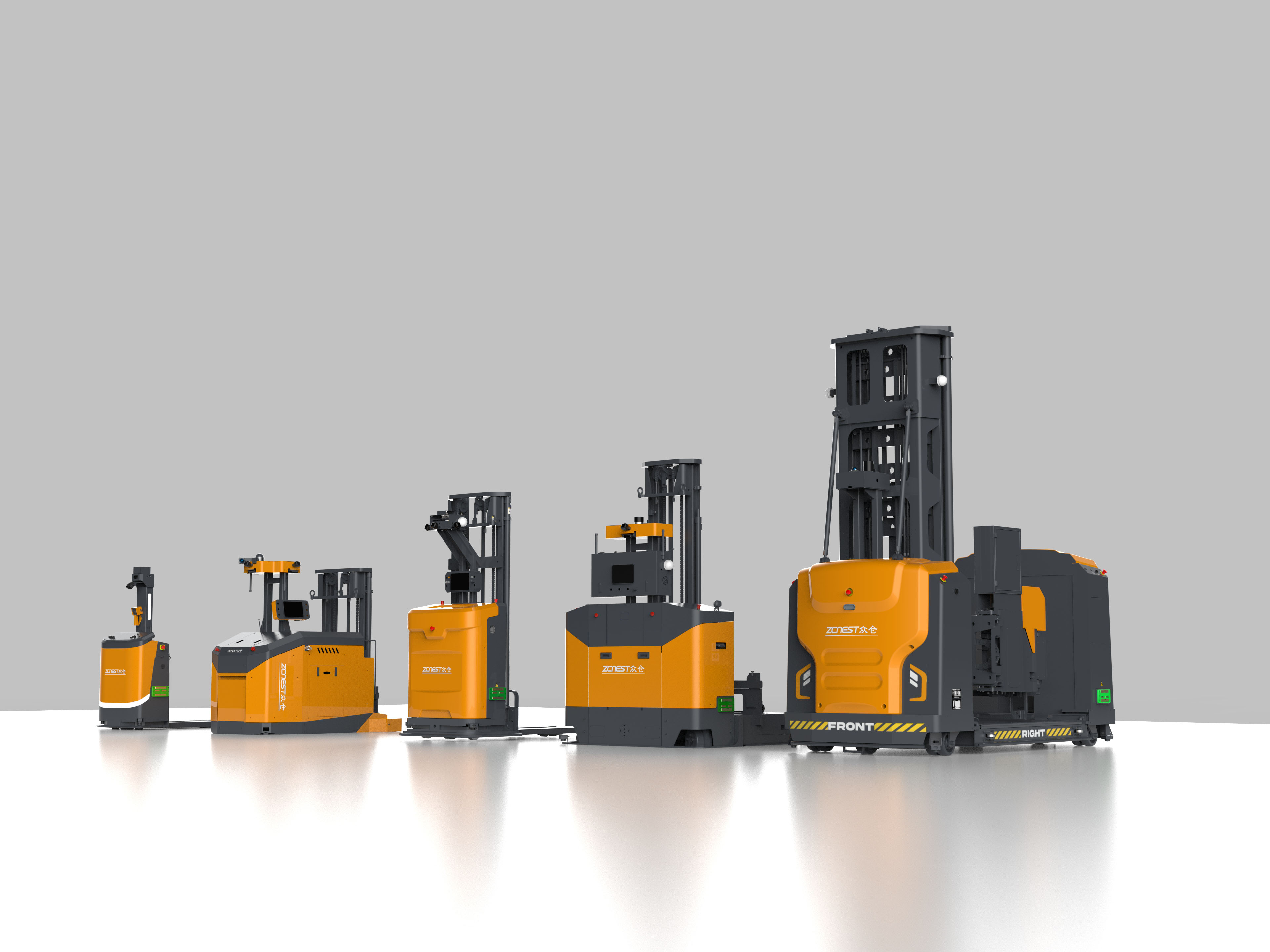
In warehouse applications, the term AGV may refer to different vehicle types, including:
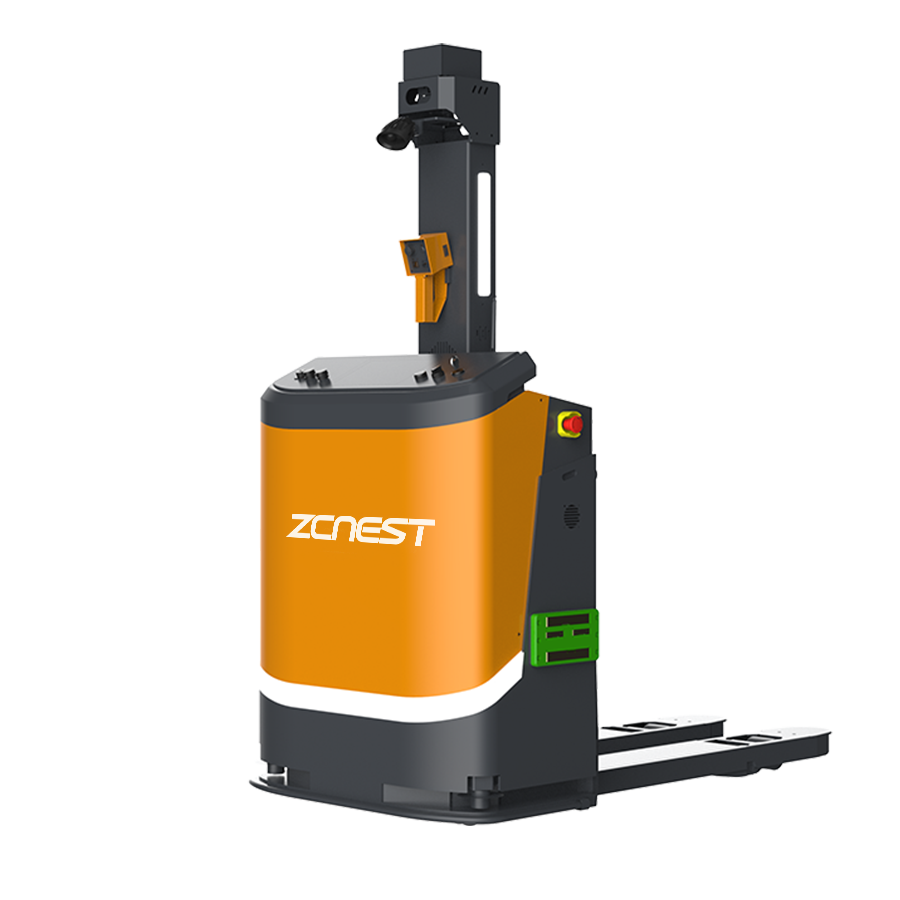
AGV pallet trucks
AGV stackers
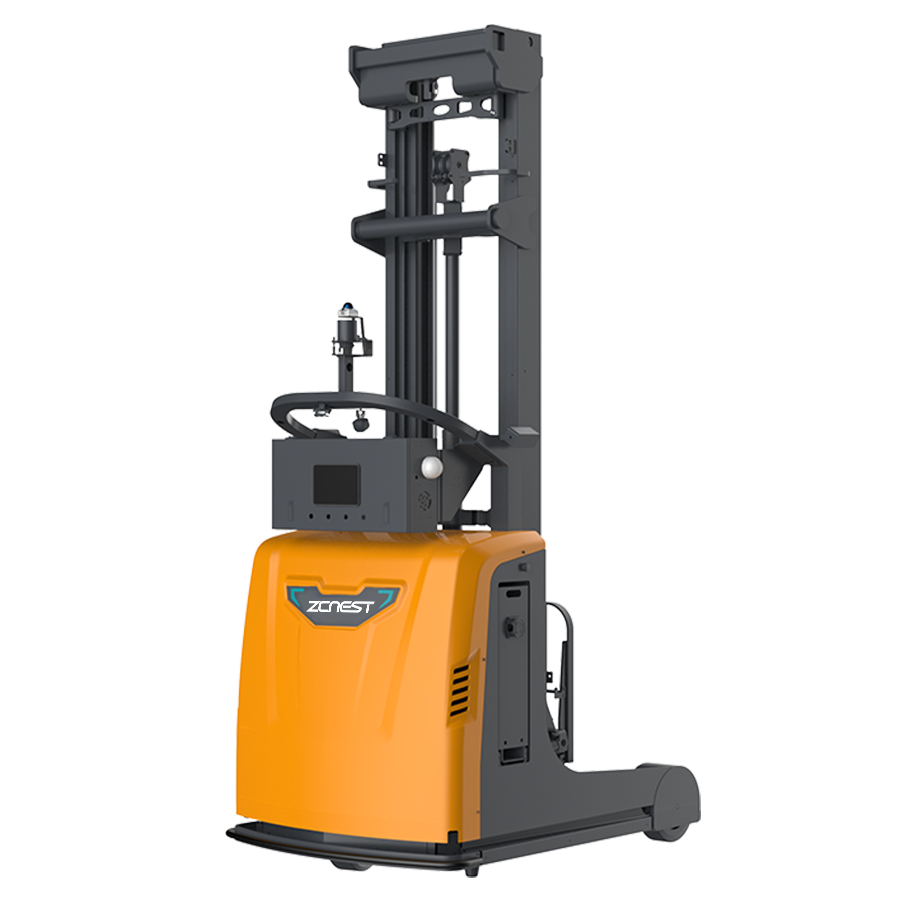
AGV reach trucks
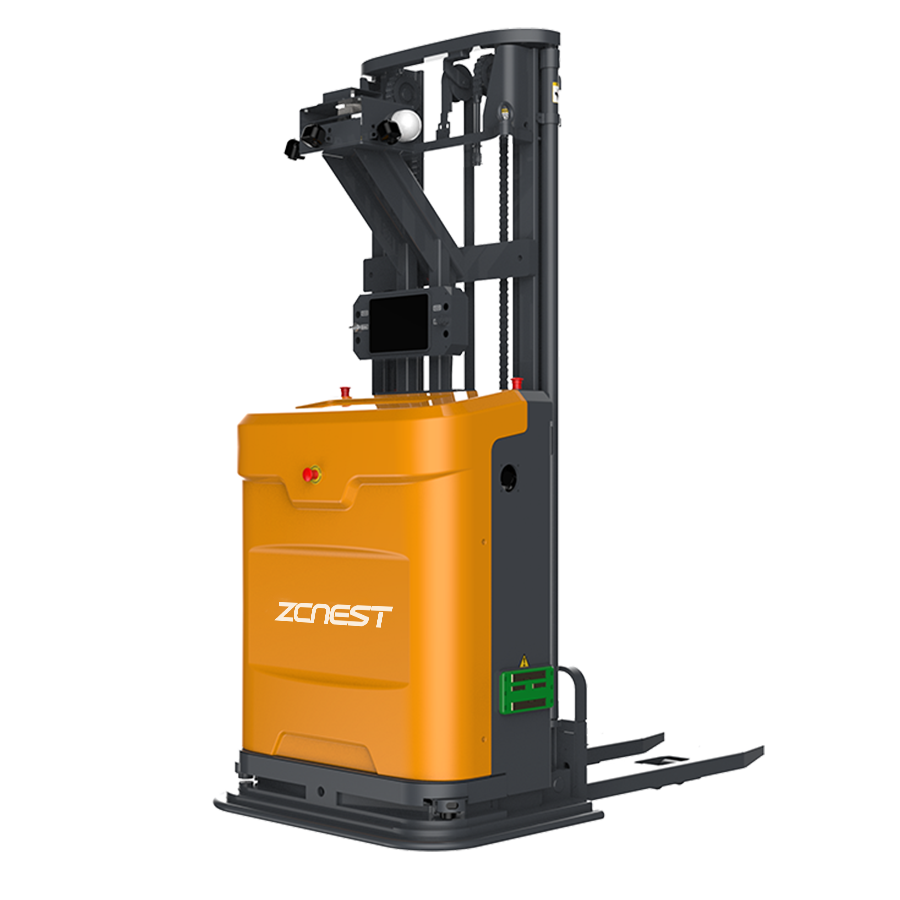
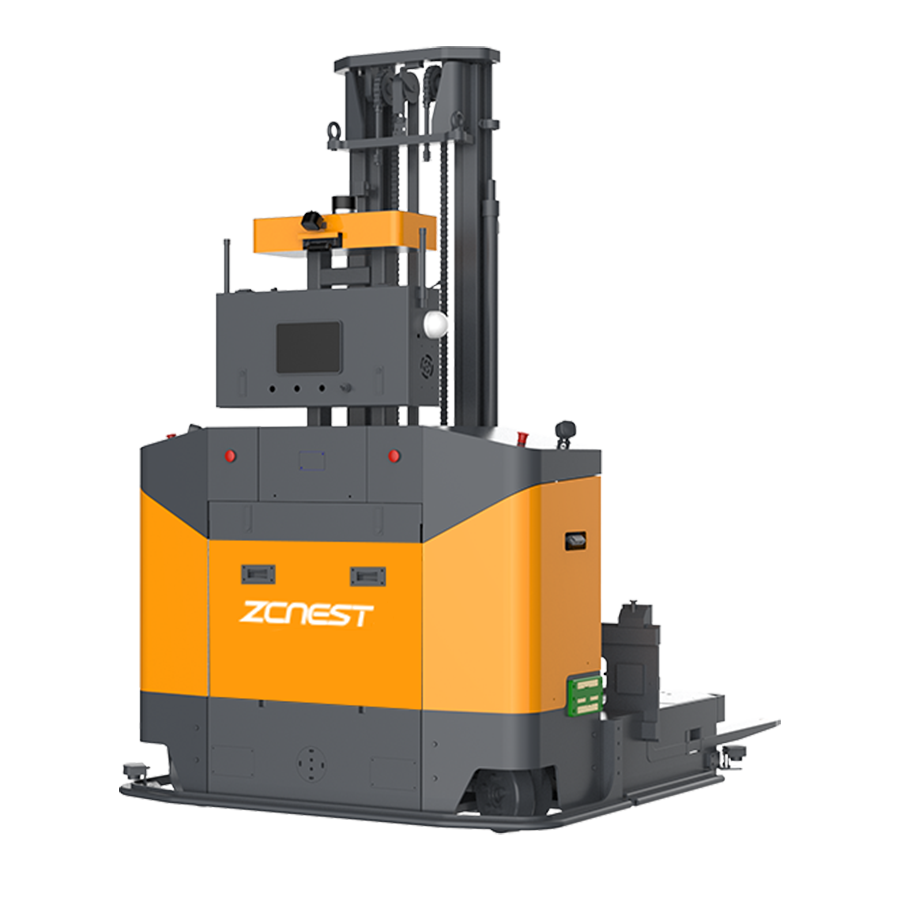
AGV forklifts
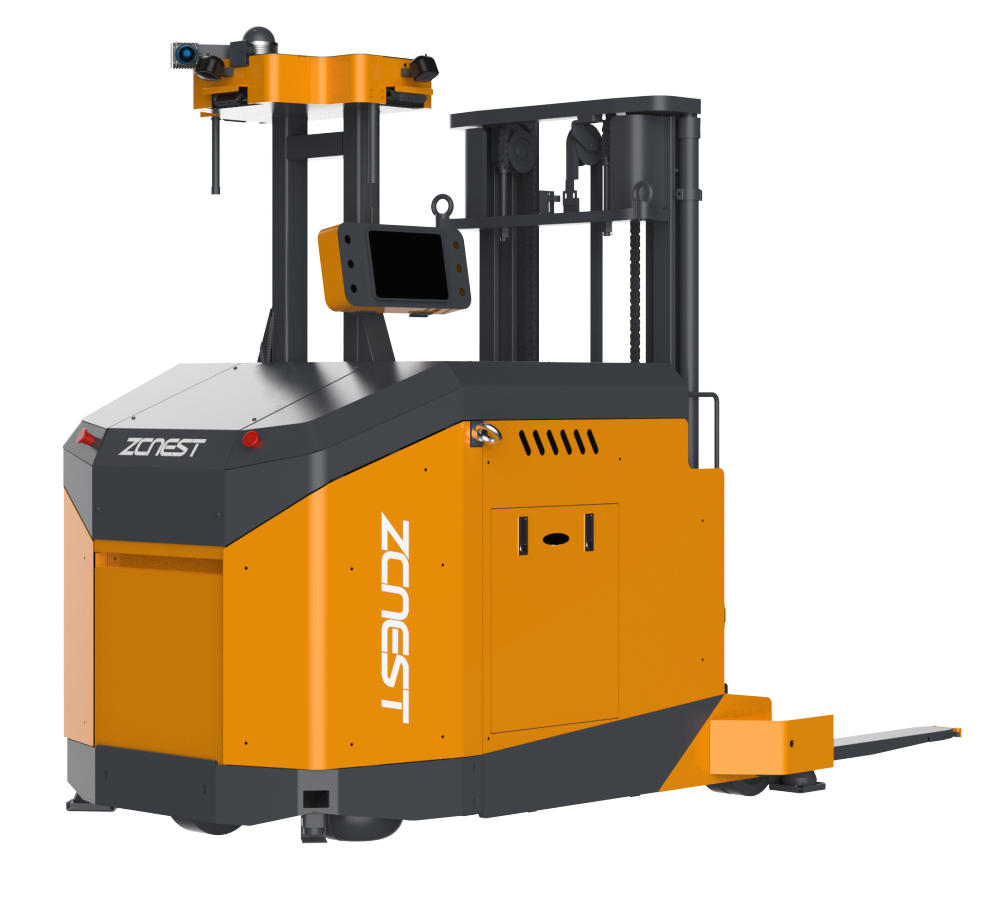
VNA AGV forklifts
High-lift autonomous forklifts
An AMR (Autonomous Mobile Robot) is generally designed to navigate more dynamically through a warehouse.
AMRs commonly use technologies such as:
SLAM
LiDAR
3D perception
Cameras
Obstacle detection
Dynamic path planning
Instead of relying primarily on fixed routes, an AMR can determine its route based on its current location, warehouse map, obstacles, and assigned task.
This makes AMRs particularly attractive for warehouses where transportation routes change frequently.
| Requirement | AGV / Autonomous Forklift | AMR |
|---|---|---|
| Pallet handling | Excellent | Excellent |
| Heavy pallet loads | Excellent | Model dependent |
| High-bay storage | Excellent | Model dependent |
| High lifting | Excellent | Model dependent |
| Narrow aisles | Excellent with suitable model | Model dependent |
| Repetitive transportation | Excellent | Excellent |
| Fixed workflows | Excellent | Excellent |
| Dynamic routing | Good to Excellent | Excellent |
| Changing layouts | Good | Excellent |
| Mixed traffic | Good | Excellent |
| Flexible transportation | Good | Excellent |
| Pallet put-away/retrieval | Excellent | Depends on model |
| Rack interaction | Excellent | Depends on model |
There is no universal winner.
The right solution depends on what your warehouse actually needs to accomplish.
The answer depends on your operating requirements.
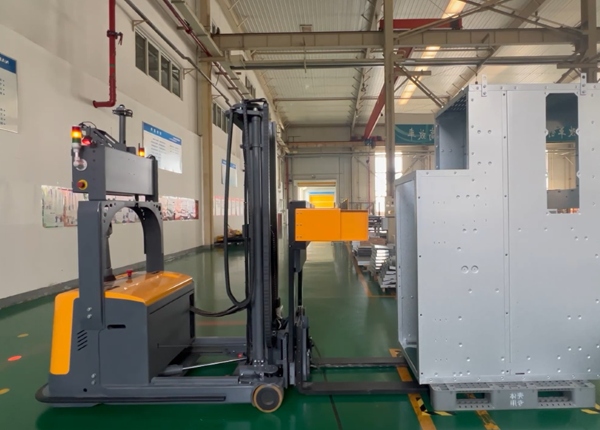
If your primary task is moving pallets between receiving, storage, staging, and shipping, an autonomous forklift may provide a better fit.
If your primary requirement is flexible transportation across changing work areas, an AMR may be more suitable.
The decision becomes particularly important when your warehouse has:
High storage racks
Narrow aisles
Heavy pallets
High throughput requirements
Existing manual forklifts
Mixed pedestrian traffic
WMS integration requirements
Instead of choosing the technology first, define the warehouse requirements first.
Payload is one of the first specifications that should be defined.
A warehouse moving 500 kg cartons is fundamentally different from a warehouse moving 2,000 kg pallets.
When evaluating an AGV or AMR, identify:
Maximum payload
Typical payload
Load center
Pallet dimensions
Load height
Pallet condition
Load stability
For example, an autonomous forklift may be a better fit for heavy pallet handling because it is specifically designed around lifting and transporting palletized loads.
For lighter loads, an AMR platform may provide sufficient capacity while offering greater flexibility.
The vehicle should be selected according to the actual operating envelope, including the maximum expected load.
Payload capacity can also affect:
Vehicle size
Battery capacity
Travel speed
Braking distance
Fork dimensions
Safety requirements
Overall project cost
Lift height is one of the biggest factors separating general-purpose mobile robots from autonomous forklift solutions.
If pallets only need to move across the warehouse floor, a pallet-moving AMR may be sufficient.
But if pallets need to be automatically stored and retrieved from high racks, you need to consider an autonomous forklift, reach truck, stacker, VNA forklift, or another high-lift configuration.
For high-bay applications, evaluate:
Maximum lift height
Rack height
Mast configuration
Fork visibility
Positioning accuracy
Mast stability
Load center
Rack tolerance
Floor flatness
Safety clearance
For warehouses with storage heights around 10–11 meters or higher, vehicle selection becomes significantly more specialized.
The robot must not only reach the required height; it must also safely and accurately position the pallet within the rack.
Aisle width can have a major impact on storage density and vehicle selection.
If your warehouse is designed around narrow aisles, a conventional autonomous forklift may not be suitable.
You may need a specialized:
Reach truck AGV
VNA AGV
Three-way forklift AGV
Multidirectional autonomous forklift
Before selecting a vehicle, measure the actual available clearance.
Consider:
Rack-to-rack distance
Pallet dimensions
Vehicle width
Turning radius
Fork clearance
Safety clearance
Load overhang
Emergency stopping distance
A vehicle that works perfectly in a 3.0 m aisle may be completely unsuitable for a 1.8 m or 1.7 m aisle.
For this reason, aisle width should be provided to the supplier before requesting a quotation.
The warehouse environment is another major factor.
An autonomous forklift or AGV may be highly effective when:
Storage locations are fixed
Routes are predictable
Pallet flows are repetitive
Warehouse traffic is structured
Layout changes are infrequent
Typical examples include:
High-bay warehouses
Distribution centers
Raw material warehouses
Finished goods warehouses
3PL pallet storage
An AMR may offer advantages when:
Routes change frequently
Obstacles appear regularly
Work areas change
Transportation tasks vary
Flexible routing is important
Typical examples include:
E-commerce fulfillment
Flexible staging areas
Dynamic picking environments
Mixed transportation operations
However, modern autonomous forklift systems can also provide flexible navigation.
The important question is therefore not:
“Is it an AGV or an AMR?”
It is:
“How flexible does the navigation system need to be for my warehouse?”
Pallet handling is more complicated than simply specifying the pallet weight.
Your supplier should know:
Pallet length
Pallet width
Pallet height
Fork entry direction
Fork pocket dimensions
Load overhang
Damaged pallet percentage
Single-deep or double-deep storage
Common pallet types can vary significantly between countries and industries.
A vehicle configured for one pallet standard may require modifications for another.
If your pallets are inconsistent, this should be identified during the initial application assessment.
A robot that can technically complete a task may still be unable to meet your required throughput.
For example:
“We need to move 300 pallets per day.”
is not enough information for fleet sizing.
You should also consider:
Operating hours
Peak-hour demand
Average travel distance
Pickup time
Drop-off time
Waiting time
Charging time
Traffic congestion
Loading/unloading time
A warehouse operating 24/7 may require a different fleet size from one operating a single eight-hour shift.
The correct number of robots should therefore be calculated from the actual workload and peak demand, not simply from daily pallet volume.
Navigation is another important consideration when comparing AGV and AMR systems.
Laser-based systems can provide reliable positioning in structured warehouse environments.
Reflectors can be used as positioning references where highly controlled navigation is required.
SLAM allows the vehicle to localize itself using environmental features and can provide greater flexibility when warehouse layouts or routes change.
3D cameras and LiDAR can help robots detect pallets, obstacles, people, and environmental changes.
The best navigation technology depends on the application.
A high-bay warehouse may prioritize positioning accuracy and rack interaction, while a dynamic warehouse may prioritize flexible route planning and obstacle avoidance.
The robot is only one part of an automated warehouse.
A complete system may include:
WMS / ERP
↓
WCS / RCS / Fleet Management
↓
AGV / AMR Fleet
The system may need to handle:
Task assignment
Storage location
Pallet identification
Vehicle dispatch
Traffic management
Battery management
Error reporting
Job completion
Charging
Re-routing
Before purchasing, ask the supplier:
Does the system support WMS integration?
Is an API available?
Can the system run on a local server?
Can multiple vehicle types operate together?
Can manual and autonomous forklifts share the warehouse?
Can the fleet be expanded later?
A low-cost vehicle with poor software integration can become an expensive project problem.
There is no single AGV or AMR price that applies to every warehouse.
The cost of a warehouse automation project depends on the vehicle configuration and the overall system.
A simplified project cost structure is:
Vehicle Cost
Navigation & Safety
Fleet Management Software
Charging System
WMS/ERP Integration
Installation & Commissioning
Rack / Site Modifications
Training & Support
=
Total Project Cost
This is why comparing suppliers only by the price of one robot can produce a misleading result.
Two suppliers may quote similar-looking vehicles but provide very different levels of software, safety, integration, installation, and support.
Several factors can significantly affect the final quotation.
Higher payloads generally require larger and more capable vehicle platforms.
A floor-level pallet AMR and an 11-meter autonomous reach truck are completely different products.
Specialized narrow-aisle vehicles can require more advanced mechanical and navigation systems.
The navigation method and infrastructure required by the site can affect the project cost.
A single-robot project and a 20-robot fleet have very different software, charging, deployment, and integration requirements.
Simple task interfaces may be relatively straightforward, while complex WMS/WCS integration can require additional engineering.
Safety scanners, warning systems, emergency functions, traffic management, and risk assessment all contribute to the system cost.
International projects may also require:
Shipping
Import documentation
Installation
Commissioning
On-site engineering
Operator training
Spare parts
For overseas customers, these costs should be clarified before comparing quotations.
Not necessarily.
A better question is:
What is the total cost of ownership over the expected operating life?
Consider:
Initial purchase price
Battery cost
Electricity
Preventive maintenance
Spare parts
Software fees
Integration
Downtime
Operator requirements
Training
Service response
Fleet expansion
A cheaper robot that requires more manual intervention or experiences more downtime may produce a higher long-term cost.
For a warehouse automation project, TCO can be more meaningful than purchase price alone.
The ROI of an autonomous warehouse project depends heavily on the current operation.
You may want to compare:
Number of forklift operators
Labor cost
Shift pattern
Overtime
Recruitment difficulty
Equipment maintenance
Operator turnover
Number of autonomous vehicles
Remaining manual operators
Maintenance
Software
Charging
Installation
Integration
A simple ROI calculation can begin with:
Annual Labor Savings + Other Annual Savings
÷
Total Automation Investment
However, a proper business case should also consider:
Increased throughput
Reduced downtime
Improved storage density
Reduced product damage
24/7 operation
Reduced dependency on forklift labor
Improved operational consistency
An autonomous forklift is particularly worth considering when your warehouse has a combination of:
You need automated pallet put-away and retrieval at significant lift heights.
You want to maximize storage density and reduce aisle requirements.
Your loads require industrial forklift-level payload capacity.
Your warehouse performs the same transportation tasks repeatedly.
Your racks, storage locations, and transportation flows are relatively predictable.
In these environments, a purpose-built autonomous forklift can provide capabilities that a general-purpose AMR may not.
An AMR may be more appropriate when your primary requirement is flexible transportation.
For example:
Routes change frequently
Loads are relatively light
Work areas change
Multiple destinations are required
Obstacles are common
Warehouse layouts evolve frequently
For these applications, dynamic navigation can be more valuable than high lifting capacity.
You don't necessarily have to choose only one technology.
A larger warehouse may benefit from different autonomous vehicles performing different tasks.
For example:
Autonomous Forklift
→ Pallet storage and retrieval
AMR
→ Flexible material transportation
AGV Pallet Truck
→ Dock-to-staging transportation
This approach can allow each vehicle type to perform the task it is best suited for.
If you expect your warehouse automation to expand over time, ask whether the fleet management system can support a mixed fleet architecture.
Before requesting a quotation, prepare as much of the following information as possible.
Warehouse dimensions
Warehouse type
Rack configuration
Rack height
Aisle width
Floor condition
Indoor/outdoor environment
Pedestrian traffic
Existing forklift traffic
Maximum payload
Typical payload
Pallet dimensions
Pallet type
Load dimensions
Load center
Load height
Pallets per hour
Average travel distance
Operating hours
Number of shifts
Peak-hour demand
Pickup locations
Drop-off locations
WMS/ERP system
Required integration
Navigation preference
Charging requirements
Fleet size
Safety requirements
You do not need a complete engineering specification to request an initial quotation.
Even basic information such as payload + lift height + aisle width + pallet size + warehouse application can help a supplier determine a suitable vehicle configuration.
Choosing the right autonomous vehicle before understanding the application can lead to the wrong specification.
Instead, provide your basic warehouse requirements and ask the supplier to recommend the appropriate solution.
Send us your:
Maximum Load
Lift Height
Aisle Width
Pallet Size
Warehouse Type
Estimated Pallets/Hour
Our engineering team can use these requirements to identify a suitable AGV, autonomous forklift, AMR, or hybrid solution.
When you receive quotations from different suppliers, don't compare only the unit price.
Check whether each quotation includes:
| Item | Supplier A | Supplier B |
|---|---|---|
| AGV/AMR vehicle | ✓ | ✓ |
| Navigation system | ✓ | ✓ |
| Safety system | ✓ | ✓ |
| Fleet management | ✓ | ✓ |
| Charging station | ✓ | ✓ |
| WMS integration | ? | ? |
| Installation | ? | ? |
| Commissioning | ? | ? |
| Operator training | ? | ? |
| Spare parts | ? | ? |
| Warranty | ? | ? |
| Remote support | ? | ? |
| On-site service | ? | ? |
This makes it easier to identify the actual total project cost.
A quotation that looks cheaper at first may not remain cheaper after integration, installation, commissioning, and support are included.
Before placing an order, ask:
What is the rated payload?
What is the maximum lift height?
What aisle width is required?
What pallet sizes are supported?
What is the positioning accuracy?
What battery technology is used?
What navigation technology is used?
How does the vehicle handle obstacles?
What happens if the warehouse layout changes?
How is positioning maintained in narrow aisles?
Does it integrate with our WMS?
Is an API available?
Can we monitor fleet status remotely?
Can the fleet support multiple vehicle types?
Who performs commissioning?
Is FAT available?
Is SAT included?
What training is provided?
What happens if the system fails?
What is the warranty period?
What spare parts are recommended?
How quickly can technical support respond?
Is remote troubleshooting available?
Is on-site service available in our region?
These questions can reveal significant differences between suppliers that are not visible in the initial vehicle price.
An AGV or AMR quotation should be based on the actual application.
For example, two warehouses may both request a “2-ton AGV forklift,” but their final systems could be completely different.
2,000 kg pallet
4 m lift height
3.2 m aisles
Stable routes
100 pallets/day
2,000 kg pallet
11 m lift height
Narrow aisles
High-density racks
500+ pallets/day
Complex WMS integration
The required vehicles, fleet size, navigation, safety systems, and software can be dramatically different.
This is why a serious supplier should ask about your warehouse before providing a final project quotation.
Use this checklist before making your decision.
✓ You primarily move pallets
✓ Heavy loads are involved
✓ High lift heights are required
✓ Narrow aisles are important
✓ High-density storage is a priority
✓ Pallet put-away and retrieval are required
✓ Transportation workflows are repetitive
✓ Warehouse routes are relatively structured
✓ Flexible transportation is the priority
✓ Routes change frequently
✓ Loads are relatively standardized
✓ The environment is dynamic
✓ Multiple transportation destinations are required
✓ Warehouse layouts may change frequently
✓ You have both pallet and lighter-load transportation
✓ Different areas have different automation requirements
✓ You want to automate in stages
✓ You expect your warehouse to expand
✓ You need multiple autonomous vehicle types
Selecting the vehicle is only the beginning of an automation project.
A typical project may include:
1. Application Assessment
↓
2. AGV/AMR Selection
↓
3. Warehouse Layout Analysis
↓
4. Fleet Sizing
↓
5. Navigation Design
↓
6. WMS / ERP Integration
↓
7. FAT
↓
8. Installation & Commissioning
↓
9. SAT
↓
10. Production Operation
The supplier's ability to support this complete process can be just as important as the vehicle itself.
If you are currently evaluating autonomous forklifts or AMRs for your warehouse, you don't need to have every technical detail finalized before contacting a supplier.
Start with the basic information:
Load Capacity
Lift Height
Aisle Width
Pallet Dimensions
Warehouse Type
Required Throughput
Based on these requirements, the appropriate AGV, autonomous forklift, AMR, or hybrid solution can be identified.
You can then compare:
Vehicle Configuration → Project Cost → ROI → TCO → Deployment Plan
instead of comparing robot prices alone.
Planning a warehouse automation project?
Send us your basic warehouse requirements. Our engineering team can recommend a suitable autonomous vehicle configuration and provide a preliminary quotation for your application.
Work Email
Company
Warehouse Requirements





 Chinese
 English