
 Chinese
 English

When deploying Autonomous Mobile Robots (AMRs) or Automated Guided Vehicles (AGVs) on elevated structures, mezzanines, or suspended floors, facility engineers encounter a critical constraint. The warehouse floor itself acts as an active component of the machine system. Overlooking this structural connection introduces substantial operational risks.
The Core Structural Misconception: Assuming that because a slab supports manual forklifts, it can automatically accommodate a heavy AMR fleet. Mobile robots introduce distinct load footprints that alter structural stress models.
While forklifts distribute mass across substantial pneumatic or large elastic tire tracks, AMRs concentrate heavy payloads onto small, rigid wheels. Evaluating whether an elevated platform can withstand these systems requires assessing concentrated point pressures rather than total gross vehicle weight.
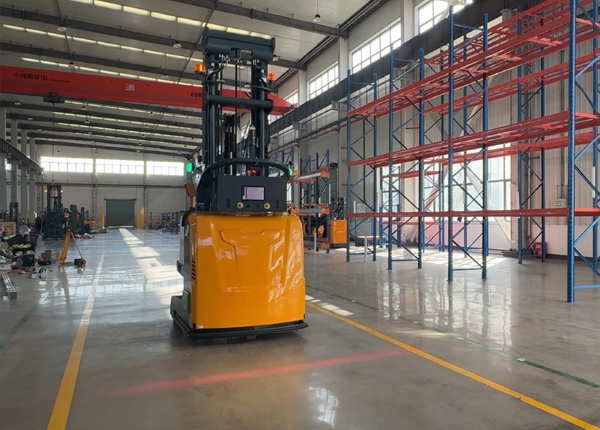
1. Point Load Dynamics: Tracking Force Concentration
Point load defines the concentrated structural force transmitted through an individual wheel's microscopic contact patch. For heavy automation equipment, this localized pressure escalates rapidly as contact surfaces shrink.
Gross Robot Weight
Axle Allocation Split
Concentrated Contact Patch
Localized Stress Spikes
Actual point loading is highly dynamic. While static measurements capture baseline distributions, real-world maneuvers—including sharp cornering, emergency braking, and ramp transitions—generate temporary load shifts that spike local floor pressures well above nominal limits.
2. Wheel Compound Matrix: Balancing Pressure and Traction
Adjusting wheel width and material properties allows engineering teams to optimize weight distribution, reducing the risk of floor fatigue and protective coating failure over extended duty cycles.
| Wheel Material Compound | Structural Stress Impact | Engineering and Navigation Trade-offs |
|---|---|---|
| Hard Polyurethane | High point pressure; concentrates load over a small contact zone. | Low rolling resistance; highly durable; minimizes battery draw under heavy loads. |
| Softer Vulcanized Rubbers | Low floor stress; broadens the contact area to safeguard finishes. | Higher rolling resistance; faster wear rates; can increase steering motor load. |
| Expanded Width Variants | Optimized weight distribution; ideal for elevated mezzanine structures. | Can slightly degrade pivot-turning accuracy and alter navigation dynamics. |
3. Elevating Infrastructure: Mezzanine Material Constraints
The structural composition of an elevated platform dictates its response to the continuous, cyclical stress paths generated by automated fleets.
Reinforced Concrete Slabs
Concrete structures provide high stiffness, predictable load distribution, and strong dampening qualities. This flat, rigid surface stabilizes sensors and minimizes localized flex, easing long-term calibration.
Wooden & Steel Mezzanines
Lightweight decks are highly sensitive to vibration and deflection. Deflecting panels can alter laser sensor alignment during transit, occasionally disrupting localization consistency for SLAM systems.
⚠️ The Fatigue Vector: Structural risk rarely manifests as immediate mezzanine