Chinese
 English

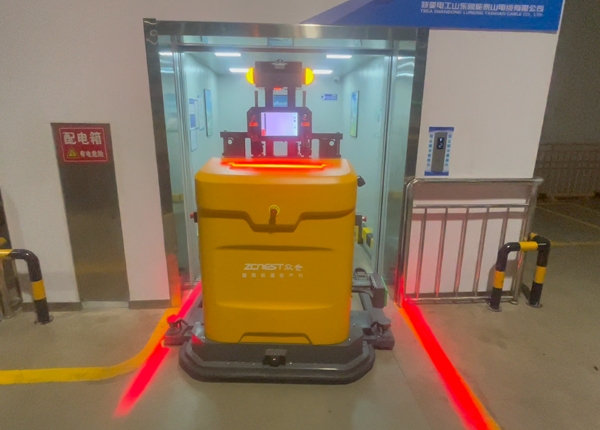
Expanding an automated guided vehicle (AGV) or autonomous mobile robot (AMR) deployment across multiple floor levels transitions the automation initiative into a multi-system building integration project. The mobile platform moves past internal fleet positioning models, interacting directly with heavily regulated vertical transit systems.
The Integration Reality: Operational bottlenecks and system standstills rarely originate from robotic navigation errors. Instead, they stem from communication lag, interface timing gaps, and unhandled building safety exceptions.
To avoid single-point infrastructure failures, engineering teams must evaluate physical handshakes, local wireless coverage, and cross-platform timing constraints before finalizing factory procurement.
1. System Signal Flow: Intermediate Interface Architecture
Autonomous fleets do not communicate directly with primary elevator hoist motors or mechanical hydraulic controls. Instead, the vehicle fleet coordinator manages entry and exit sequences via an intermediate structural control layer.
1. Automated Guided Vehicle / AMR Mobile Node
↓ (Industrial Wireless Connectivity)
2. Robot Control System (RCS) / Central Fleet Manager
↓ (Local Network Protocol / Wired Ethernet)
3. Intermediate Elevator Interface Controller (Relay I/O / Gateway)
↓ (Hardware Direct Wire Interlock)
4. Primary Building Elevator PLC / Lift Controller System
2. Interface Matrix: Assessing Connection Methods
Selecting an integration approach involves balancing the age of your building's infrastructure with the data visibility needs of your warehouse operations.
| Integration Approach | Physical Execution Mode | Operational Limitations & Use Cases |
|---|---|---|
| Dry-Contact Relay | Physical I/O modules simulate cabin call buttons and door-state loops. | Ideal for retrofitting legacy freight lifts; provides basic control with minimal diagnostic feedback. |
| PLC Network Gateway | Direct data synchronization over industrial fieldbuses (e.g., Modbus, EtherNet/IP, Profinet). | Standard for modern facilities; transmits precise positional data and system status updates. |
| Smart Building API | Cloud-linked or localized web-service integrations via native developer portals. | Common in urban logistics centers; requires stable network backbones and vendor access permissions. |
3. High-Precision Entry Positioning and Sensor Risks
Guiding a heavy mobile platform into a cramped elevator cabin demands tighter structural navigation tolerances than traveling along open warehouse aisles. Minor positioning errors can damage elevator doors or cause system-wide tracking drift.
Reflective Surface Disruption: Polished steel cabin panels can reflect and scatter laser beams, occasionally generating positioning artifacts for standard on-board LiDAR sensors.
Secondary Localization Anchors: To bypass reflection issues, integrators install secondary positioning references—such as localized QR matrices or reflectors—directly inside the elevator entrance zone.
Mechanical Alignment Loops: Prior to signaling door closures, the vehicle coordinator evaluates complete vehicle containment, wheel alignment clearances, and absolute safety field boundaries.
4. Exception Handling: Structured Timeout Configurations
The primary engineering challenge in multi-floor automation is managing edge cases and unexpected system drops. Failing to anticipate network dead zones or physical door obstructions can leave vehicles stranded inside shafts, stalling vertical workflows.
⚠️ The Shaft Wiper Isolation Risk: Concrete elevator shafts and reinforced structural steel blocks act as natural wireless shield cages. If a vehicle experiences a roaming drop mid-transit, the central controller must deploy automated timeout routines to prevent building-wide logistics blockages.
Essential Exception Handling Workflows:
Entry Timeout Protocol: If a vehicle cannot enter a waiting cabin within a designated window, the fleet manager cancels the lift request and reroutes the asset.
Cabin Trapped Rescue Routines: If tracking or network connection drops while inside the shaft, the vehicle triggers a local safe-stop mode, while the elevator controller forces doors open on a recovery floor.
Obstruction Clearance Sequence: Mechanical door pressure trips prompt automatic short-distance vehicle adjustments, resetting entry checks before throwing an operator alert.
Multi-Floor Vertical Automation Engineering Audit
Before implementing multi-floor travel changes in an active facility, confirm that your system integration documentation covers these key infrastructure and code checkpoints: