
 Chinese
 English

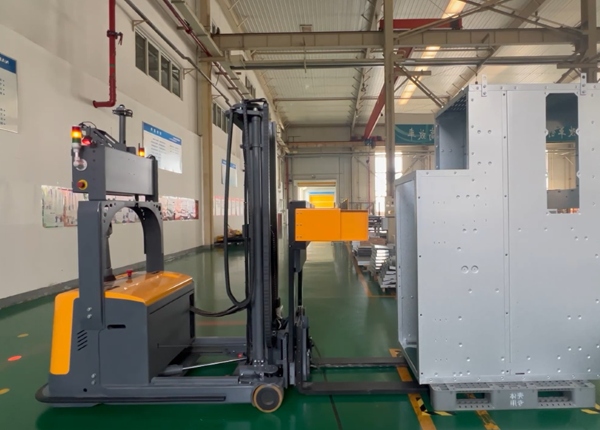
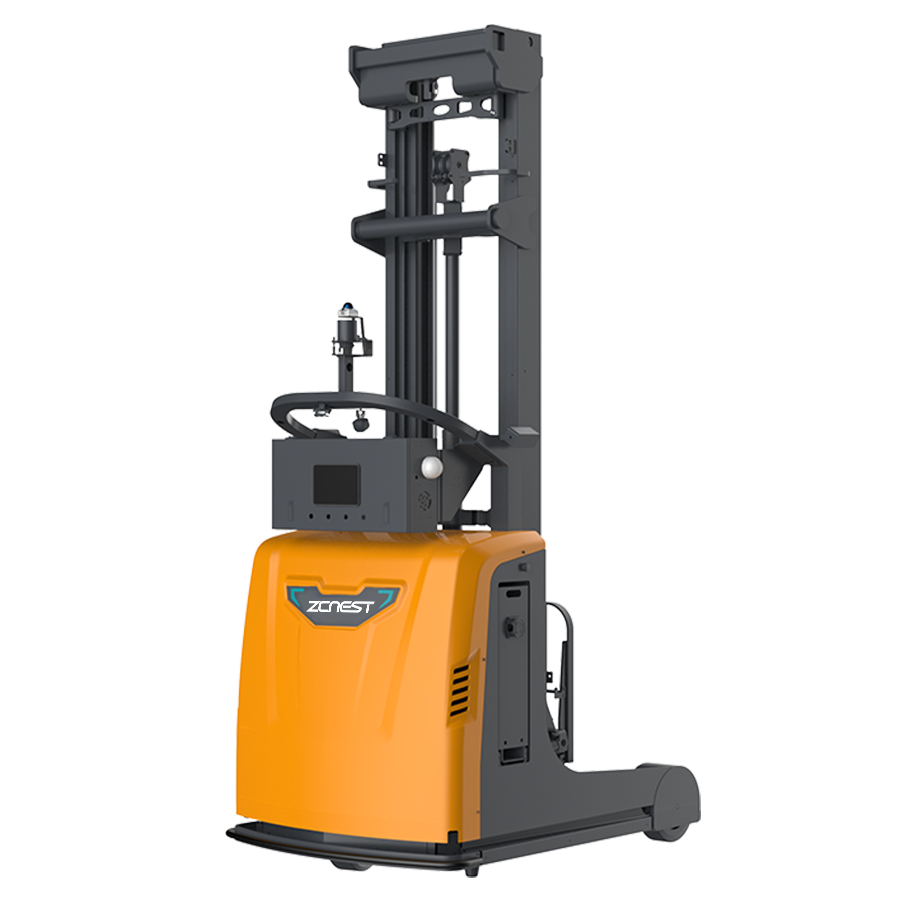
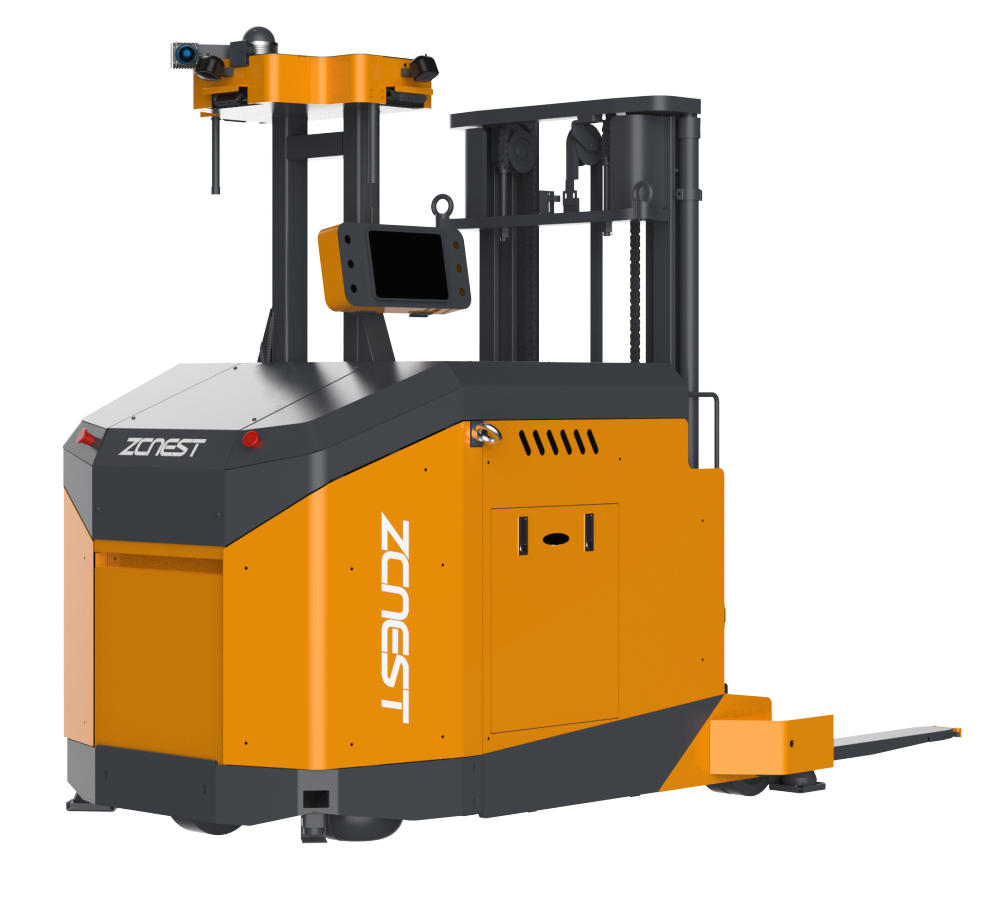
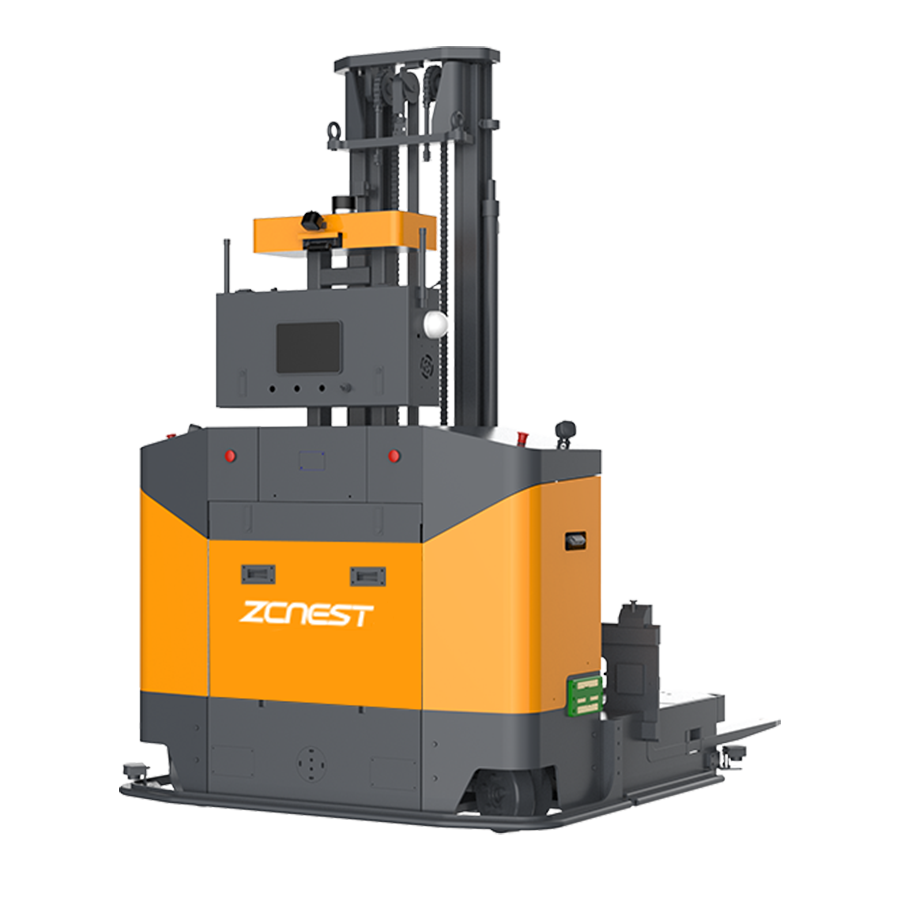
In modern driverless warehousing, integrating an AI vision perception architecture represents a critical evolution for high-precision automated forklifts (AGVs/AMRs). While traditional 2D LiDAR navigation excels at vehicle localization and global path planning, standard coordinate-driven execution inevitably encounters blind spots and operational failures when handling real-world variables like deformed pallets, irregular shrink-wrapping, or tilted load stacks.
The Core Perception Leap: Our AI vision system transitions material handling from the rigid legacy method of "Drive to Coordinates → Blind Fork Insertion" into an adaptive "Real-Time Observe → Geometric Analyze → Dynamic Correct → Precision Insert" closed-loop control model. This dramatically reduces fork puncture incidents and double-handling picking failures.
To operate reliably in high-throughput industrial environments, automated equipment must natively accommodate non-standard, imperfect unit loads. By combining multi-sensor fusion, active infrared illumination, and spatial confidence-scoring algorithms, our systems guarantee absolute picking execution consistency under volatile facility conditions.
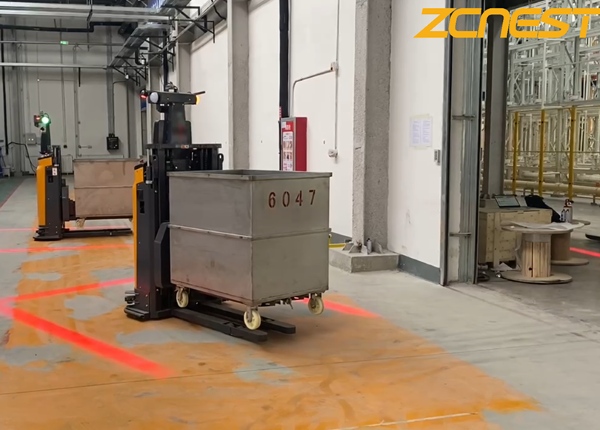
1. Perception Architecture: Multi-Modal Hardware Synergy
Relying on a single optical or laser wavelength exposes an automated forklift to local tracking data drops caused by sudden shifts in facility lighting, airborne dust, or surface glare. Our system ensures all-weather, multi-shift uptime through a highly unified hardware stack:
3D ToF Depth Cameras
Generates dense geometric point clouds of the load face. This maps precise pallet pocket entryways, center-to-center distances, and exact three-dimensional spatial poses completely independent of ambient light variations.
Active Infrared (IR) Illumination
Emits specialized, non-visible infrared light waves that cut through dim environments and airborne particles. This eliminates deep shadow pockets inside racking rows, preventing fork tip collisions.
2. Edge-Based Real-Time Adaptive Correction Pipeline
When approaching a pallet that is misaligned, shifted, or structurally warped by load compression, the vehicle's onboard edge computing system dynamically restructures the fork carriage's path rather than triggering a hard stop:
Optical End-Face Scan
Pocket Feature Extraction
Pose & Skew Angle Est.
Active Carriage Adjustment
The vehicle measures and corrects for lateral offsets, pitch orientation, and yaw deviations during its final approach. Utilizing hydraulic side-shifters and active fork-positioning attachments, it automatically matches the target entry profile to ensure zero-friction engagement.
⚠️ High-Bay Deflection Amplification: A minor, millimeter-level pallet misalignment at the floor tier scales up exponentially as storage elevations increase. Between 8 to 12 meters, even tiny structural deviations result in failed entries. To solve this, our system integrates direct carriage-mounted AI vision arrays to perform micro-validation at height, completely eliminating blind overhead drops.
3. Optical Interference Suppression: Mitigating Transparent Shrink-Wrap Glare
Tightly applied, clear plastic shrink-wrapping is a notorious point of failure for legacy optical automation. High-gloss stretch films refract and scatter laser beams, corrupting reflective sensors with false distance readings and fractured boundary outlines.
| Perception Sensor Mode | Typical Physical Failure Risk | AI Sensor Fusion Suppression Mechanism |
|---|---|---|
| 2D/3D LiDAR | Laser beams pass through or shatter off glossy films, losing accurate target profiles. | Extracts high-frequency reflectivity patterns and uses shape-contour history to filter out point-cloud noise. |
| Industrial RGB Optics | Overhead warehouse bay lights create bright mirror reflections, masking the pocket gaps. | Runs deep Convolutional Neural Networks (CNN) to perform semantic segmentation on wrapped textures. |
| Ultrasonic Sensors | Loose, torn, or flapping wrap boundaries absorb or distort sound waves, causing noisy telemetry. | Applies dynamic confidence scoring; automatically lowers ultrasonic weights and prioritizes visual tracking if acoustic metrics fluctuate. |
4. Industrial Engineering Reality: Deterministic Logic vs. Autonomous Learning
In heavy industrial environments prioritizing strict safety protocols and constant uptime, predictable vehicle behavior is paramount. Running uncontrolled, black-box deep learning loops directly on an active warehouse floor introduces catastrophic operational risks and path unpredictability.
Our fleet relies on a highly regulated engineering lifecycle: edge-case anomalies or unmapped load behaviors are securely logged, tagged, and uploaded back to a development sandbox environment. Here, the vision models are retrained against expansive datasets and subjected to millions of rigorous regression tests. Only when performance and safety margins are fully verified is the consolidated firmware patch pushed down to the active fleet—ensuring a reliable audit trail and stable operations.
AI Vision Automated Forklift Sourcing Review Checklist
When evaluating high-precision automated forklifts equipped with adaptive vision correction, verify the following core technical indicators and engineering criteria: