

When buying AGVs, most buyers focus on navigation technology, software features, payload capacity, and pricing.
But experienced importers know that one of the biggest risks is choosing a supplier that may not be financially strong enough to support your project over the next 5–10 years.
Why this matters:
An AGV purchase is not a one-time equipment transaction. Your automation system will likely depend on the supplier for:
Software updates
Spare parts supply
Technical support
Bug fixes
Battery replacement
Future fleet expansion
If the supplier experiences financial trouble, your warehouse automation project can become difficult and expensive to maintain.
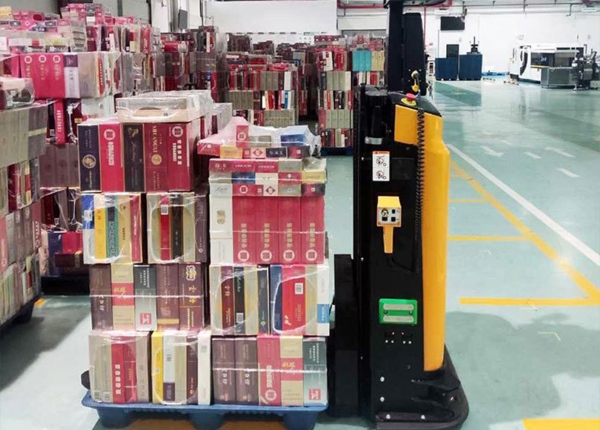
A traditional forklift can usually be serviced by local technicians and third-party parts suppliers.
An AGV system is different because it often depends on:
Proprietary software
Fleet management systems
Controller firmware
Navigation algorithms
API integrations
Key Takeaway:
Supplier stability directly impacts the long-term usability of your AGV system.
Before evaluating finances, confirm the supplier is a legitimate registered business.
Business License
Unified Social Credit Code
Registered Capital Information
Company Registration Date
Shareholder Structure
Suppliers operating for 8–15+ years generally present lower risk than newly established companies with limited project history.
However, age alone does not guarantee financial strength.
Yes. You should absolutely ask.
While privately held Chinese companies are generally not required to disclose detailed financial statements publicly, reputable suppliers are often willing to share performance indicators.
Annual revenue trends
Export revenue percentage
Employee growth figures
Factory expansion records
Major customer references
Annual AGV sales volume
Total AGV deployments
Export ratios
Production statistics
Market growth figures
Red Flags:
Refusing all discussion about company size
No customer references available
Inconsistent revenue claims
Frequent changes to company entities
Employee Growth
Growing headcount often indicates:
Increasing sales
Expanding project pipeline
Ongoing R&D investment
Factory Expansion
New production lines
Larger manufacturing facilities
Higher production capacity
Export Activity
Recurring overseas customers
Stable international shipments
Global support experience
Both models can be successful, but they present different risk profiles.
| VC-Backed AGV Company | Self-Sustaining Manufacturer |
|---|---|
| Faster innovation Larger R&D budgets Rapid software development | Positive operating cash flow Manufacturing-focused Lower financing dependence |
| Funding-round risk Growth pressure Profitability uncertainty | Slower innovation Smaller software teams Fewer overseas offices |
Who are the major shareholders?
Has the company raised venture capital?
Is the company profitable?
Are there plans for an IPO?
Many of the most financially stable AGV suppliers are not the most heavily funded. They are the companies consistently generating profits from real customer projects.
This is one of the smartest questions buyers can ask.
Who owns the source code?
Who controls software licensing?
Who maintains the platform after ownership changes?
Battery support period
Controller support period
LiDAR availability
Drive module replacement plans
What happens if regional offices close?
How are support contracts maintained after restructuring?
What protections exist for current customers?
The biggest hidden risk is often not bankruptcy—it is the supplier abandoning a software platform and forcing customers to migrate to a new system.
Yes. Serious suppliers are usually familiar with this request.
Length of banking relationship
General account standing
Overall credit reputation
Account balances
Debt obligations
Profitability figures
Commercial credit reports
Trade references
Supplier references
Large-project customer references
✅ Corporate Stability
• Years in business
• Ownership structure
• Management continuity
✅ Financial Strength
• Revenue growth trend
• Export performance
• Profitability indicators
✅ Operational Strength
• Factory capacity
• Engineering team size
• Service network
✅ Business Continuity
• Spare-parts strategy
• Software roadmap
• Support commitments
✅ Market Validation
• Customer references
• Installed AGV projects
• International project experience
Frequent company name changes
High employee turnover
No customer references
Dependence on a single investor
No long-term support strategy
Pricing significantly below market norms
“Will this supplier still be supporting my AGVs five years from now?”
“Can they survive an economic downturn?”
“Will software and spare parts remain available?”
“Can I trust them as a long-term automation partner?”
These are exactly the right concerns.
Because in warehouse automation, the biggest project risk is rarely the robot itself—it is the long-term viability of the company standing behind it.
A strong AGV vendor should be able to provide evidence of:
Corporate registration and export qualifications
Business scale and growth trajectory
Customer references in your target market
Long-term software and spare-parts support plans
Financial and operational stability
If you'd like a detailed supplier due-diligence package, leave your contact information and project requirements (country, warehouse size, AGV quantity, and expected timeline). Our team can provide a practical AGV Vendor Financial Audit Checklist to help reduce long-term project risk before signing a contract.
FREE ENGINEERING SUPPORT Stop Gambling on Generic Platforms. Get an AGV/AMR Tailored to Your Warehouse.Buying automated guided vehicles involves complex safety standards (CE/ANSI), navigation setups (Laser SLAM), and ERP system integration. Don't risk your factory safety with middle-men. ✓ 100% Direct Factory: Customized payload up to 5 Tons. ✓ Free CAD Simulation: Send us your layout, and our engineers will simulate the optimal AGV routes. ✓ Global Support: Overseas installation guidance & local maintenance partners. |





 Chinese
 English