

When importing AGVs from China, most buyers focus on price, delivery schedules, technical specifications, and warranty terms.
But in modern AGV projects, one of the most valuable assets is often not the robot itself.
Your real assets may include:
Warehouse layouts and facility maps
Operational workflows
WMS integration logic
Fleet scheduling rules
API architecture
Production data and throughput information
In many cases, these assets are worth far more than the AGVs themselves.
That is why intellectual property (IP) ownership and data protection clauses should be negotiated before any software development, mapping, or integration work begins.
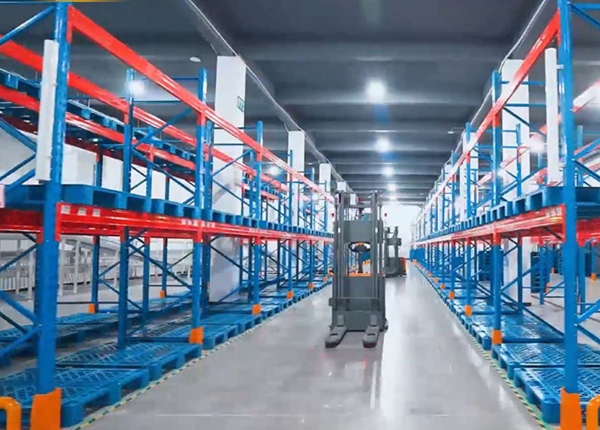
Unlike traditional equipment purchases, AGV deployments frequently involve:
Custom software development
API integrations
Workflow configuration
Digital warehouse mapping
Operational optimization
During implementation, suppliers may gain access to:
Facility drawings
Rack locations
Inventory flow information
Production processes
Throughput statistics
Proprietary operating methods
Without proper contractual protection, ownership rights and usage permissions can become unclear, creating long-term legal and operational risks.
A well-structured AGV agreement should clearly define the following:
| Contract Area | Purpose |
|---|---|
| Pre-Existing IP | Protects supplier-owned AGV software and platforms |
| Custom Development | Defines ownership of integrations and custom modules |
| Confidential Information | Protects layouts, workflows, and operational data |
| Data Usage Restrictions | Limits resale, reuse, and disclosure of customer data |
| Software Escrow | Protects continuity if support becomes unavailable |
This is one of the most important questions in any AGV procurement project.
The answer depends entirely on the contract language.
Supplier owns source code
Supplier owns custom modules
Customer receives usage rights only
Customer owns integration code
Customer owns warehouse-specific logic
Supplier retains ownership of core platform software
Supplier owns reusable platform technology
Customer owns project-specific customization
Best Practice:
Clearly define Core Platform IP, Custom Development IP, Source Code Rights, Modification Rights, and Integration Deliverables in writing.
It should—but many standard AGV quotations never address this issue directly.
Storage density strategies
Production flow design
Throughput capacity
Expansion plans
Operational know-how
Selling facility maps
Sharing operational data
Disclosing workflow information
Providing benchmarking reports using customer data
Using customer information for third-party projects
Define warehouse layouts and operational data as "Customer Confidential Information" and prohibit reuse without written approval.
Non-Disclosure Agreement (NDA)
Data Processing Agreement (DPA)
Cloud data handling policies
| Scenario | Possible Impact |
|---|---|
| Minor Dispute | Updates continue normally |
| Licensing Dispute | Certain software modules may become unavailable |
| Patent Litigation | Features may be redesigned or removed |
| Platform Shutdown | Support ends and migration becomes necessary |
Software maintenance commitments
Guaranteed bug fixes and security patches
Source code escrow agreements
Migration assistance clauses
Business continuity obligations
The biggest risk is often not an IP lawsuit—it is the supplier discontinuing a software platform and forcing customers to migrate unexpectedly.
For large AGV projects, the answer is often yes, although the scope depends on project size and negotiation leverage.
Cybersecurity documentation review
Security questionnaires
Remote architecture assessments
Third-party certification verification
On-site security audits
ISO 27001
SOC 2
Information security management certifications
Data Storage
Is data stored locally or in the cloud?
Which country hosts the servers?
Access Control
Who can access facility maps?
How are permissions managed?
Are activities logged?
Encryption
Is data encrypted at rest?
Is data encrypted during transmission?
Retention Policy
How long is data stored?
How is deleted information handled?
"Do I actually own the custom system I'm paying for?"
"Can my warehouse data be reused elsewhere?"
"Will I lose access if the supplier encounters legal problems?"
"Can I verify their cybersecurity practices?"
"How do I avoid vendor lock-in?"
These are exactly the right questions because, in modern AGV projects, the most valuable asset is often not the robot—it is the software, data, and operational knowledge built around it.
Make sure the agreement clearly addresses:
Ownership of custom software
Ownership of warehouse maps and operational data
Confidentiality obligations
Software maintenance commitments
Cybersecurity responsibilities
Audit rights
Business continuity protections
If you're evaluating AGV suppliers for a US, Singapore, or European deployment, leave your project details (facility size, integration requirements, cloud/on-premise preference, and expected fleet size). Our team can provide an AGV IP & Data Protection Contract Checklist to help identify hidden legal and commercial risks before signing.
FREE ENGINEERING SUPPORT Stop Gambling on Generic Platforms. Get an AGV/AMR Tailored to Your Warehouse.Buying automated guided vehicles involves complex safety standards (CE/ANSI), navigation setups (Laser SLAM), and ERP system integration. Don't risk your factory safety with middle-men. ✓ 100% Direct Factory: Customized payload up to 5 Tons. ✓ Free CAD Simulation: Send us your layout, and our engineers will simulate the optimal AGV routes. ✓ Global Support: Overseas installation guidance & local maintenance partners. |





 Chinese
 English