


Sometimes yes—but component serviceability is one of the most overlooked long-term operational risks in AGV procurement. Many Chinese AGV suppliers integrate a mix of international brands, domestic Chinese sensors, or proprietary OEM private-label lines.
The critical question is not: "Does the AGV work today during the demo?"
The real question is: "Can you source replacement sensors in the US five years from now without shutting down your entire warehouse?"
For large-scale AGV deployments, sensor ecosystem stability and parts availability are just as vital as the robot's physical payload capacity.
If your AGV utilizes globally recognized sensor brands like SICK AG or Pepperl+Fuchs, sourcing a replacement part in major US industrial and logistics hubs (like Chicago, Atlanta, or Dallas) is straightforward due to their established distribution networks.
However, if the supplier opted for low-cost domestic Chinese LiDARs or proprietary un-documented interfaces, you may face severe operational bottlenecks:
Extended Downtime: Waiting weeks for overseas shipping and customs clearance while a forklift sits idle.
Firmware Lock-In: OEM-rebranded sensors often have restricted firmware, making off-the-shelf market replacements incompatible.
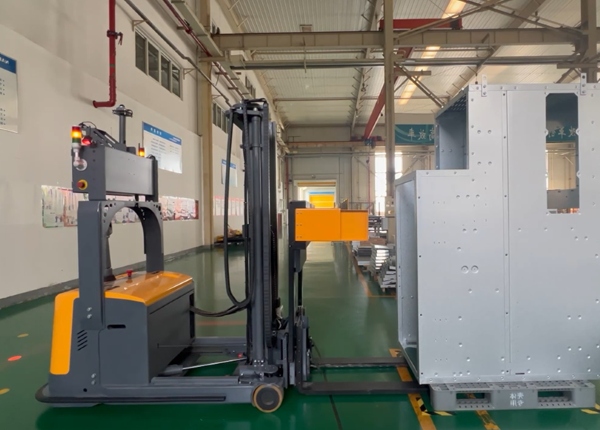
Can you buy a replacement sensor locally and swap it out yourself? It depends entirely on your contract. AGVs are highly integrated ecosystems where LiDAR hardware, navigation firmware, and SLAM safety algorithms interact tightly.
⚠️ The Warranty Pitfall
Many overseas suppliers will void portions of your warranty, refuse remote software troubleshooting, or deny navigation calibration support if they detect non-original third-party hardware—even if the replacement sensor matches the physical specs perfectly.
Before finalizing a purchase, professional procurement teams always negotiate a pre-approved **spare-parts list** and **firmware compatibility guarantees**.
While sensor failure is manageable, a failed **Main Controller Board** (the navigation brain and motion control core) can fully paralyze your fleet. Unlike standardized sensors, controller boards are often completely proprietary, meaning replacement requires:
Proprietary firmware flashing and software version matching.
Complex configuration synchronization with the fleet management system.
Navigating potential geopolitical export restrictions or production batch scheduling delays.
Best Practice: Sophisticated operators reduce this downtime risk to zero by mandate-stocking a critical spare-parts inventory locally, including spare controller boards, safety PLCs, and preconfigured industrial PCs.
When a specific LiDAR line is discontinued, replacing an old sensor with its direct "newer revision" from the same brand doesn't always guarantee plug-and-play success. Upgraded hardware models frequently introduce subtle changes:
Altered data packet structures or communication API behaviors.
Different scan rates and timing synchronization.
If the AGV's internal SLAM localization software was tightly optimized for the previous generation, a newer sensor can cause unexpected localization drift, unstable mapping, or intermittent safety logic timing dropouts. Always request a confirmed firmware compatibility matrix from your vendor.
The true cost of warehouse automation is determined by long-term maintainability rather than the initial quotation price. Here is how top procurement teams minimize risk:
| ✅ WHAT TO PREFER | ❌ WHAT TO AVOID |
|---|---|
| • Globally supported sensor brands (SICK, P+F, etc.) • Fully documented communication protocols • Off-the-shelf replaceable industrial components • Localized safety stock for controllers | • Private-label, undocumented unknown LiDARs • Highly restrictive vendor-locked software environments • Hidden proprietary interfaces lacking SDK documentation • Single-source reliance for standardized wear parts |
Don't get locked into an unserviceable ecosystem. Our automation engineers can analyze your specific AGV bill of materials (BOM), sensor lines, and controller components to ensure long-term US serviceability and zero single-point-of-failure risks.
Submit your configuration details for a comprehensive supply chain evaluation:
Current / Proposed LiDAR Model & Manufacturer Name
AGV Supplier & Core Controller Architecture
Target Fleet Scale & Maximum Acceptable Emergency Downtime
Existing Local Spare-Parts Sourcing Strategy
📖 AGV Forklift Guide — Essential manual for selection and safety.
⚙️ How AGV Systems Work — A deep dive into navigation and logic.
⚖️ AGV vs. AMR Comparison — Choosing the right technology for your facility.
💰 AGV Cost and ROI — Evaluating investment and payback periods.
FREE ENGINEERING SUPPORT Stop Gambling on Generic Platforms. Get an AGV/AMR Tailored to Your Warehouse.Buying automated guided vehicles involves complex safety standards (CE/ANSI), navigation setups (Laser SLAM), and ERP system integration. Don't risk your factory safety with middle-men. ✓ 100% Direct Factory: Customized payload up to 5 Tons. ✓ Free CAD Simulation: Send us your layout, and our engineers will simulate the optimal AGV routes. ✓ Global Support: Overseas installation guidance & local maintenance partners. |











 Chinese
 English




