


When deploying imported autonomous forklifts in North American facilities, safety compliance isn't determined by the country of origin. It is defined strictly by the exact system architecture and installation-level validation .
Many procurement teams fall into the trap of accepting a generic factory certificate. In reality, meeting US industrial standards requires deep integration between site-specific physics, hardware-level redundancy, and functional safety engineering.
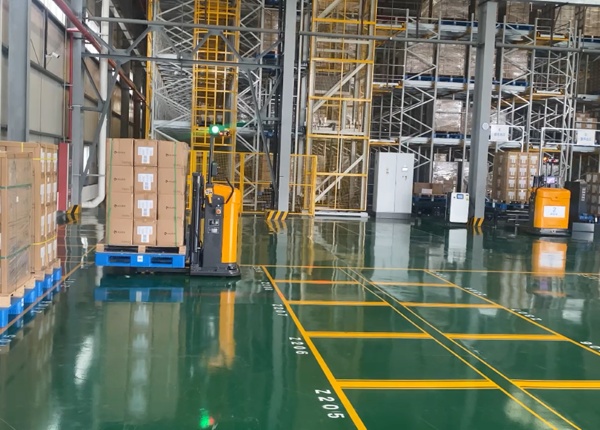
In the United States, driverless industrial trucks are evaluated under the strict guidelines of ANSI/ITSDF B56.5. Buyers must understand a critical distinction before finalizing an automation contract:
| The Manufacturer's Claim | The US Operational Reality |
|---|---|
| "Our AGV chassis is built according to ANSI B56.5 specifications." | Compliance is site-specific. True adherence requires an on-site system safety architecture review, FMEA/PL rating checks, and validation by a licensed engineer within your specific facility context. |
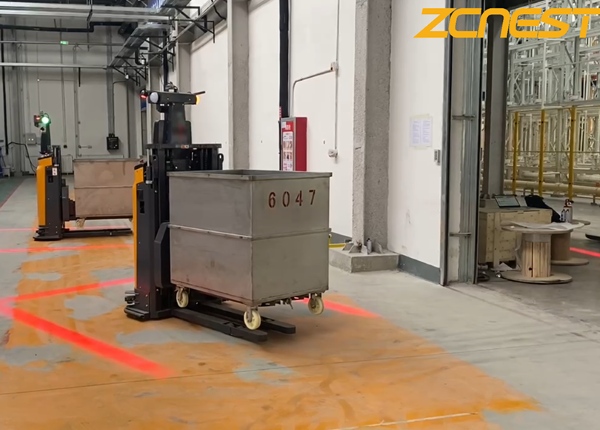
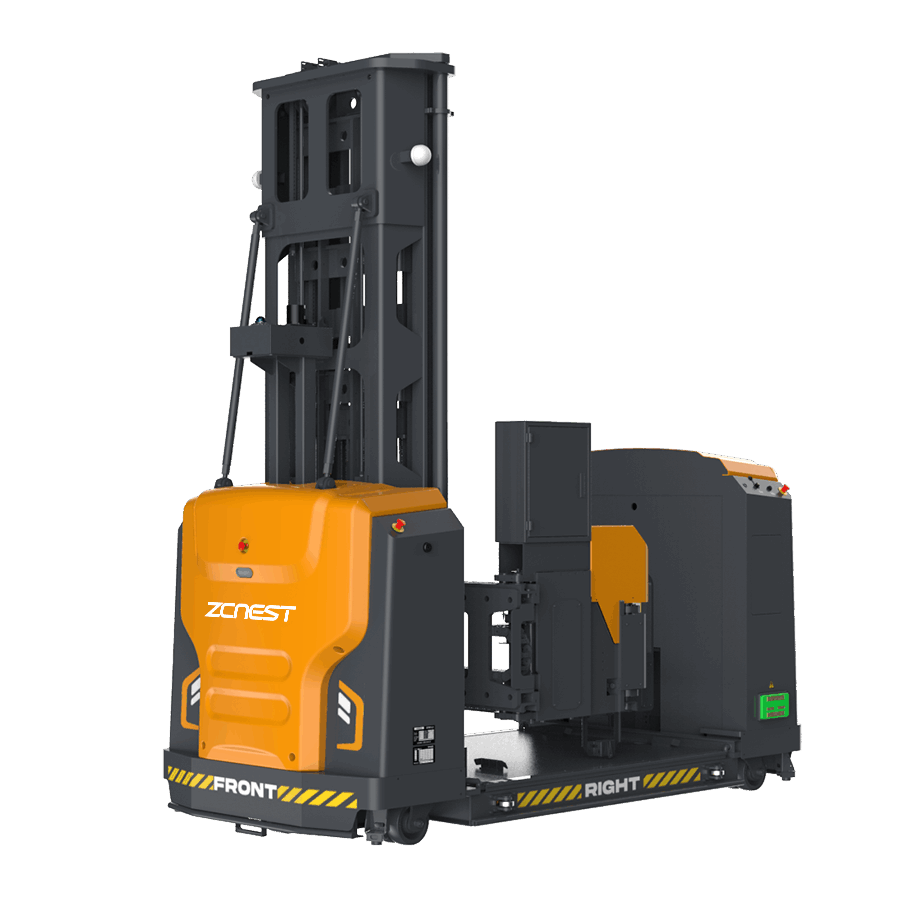
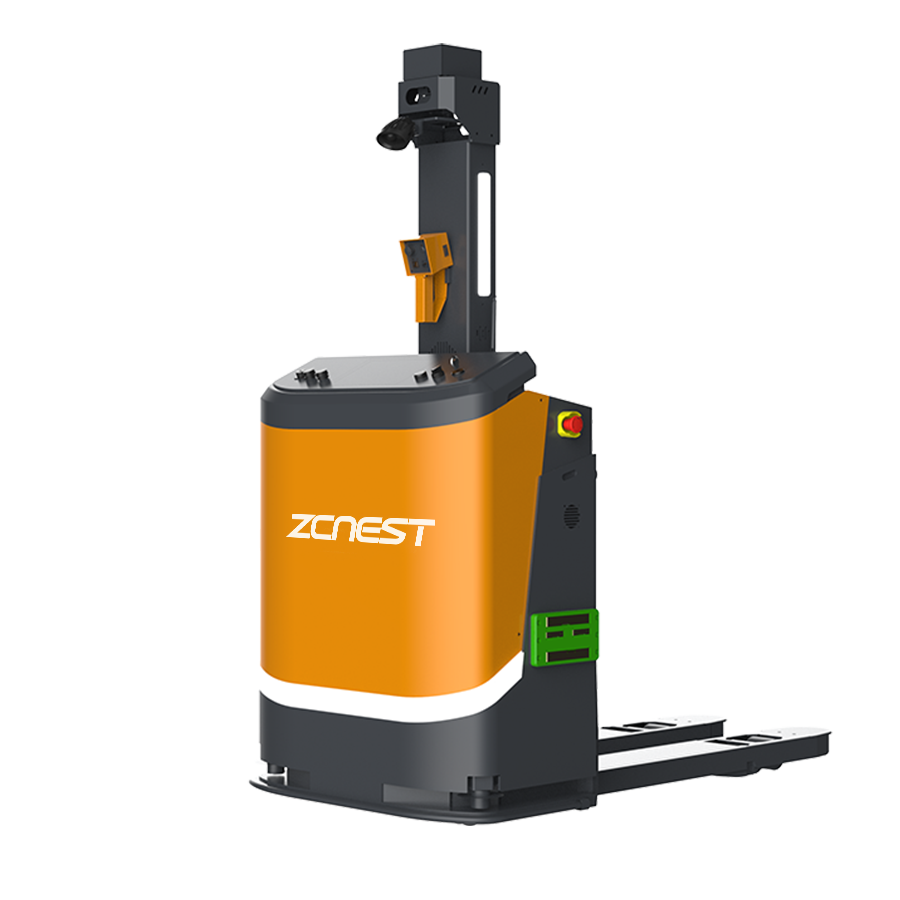
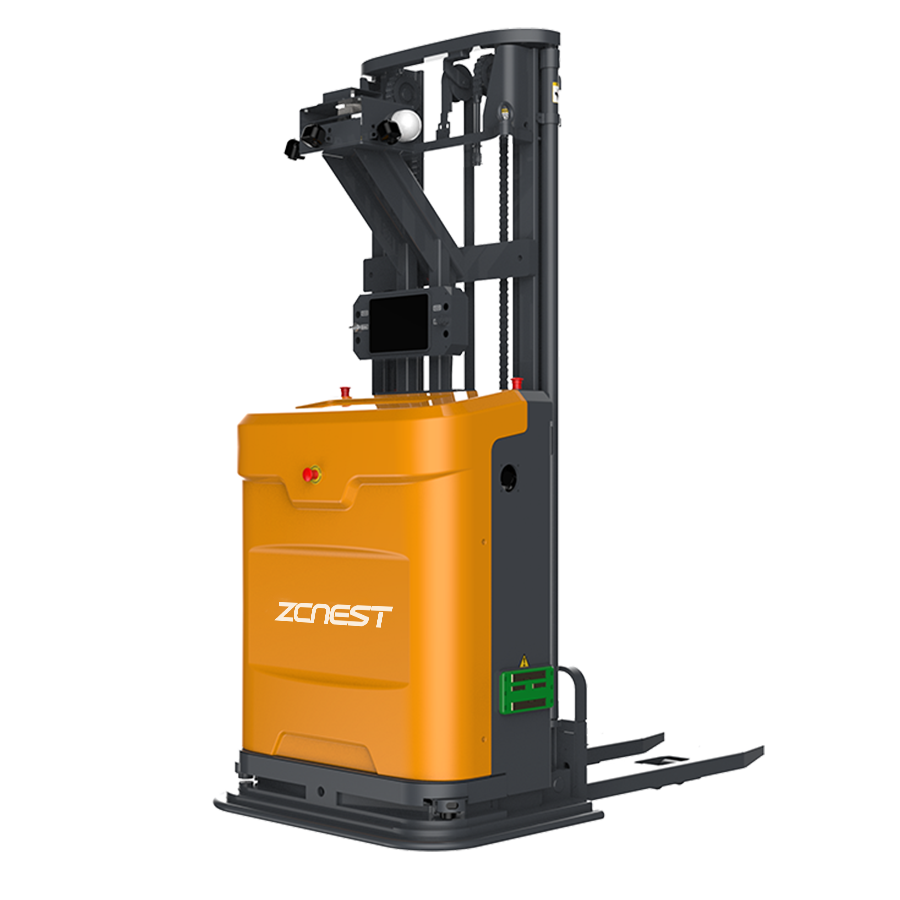
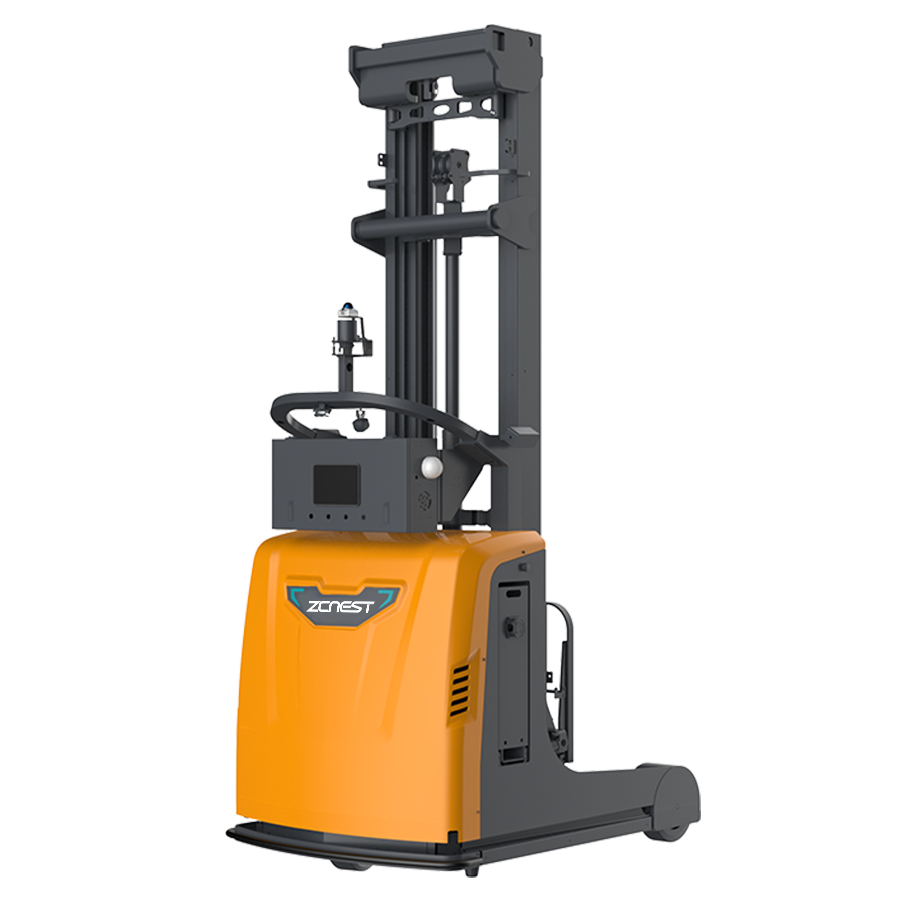
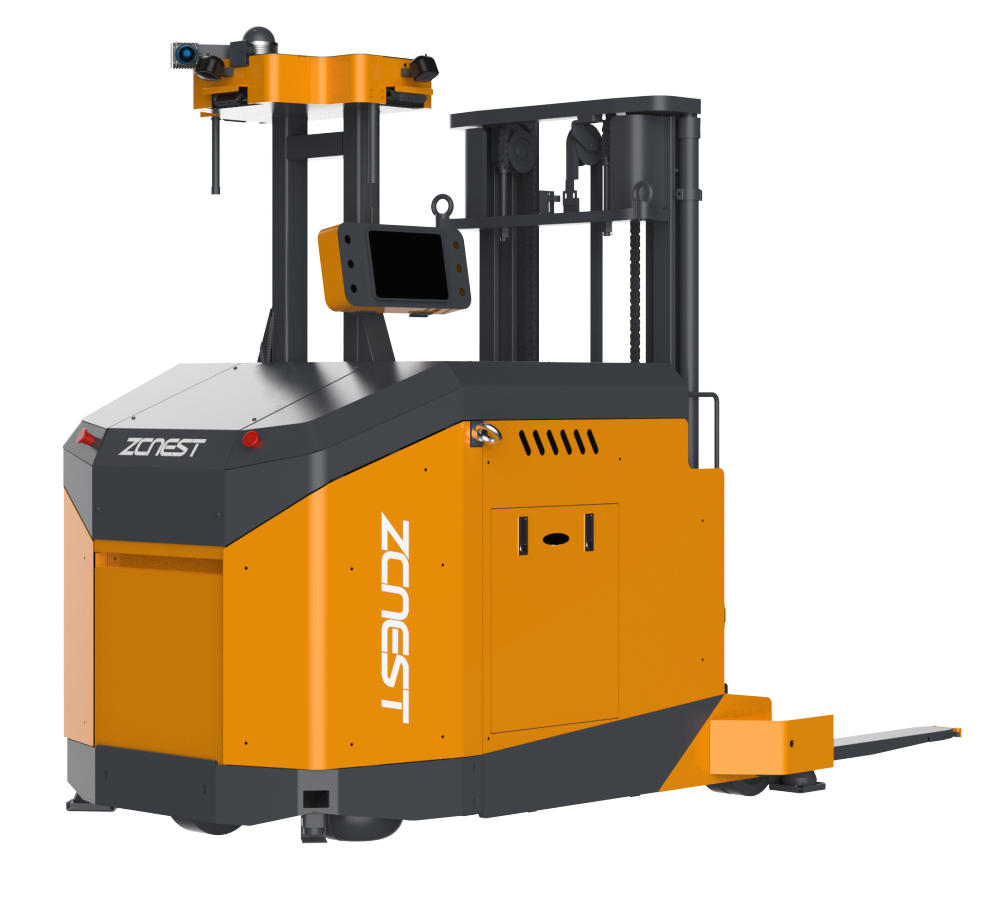
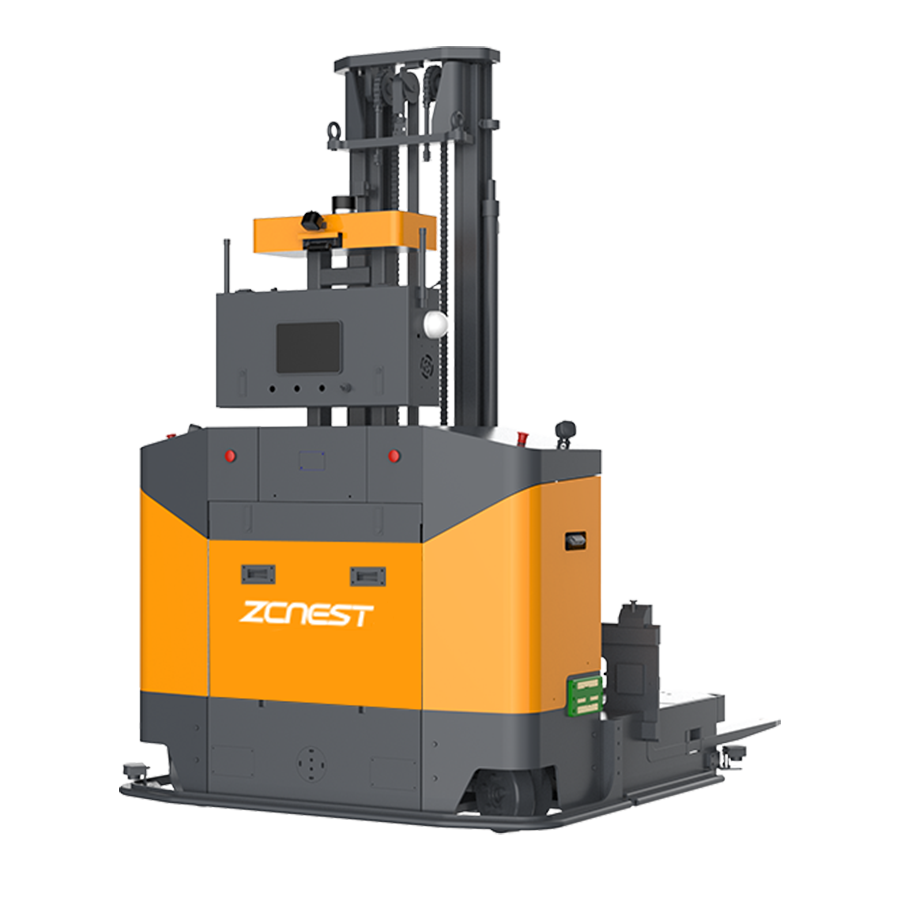
A typical high-lift or reach-truck AGV distributes 2 to 4 physical Emergency Stop buttons around its chassis (commonly left side, right side, rear housing, and the primary HMI panel). This placement ensures that a pedestrian can hit an E-stop from any approach angle without stepping directly into a high-risk travel path.
🔒 Non-Negotiable Engineering Principles:
Hardwired Circuitry: The E-stop must be tied directly to a dual-channel hardware safety relay—never processed solely via software or standard operating PLCs.
Immediate Motion Cutoff: Activating the switch must immediately cut power to the main motion drivers and engage mechanical brakes.
Manual Power Reset: The system must require an intentional, physical manual key turn or reset button cycle on the machine to clear the fault.
A common misconception is that an AGV should lock up its wheels instantly when an emergency occurs. At full speed and carrying heavy payloads, instant lock-up braking creates massive safety risks.
Slamming the brakes triggers structural mast oscillation, cargo shifting, and potential tipping levers, especially at higher lift elevations. Instead, sophisticated AGVs employ **Load-Aware Controlled Deceleration Curves**:
📉 Light Load / Low Elevation The safety system applies aggressive braking profiles, achieving shorter stopping distances with zero tipping risk.
⚠️ Max Payload / High Elevation The system smoothly modulates jerk limitations and deceleration curves—resulting in a longer, but significantly safer, controlled stop.
In marketing brochures, "360-degree protection" is frequently used to describe any system with multiple sensors. When auditing a supplier for foot-injury prevention logic, your integration team must verify the actual hardware configuration:
Dual Scanner Layouts: Utilizing two diagonal scanners can leave blind spots along the lateral sides of the vehicle during zero-radius pivots or complex turning sequences.
True 360° Redundancy: Combines overlapping multi-planar hardware safety scanners with side-mounted proximity or ultrasonic arrays, ensuring constant human leg detection at all times.
What about Wi-Fi dropouts? Wi-Fi is treated strictly as a fleet dispatch and communication layer—not a functional safety channel. If connection is lost, onboard local sensors maintain full autonomy, bringing the vehicle to a controlled stop only after a predefined heartbeat timeout threshold expires.
Industrial safety is defined by predictability under failure conditions. A mature AGV platform must perform controlled decelerations under full loads, safely manage wireless communication drops without blocking traffic, protect pedestrians in all travel vectors, and feature a robust, dual-channel hardwired safety backbone.
Ensure your next automated deployment effortlessly clears internal EHS audits and regulatory reviews. Share your operational profiles with our senior safety compliance engineers, and we will compile a certified risk-and-performance report mapped to your layout requirements.
Submit your vehicle configuration and site metrics below:
Target Payload Weights (kg) & Maximum Planned Travel Speeds (m/s)
Maximum Stacking/Lifting Elevations and Multi-Level Racking Layouts (m)
Facility Floor Characteristics (e.g., Concrete Friction Coefficients, Known Slopes/Grades)
Required Safety Standards Framework (e.g., ANSI/ITSDF B56.5, CE ISO 3691-4 Compliance)
📖 AGV Forklift Guide — Essential manual for selection and safety.
⚙️ How AGV Systems Work — A deep dive into navigation and logic.
⚖️ AGV vs. AMR Comparison — Choosing the right technology for your facility.
💰 AGV Cost and ROI — Evaluating investment and payback periods.
FREE ENGINEERING SUPPORT Stop Gambling on Generic Platforms. Get an AGV/AMR Tailored to Your Warehouse.Buying automated guided vehicles involves complex safety standards (CE/ANSI), navigation setups (Laser SLAM), and ERP system integration. Don't risk your factory safety with middle-men. ✓ 100% Direct Factory: Customized payload up to 5 Tons. ✓ Free CAD Simulation: Send us your layout, and our engineers will simulate the optimal AGV routes. ✓ Global Support: Overseas installation guidance & local maintenance partners. |





 Chinese
 English