

Behind every technical evaluation of imported Automated Guided Vehicles (AGVs), enterprise buyers harbor a deeper operational anxiety: "Will my facility be permanently dependent on overseas engineers for every minor layout change?"
Modern mobile robotics combine onboard SLAM software with secure remote access layers (VPN/Secure Gateways). However, the boundary between user autonomy and vendor-restricted access varies wildly between suppliers. To safeguard your investment, you must map out software ownership before deployment.
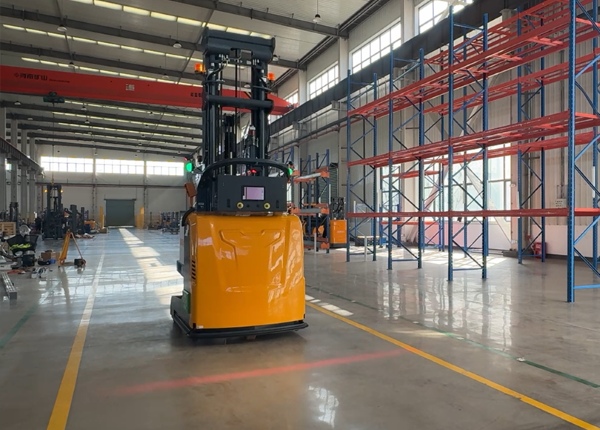
In mid-to-high-end fleet management platforms, the answer is a definitive **yes**. Warehouse operators do not need factory-level engineering code to implement daily traffic modifications. Through graphical drag-and-drop interfaces, local teams can modify:
🚧 Traffic Constraints Draw polygon no-go zones, temporary blocked corridors, and one-way aisles.
⚡ Operational Nodes Designate speed limit segments, pallet staging buffers, and charging thresholds.
These layers are controlled locally via on-premise servers or web dashboards. However, core SLAM localization parameters, sensor fusion algorithms, and raw kinematic calibrations remain heavily locked behind manufacturer passwords to prevent systemic navigation collapse.
When an AGV suffers a physical collision, returning it to service depends on the impact severity. Software toolsets provided by suppliers generally categorize recovery workflows into three distinct tiers:
🛠️ The Collision Recovery Hierarchy:
Minor Impact (Bumper/Light Contact): Managed completely in-house. Requires basic encoder resets and built-in sensor self-checks via the fleet calibration wizard.
Moderate Impact (Sensor Displacement): Semi-autonomous. Requires localized LiDAR re-indexing and IMU calibration modules, often guided via a remote specialist.
Severe Impact (Structural Frame Shift): Full vendor dependency. Demands complete SLAM remapping, geometric re-alignment, and factory parameter resets.
Many marketing brochures heavily emphasize "Digital Twin Capabilities." Enterprise buyers must look past the buzzwords to understand what is actually delivered.
A true aerospace-level digital twin involves predictive physics modeling and real-time stress tracking. What mature AGV suppliers actually provide is a highly functional 2D/3D Fleet Visualization & Simulation Layer. This tool is invaluable because it allows your team to upload a new layout CAD file and test traffic flow, validate bottleneck routing, and insert virtual obstacles **before single hardware asset moves on the floor**.
To achieve a "zero single-point-of-dependency" operational model, responsibilities must be divided logically between your internal automation staff and the supplier's remote support team:
| Operated Completely In-House | Requires Supplier Engineering Access |
|---|---|
|
|
The Hidden Renovation Cost: When executing facility extensions or rack reconfigurations, the primary expense isn't the re-mapping software script—it's the facility downtime and safety revalidation. Standardizing your version control via the management dashboard minimizes these overheads significantly.
A successful mobile robotics deployment guarantees software sovereignty. High-performing ecosystems empower your internal maintenance teams with user-facing calibration wizards, open APIs, and independent layout editing, leaving remote manufacturer connections reserved strictly for lifecycle firmware upgrades and complex structural failures.
Ensure long-term operational resilience and full control over your layout modifications. Share your targeted fleet goals with our industrial software architects, and we will build a clear engineering access roadmap to protect your facility from vendor lock-in.
Submit your warehouse layout parameters for a technical review:
Planned Fleet Scale (Number of Units) & Navigation Protocol (e.g., Natural SLAM, Reflector)
Estimated Facility Layout Reconfiguration Frequency (e.g., Seasonal Changes, Frequent Rack Adjustments)
Internal IT & Cybersecurity Constraints (e.g., On-Premise Only, Strict Remote VPN/Inbound Approvals)
Preferred Internal Maintenance Capability Tier (Basic Operators vs. On-Site Automation Engineers)
📖 AGV Forklift Guide — Essential manual for selection and safety.
⚙️ How AGV Systems Work — A deep dive into navigation and logic.
⚖️ AGV vs. AMR Comparison — Choosing the right technology for your facility.
💰 AGV Cost and ROI — Evaluating investment and payback periods.
FREE ENGINEERING SUPPORT Stop Gambling on Generic Platforms. Get an AGV/AMR Tailored to Your Warehouse.Buying automated guided vehicles involves complex safety standards (CE/ANSI), navigation setups (Laser SLAM), and ERP system integration. Don't risk your factory safety with middle-men. ✓ 100% Direct Factory: Customized payload up to 5 Tons. ✓ Free CAD Simulation: Send us your layout, and our engineers will simulate the optimal AGV routes. ✓ Global Support: Overseas installation guidance & local maintenance partners. |





 Chinese
 English