


When evaluating modern mobile robotics, the bottleneck is rarely the physical chassis. The real operational risk lies in the software orchestration layer. Almost every AGV supplier answers "Yes" when asked if they have an API—but the critical metric is the architecture's stability, documentation depth, and maintainability.
The Robot Control System (RCS) acts as the traffic brain connecting AGVs to enterprise layers. Without an open, well-documented integration stack, your automation project risks becoming an expensive, vendor-locked black box dependent on overseas engineering support for every minor workflow adjustment.
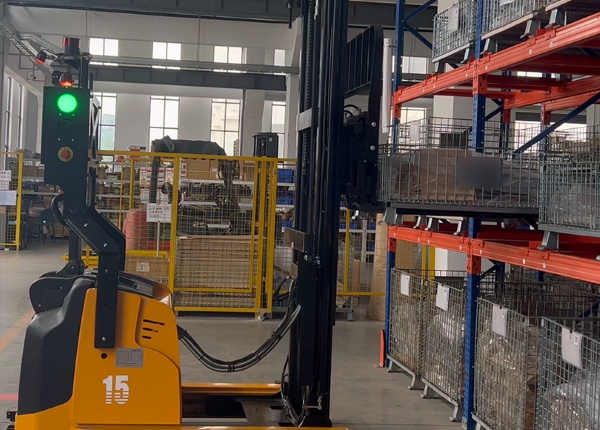
In an enterprise-grade automated facility, the material handling hardware represents only 30% to 40% of the project complexity. The remaining weight rests on the data orchestration flow mapped below
The RCS translates high-level enterprise material requests into millisecond-level path reservations, dynamic queue priorities, and localized collision avoidance maneuvers.
Before signing a procurement agreement, your internal IT department must audit the developer manuals. Commercial documentation typically falls into three distinct capability tiers:
| Supplier Tier | Integration & Maintenance Impact |
|---|---|
| Tier 1: Global Open Architecture | Provides native English Swagger/OpenAPI interactive sandboxes, clear JSON payload examples, detailed webhook event callback registries, and unredacted error logs. Allows full local IT self-sufficiency. |
| Tier 2: Engineering-Only English | Partially translated documents, fragmented legacy API versions, and sparse endpoint examples. Deployments rely heavily on instant-messaging groups (e.g., WeChat) and live remote debugging sessions over varying time zones. |
| Tier 3: Locked Middleware | Core dispatch parameters are hidden behind proprietary localized middleware. Code documentation is origin-language only, cementing a permanent long-term operational dependency on the supplier. |
A mature RCS avoids relying on a single data exchange protocol. High-throughput warehouse environments require a split-layer hybrid infrastructure:
🔗 RESTful APIs (Stateless) Optimized for high-level transactional tasks: inbound/outbound mission creation, inventory location mapping updates, and batch order synchronization from SAP or Oracle WMS.
⚡ WebSockets / MQTT (Stateful) Utilized for millisecond real-time event loops: continuous X/Y/Z coordinate telemetry reporting, dynamic multi-vehicle congestion management, battery status heartbeat streams, and immediate fault propagation.
This hybrid configuration ensures that business logic remains clean and easy to scale, while heavy operational telemetry doesn't choke your central enterprise system networks.
Low-cost fleet managers often operate on a rigid First-In, First-Out (FIFO) stack. True enterprise deployments require a platform capable of parsing dynamic weighted logic points mapped straight from your MES or ERP system, such as:
Dynamic Interruption: Rerouting an in-transit AGV to handle a critical production-line bottleneck or inbound shipping emergency.
Weighted Scheduling: Rebalancing fleet distribution rules based on aisle traffic load parameters to bypass local congestion zones.
Smart Opportunity Charging: Delaying automatic charge routines until low-priority windows occur, preserving high-availability vehicle matrices during peak shipping hours.
The durability of your mobile automation investment boils down to integration transparency. By securing robust, version-controlled English documentation frameworks, ensuring hybrid REST/WebSocket capability, and validating ERP-level task orchestration prior to factory acceptance testing (FAT), you insulate your facility from single-engineer dependency risks.
Don't wait until commissioning to discover software mismatches. Share your existing IT landscape metrics with our system integration engineers, and we will map out an open, robust, and completely self-managed deployment blueprint for your facility.
Submit your current operational ecosystem for technical review:
Target Enterprise Software Stacks (e.g., SAP EWM, Oracle WMS, Proprietary Local MES)
Required Latency Metrics & Telemetry Update Heartbeats (e.g., Sub-second WebSocket Streams)
On-Premise Server Requirements vs. Authorized Outbound Gateway Firewall Frameworks
Expected Scale-Up Curve (e.g., Small 5-unit Pilot vs. Multi-Zone 100+ Asset Automated Matrix)
📖 AGV Forklift Guide — Essential manual for selection and safety.
⚙️ How AGV Systems Work — A deep dive into navigation and logic.
⚖️ AGV vs. AMR Comparison — Choosing the right technology for your facility.
💰 AGV Cost and ROI — Evaluating investment and payback periods.
FREE ENGINEERING SUPPORT Stop Gambling on Generic Platforms. Get an AGV/AMR Tailored to Your Warehouse.Buying automated guided vehicles involves complex safety standards (CE/ANSI), navigation setups (Laser SLAM), and ERP system integration. Don't risk your factory safety with middle-men. ✓ 100% Direct Factory: Customized payload up to 5 Tons. ✓ Free CAD Simulation: Send us your layout, and our engineers will simulate the optimal AGV routes. ✓ Global Support: Overseas installation guidance & local maintenance partners. |





 Chinese
 English