


Field Engineering Directive
In rugged industrial environments, automated guided vehicles (AGVs) never operate in isolation. They must fluidly communicate with localized building infrastructure—elevators, high-speed roll-up doors, and fire suppression systems.
Crucially, this orchestration relies entirely on deterministic, low-latency edge PLC logic and local wireless handshaking—not cloud-only triggers. Cloud architecture introduces packet loss, latency spikes, and severe safety compliance violations during critical millisecond real-time motion control loops.
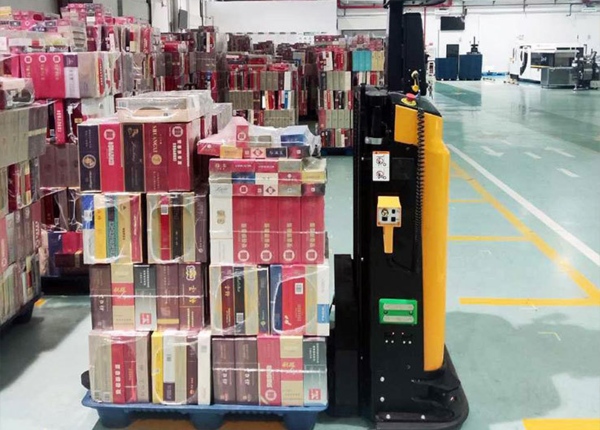
When an AGV approaches a facility bottleneck, it executes a hardwired or local industrial network handshake (via Profinet, EtherNet/IP, Modbus, or OPC UA). The operational exchange follows a strict, deterministic command loop:
01 / REQUEST
AGV Fleet Manager transmits intent: "Approaching High-Speed Door 04. Requesting physical entry clearance."
02 / INTERLOCK
Building PLC interrogates sensors: Curtains raised, clear of manual forklifts, limits confirmed. PLC locks out opposing traffic.
03 / EXECUTE
Confirmation signal dispatched: AGV safely crosses the threshold. If communication drops for even a fraction of a second, the vehicle instantly triggers a fail-safe localized emergency stop.
Standard passenger or freight elevators are fundamentally incapable of communicating with mobile robots out of the box. Converting vertical infrastructure into an AGV-ready asset requires dedicated hardware middleware integrations:
• Elevator Control Interface Gateway: A proprietary or open industrial gateway module designed to allow the AGV RCS to systematically place floor calls, override door closing times, and continuously monitor car positioning.
• Redundant Positioning Aids: Localized 2D barcodes, reflector tags, or high-accuracy laser measurement sensors installed at the elevator entry threshold to ensure the robot docks with sub-millimeter precision, avoiding tire trapping or step-height collisions.
• Global Protocol Mismatches: In retrofit installations, imported AGV architectures frequently encounter localized legacy elevator protocols. Early engineering audits are non-negotiable to prevent building code violations.
During a critical building emergency, the structural fire safety system represents the absolute highest authority. AGVs must integrate with fire alarm panels—they never override them.
Upon intercepting a fire loop alarm, the AGV Robot Control System must immediately execute localized evacuation scripts: clearing active fire lanes, driving out of active elevator shafts, parking away from emergency fire doors, and shutting down traction motors to ensure manual evacuation pathways remain completely unobstructed.
The number one cause of commissioning delays and unexpected cost overruns in international mobile robotics projects is ambiguous electrical and structural ownership. Experienced operators establish precise contractual boundaries prior to signing purchase orders:
🤖 AGV Supplier Scope Delivery of software control logic, field-bus communication mapping, I/O pinout requirements, edge gateway software integration, and validation of interlock parameters.
⚡ Local Electrical Contractor Scope Physical execution of field wiring, structural conduit installation, high-voltage power distribution drops, and strict enforcement of regional and national electrical safety codes.
🏢 Facility Owner Scope Coordinating structural modifications, managing on-site accessibility with third-party elevator and door OEMs, and processing local municipal building and safety permits.
A highly successful AGV deployment is far more than a set of advanced navigation robots moving assets across a floor. It is a highly synchronized, validated building automation ecosystem. Projects thrive long-term when local contractors and robotics integration engineers establish clear physical and electrical data boundaries early in the layout phase.
Evaluating your current elevator profiles, high-speed door models, multi-floor sequencing parameters, and safety interlock architectures ensures absolute hardware alignment. Mapping these communication layers early insulates your facility from structural bottlenecks and guarantees an uncompromised, self-reliant operation.
📖 AGV Forklift Guide — Essential manual for selection and safety.
⚙️ How AGV Systems Work — A deep dive into navigation and logic.
⚖️ AGV vs. AMR Comparison — Choosing the right technology for your facility.
💰 AGV Cost and ROI — Evaluating investment and payback periods.
FREE ENGINEERING SUPPORT Stop Gambling on Generic Platforms. Get an AGV/AMR Tailored to Your Warehouse.Buying automated guided vehicles involves complex safety standards (CE/ANSI), navigation setups (Laser SLAM), and ERP system integration. Don't risk your factory safety with middle-men. ✓ 100% Direct Factory: Customized payload up to 5 Tons. ✓ Free CAD Simulation: Send us your layout, and our engineers will simulate the optimal AGV routes. ✓ Global Support: Overseas installation guidance & local maintenance partners. |





 Chinese
 English