


Automated Guided Vehicles (AGVs) frequently deliver flawless execution during controlled factory demonstrations, clean pilot tests, and showroom inspections. However, when deployed into live, heavy-industrial fulfillment environments, they confront a chaotic Radio Frequency (RF) landscape defined by multi-path interference, dynamic metal-rack shielding, and severe signal shadowing from changing inventory volumes. The defining performance metric is not wireless compatibility—it is autonomous degradation resilience.
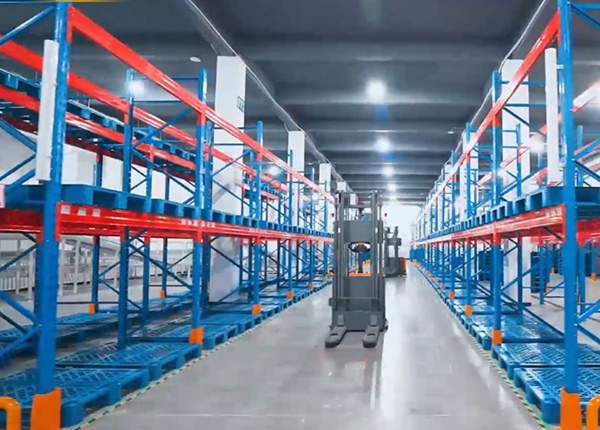
Enterprise-grade mobile robotics systems operate on a layered architectural hierarchy designed to ensure that communication failures do not translate into kinetic risk. Safety decisions, localization updates, and trajectory calculations remain strictly localized to the physical robot's edge controller.
Instantly locking brakes the millisecond a single wireless packet drops introduces severe operational friction—it triggers immediate aisle blockages, causes pallet instability, and creates traffic deadlocks. Mature systems execute an engineered sequence of operational degradations based on timeout severity:
Transient Disconnection [ < 2,000ms ]
Buffered Mission Execution The vehicle draws down its pre-loaded onboard mission buffer. It continues down its current localized path segment while executing background network re-connection retries silently, without degrading operating velocity.
Medium Outage [ 2s - 10s ]
Controlled Safe Continuity The AGV finishes its immediate, single-point drop-off or pick-up assignment to clear payload risk, moves smoothly out of complex active intersections using local proximity tokens, and transitions into a controlled standby park mode until the network state updates.
Extended Outage [ > 10s ]
Degraded Safe Standby The vehicle halts motion completely, engages its electro-mechanical brakes, activates local warning indicators (beacons/buzzers), and presents an offline status flag to local safety operators.
Because dynamic warehouse inventory—like stacked pallets or heavy metallic structural columns—creates shifting wireless dead zones, high-tier AGV deployments utilize multi-layered infrastructure shielding strategies:
🗺️ Coverage-Aware Routing Matrix
The central fleet manager can actively reroute mission paths away from known low-signal corridors during high-density fleet maneuvers, spreading out congestion across areas with verified RF saturation.
📡 Industrial Fast Roaming Optimization
Onboard client bridges utilize Layer-2 hardware pre-authentication protocols (802.11r/k/v). This compresses Access Point (AP) handoff latencies down to under 100 milliseconds, dropping the handoff window to a speed that leaves TCP socket sessions completely uncompromised.
Determining whether a facility requires a Private Cellular 5G deployment or standard industrial-grade Wi-Fi is an exercise in resource optimization. Many system integration issues commonly blamed on "flawed wireless coverage" are fundamentally failures in onboard local logic or poor AP cell configuration.
Scenario Alpha When Engineered Industrial Wi-Fi Suffices For fleets under 50 vehicles executing standard, discrete warehouse handling movements within a single contiguous building shell. By executing precise RF site heatmaps, employing directional antennas, and isolating AGV data on a dedicated VLAN with aggressive Quality of Service (QoS) priorities, Wi-Fi provides industrial-grade uptime with exceptionally low maintenance overheads.
Scenario Beta When Private 5G Becomes Mission-Critical When fleet scales surpass 150+ highly mobile units operating simultaneously across massive, multi-building industrial complexes, outdoor integration corridors, or high-bay heavy manufacturing environments. Private 5G completely eliminates standard roaming dropouts via cellular handovers, isolates your operational assets from enterprise network interference, and scales to support massive connectivity loads without packet degradation.
To secure true operational resilience, enterprise procurement teams must mandate rigorous failure-mode validation protocols prior to deployment sign-off. Before final contract execution, require your robotics partner to conduct systematic, physical site simulations: intentionally killing power to regional access points during high-velocity moves, injecting synthetic 10% packet drop rates across narrow-aisle choke points, and stress-testing multi-car intersections under maximum network latency constraints. Forcing the system to cleanly degrade rather than fail abruptly is the single best validation of an industrial-grade deployment.
📖 AGV Forklift Guide — Essential manual for selection and safety.
⚙️ How AGV Systems Work — A deep dive into navigation and logic.
⚖️ AGV vs. AMR Comparison — Choosing the right technology for your facility.
💰 AGV Cost and ROI — Evaluating investment and payback periods.
FREE ENGINEERING SUPPORT Stop Gambling on Generic Platforms. Get an AGV/AMR Tailored to Your Warehouse.Buying automated guided vehicles involves complex safety standards (CE/ANSI), navigation setups (Laser SLAM), and ERP system integration. Don't risk your factory safety with middle-men. ✓ 100% Direct Factory: Customized payload up to 5 Tons. ✓ Free CAD Simulation: Send us your layout, and our engineers will simulate the optimal AGV routes. ✓ Global Support: Overseas installation guidance & local maintenance partners. |





 Chinese
 English