


Implementing Augmented Reality (AR) remote maintenance for international AGV fleets represents a major shift away from costly, slow cross-border engineer travel. However, treating AR support as a comprehensive backup solution introduces severe risks of long-term operational lock-in. True lifecycle resilience requires a structured deployment strategy that transforms remote AR interaction from an emergency lifeline into a targeted tool for building on-site technical self-sufficiency.
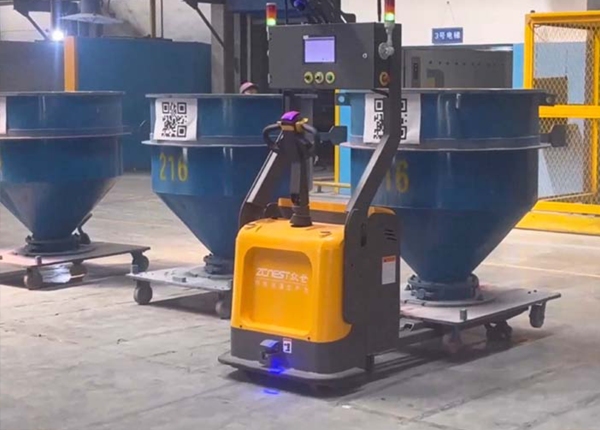
To prevent local maintenance teams from immediately offloading standard issues to overseas engineers, facilities must establish a strict, layered remediation protocol. AR collaboration should only be initiated when local diagnostics hit clear technical limits.
[Cross-Border Maintenance Escalation Flow]
+-----------------------------------------------------------+ | LEVEL 1: LOCAL EDGE TRIAGE (Target MTTR: < 15 Mins) | | - Local technicians read clear-text error logs on HMI | | - Execute physical reboots & mechanical obstructions check| +-----------------------------------------------------------+ │ ▼ [Fault Unresolved: Requires Advanced Diagnostics] +-----------------------------------------------------------+ | LEVEL 2: ACTIVE RECTOR CO-PILOT (Target MTTR: < 45 Mins) | | - Local team launches mobile AR streaming interface | | - Overseas engineer overlays wiring & LiDAR alignment code| +-----------------------------------------------------------+ │ ▼ [Systemic Defect: Proprietary Access Needed] +-----------------------------------------------------------+ | LEVEL 3: DEEP CORE ENGINEERING (Target MTTR: Variable) | | - Secure VPN remote login by vendor core team | | - Direct firmware patching & structural safety overrides | +-----------------------------------------------------------+
Choosing the right user interface directly determines how easily local maintenance teams adopt the technology and how effectively they communicate during critical downtime events.
Deployment Baseline The Mobile Handset / Tablet Approach Mobile devices represent the most robust approach for over 85% of active warehouse incidents. Utilizing enterprise-managed smartphones or ruggedized tablets minimizes initial capital expenditure, completely bypasses specialized training, and eliminates the risk of devices sitting uncharged in storage during a critical line-down event.
Specialized Execution Industrial Wearable Smart Glasses Wearable headsets are justified only for complex, multi-hour structural overhauls, high-density electrical panel rewiring, or tight, hazardous environments where a technician must have both hands free to handle tools safely. Integrating smart glasses requires a committed training structure to counter lower day-to-day user acceptance.
A beautifully designed AR annotation platform is useless if communication breaks down during a high-stress outage. True localization requires deeper technical alignment beyond basic software translation.
📋 Beyond the Translated User Interface
While export vendors often feature English application menus, their underlying low-level PLC register definitions, raw system error codes, and advanced laser-sensor calibration interfaces frequently remain untranslated. Operations managers must ensure that advanced diagnostic error trees are natively clear and accessible to local technicians without requiring external translation.
🤝 Establishing Communication Guardrails
Procurement specifications must mandate that remote AR support packages guarantee access to designated, English-proficient systems engineers during active operational hours—fully matching your facility's specific shift patterns, rather than relying on generic on-call queues.
To protect your facility from high recurring subscription overheads and a total lack of internal autonomy, your technical team should audit the system's operational independence profile using these clear criteria:
🔓 Software Tool Accessibility Can local maintenance technicians independently execute standard LiDAR SLAM mapping updates, adjust localized point-to-point speed parameters, and recalibrate basic safety sensor zones? Or are these baseline operational adjustments locked behind proprietary vendor software accounts that require active remote intervention? 🛠️ Unscripted System Stress Tests Prior to final system acceptance, require your supplier to guide a local technician through an unscripted hardware failure simulation using only the provided AR support platform. This live test will quickly reveal any underlying communication friction, documentation gaps, or hidden dependencies before the system goes live.
AR-assisted tele-engineering is an excellent tool for resolving rare, highly complex system anomalies and managing unexpected edge cases. However, it should never be treated as a shortcut to skip thorough technical training for your on-site team. Long-term profitability and true operational uptime ultimately depend on building an independent, highly capable local maintenance team supported by clear documentation and a robust on-site spare parts strategy.
📖 AGV Forklift Guide — Essential manual for selection and safety.
⚙️ How AGV Systems Work — A deep dive into navigation and logic.
⚖️ AGV vs. AMR Comparison — Choosing the right technology for your facility.
💰 AGV Cost and ROI — Evaluating investment and payback periods.
FREE ENGINEERING SUPPORT Stop Gambling on Generic Platforms. Get an AGV/AMR Tailored to Your Warehouse.Buying automated guided vehicles involves complex safety standards (CE/ANSI), navigation setups (Laser SLAM), and ERP system integration. Don't risk your factory safety with middle-men. ✓ 100% Direct Factory: Customized payload up to 5 Tons. ✓ Free CAD Simulation: Send us your layout, and our engineers will simulate the optimal AGV routes. ✓ Global Support: Overseas installation guidance & local maintenance partners. |





 Chinese
 English