


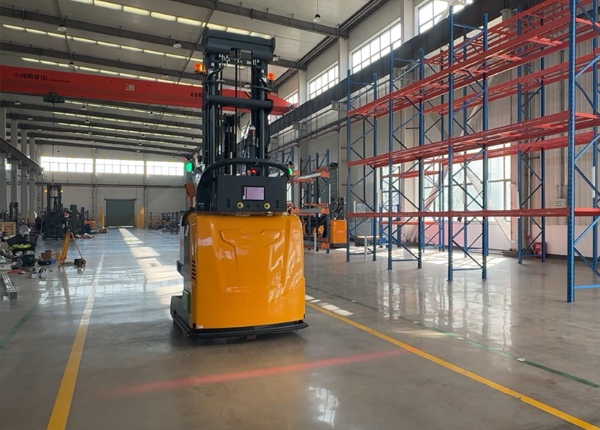
A frequent concern for automation managers is whether code updates cease the moment a Chinese supplier stops manufacturing a specific AGV chassis model.
The Industry Standard Standard Policy
Critical security patches and major bug fixes usually continue even after a physical hardware model is discontinued. Because software platforms are highly modular, suppliers generally maintain the core control code across multiple hardware generations. However, optimization updates or new feature rollouts will rarely be backported to EOL hardware models.
The Robot Control System (RCS) acts as the central fleet brain. Securing a contractually backed operational lifespan for this software layer is mandatory during technical procurement rounds.
Standard Support Windows: Most premium suppliers offer a guaranteed software lifecycle support window of 5 to 8 years from the initial deployment date.
What is Included: This guarantee ensures access to critical navigation debugging, map optimization support, and API connection patches for your existing Warehouse Management System (WMS).
💡 B2B Contract Tip: Always secure a software lifecycle clause in your SLA stating: "Supplier guarantees technical availability and bug remediation for RCS Version [X] for a minimum of 7 years post-commissioning, regardless of hardware fleet iterations."
Can the underlying vehicle software or operating system be modernized without purchasing entirely new physical mobile units? This depends on how the architecture is split.
Firmware & OS Upgrades
Minor software iterations and onboard firmware updates can be pushed remotely over-the-air (OTA) or via local physical connections. This optimizes navigation algorithms without touching the chassis structure.
Hardware Bottlenecks
Major industrial OS overhauls may require greater processing capabilities. If the on-board industrial PC (IPC) lacks processing cores or memory, upgrading the OS will require an internal IPC hardware swap.
Once automated material handling systems pass the 5-year operational milestone, traditional warranties expire, shifting fleets into legacy support territory.
Does the supplier offer a "Legacy Support" contract for machines older than 5 years?
Yes, but it moves to a paid premium tier. After year 5, leading manufacturers offer extended lifecycle service options. These tailored contracts shift from emergency responses to preventive software audits, ensuring the legacy fleet communicates effectively with newer system infrastructure.
Industrial server environments evolve rapidly, creating potential friction between older fleet code and modernized operating system networks.
Is there a risk of the software becoming incompatible with newer Windows/Linux versions?
Yes, this is one of the highest mid-term architectural risks. Central RCS software platforms often run on Windows Server frameworks or designated Linux distros (such as Ubuntu LTS). If your internal IT department mandates a global push to a newer OS version for cybersecurity compliance, older RCS editions may suffer from database execution errors or broken dependencies.
To hedge against this, ensure your annual maintenance framework includes clear pathways for continuous version upgrades to keep pace with modern enterprise IT standards.
📖 AGV Forklift Guide — Essential manual for selection and safety.
⚙️ How AGV Systems Work — A deep dive into navigation and logic.
⚖️ AGV vs. AMR Comparison — Choosing the right technology for your facility.
💰 AGV Cost and ROI — Evaluating investment and payback periods.
FREE ENGINEERING SUPPORT Stop Gambling on Generic Platforms. Get an AGV/AMR Tailored to Your Warehouse.Buying automated guided vehicles involves complex safety standards (CE/ANSI), navigation setups (Laser SLAM), and ERP system integration. Don't risk your factory safety with middle-men. ✓ 100% Direct Factory: Customized payload up to 5 Tons. ✓ Free CAD Simulation: Send us your layout, and our engineers will simulate the optimal AGV routes. ✓ Global Support: Overseas installation guidance & local maintenance partners. |





 Chinese
 English