
 Chinese
 English

For most warehouse operators, the deepest anxiety during an automated guided vehicle (AGV) deployment is not whether the robots will work out of the box. It is whether the facility can continue shipping daily customer orders while the automation infrastructure is being integrated.
In high-volume logistics, downtime is a major cost driver. Extended deployment delays break customer trust, throw labor planning into chaos, and create bottleneck ripples throughout the entire supply chain.
That is why mature operations bypass high-risk "big-bang" system turn-ons in favor of structured, phased, non-stop rollout strategies. Successful automation delivery is as much an operational change-management project as it is a engineering installation.
1. The Roadmap for Continuous Operations
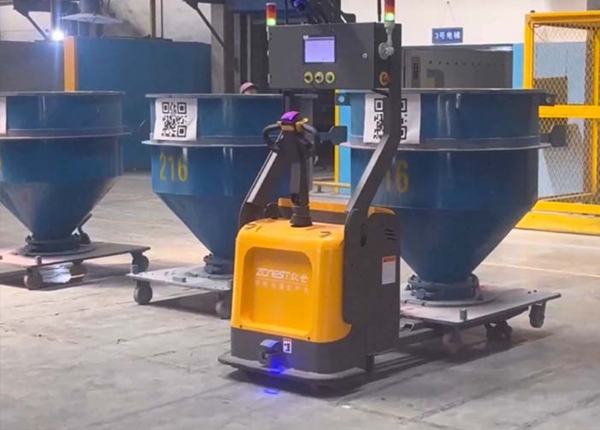
Rather than converting an entire layout overnight, an incremental rollout isolates risk by validating software stability, network coverage, and physical path clearance section by section. This allows manual forklift teams and autonomous systems to adapt to shared traffic workflows at a controlled pace.
Phase 1: Mapping & Infrastructure (Off-hours site capture, network audits)
↓
Phase 2: Controllable Pilot Zone (Isolated, low-complexity routes)
↓
Phase 3: Parallel Operation (Supervised human-robot coexistence)
↓
Phase 4: Scaled Automation (Live WMS integration & full fleet handover)
2. Live Mapping Without Traffic Disruption
Capturing the geometry of a live, high-traffic warehouse requires an engineering approach that avoids pausing active forklift drivers. Industrial AGV systems utilize advanced algorithms to clean up mapping data, distinguishing permanent infrastructure from temporary materials.
| Mapping Approach | Operational Execution | Impact on Daily Throughput |
|---|---|---|
| Off-Hours Mapping | Telemetry sweeps are scheduled during low-traffic night shifts, weekends, or scheduled maintenance windows. | Zero; eliminates layout path conflicts with manual floor crews. |
| Rolling-Zone Capture | The facility is divided into localized sectors, which are mapped sequentially while production moves elsewhere. | Minimal; temporarily shifts local storage activity to alternative aisles. |
| Dynamic Data Filtering | SLAM-based (Simultaneous Localization and Mapping) sensors capture data during live shifts, automatically filtering out moving objects. | Zero; software algorithms discard forklifts, pallets, and workers from the permanent master layout. |
📌 Warehouse Layout Reality: The primary challenge during layout mapping is rarely active forklift movement. Instead, it is managing highly dynamic storage configurations, such as seasonal floor-stacking zones, which alter localized navigation landmarks.
3. Mitigating Software Cut-Over and Integration Risks
The highest-risk milestone in any logistics automation project occurs when the fleet management software hooks directly into live Warehouse Management Systems (WMS) or Enterprise Resource Planning (ERP) platforms. A minor data field mismatch can stall a facility's entire operational flow.
Tactics Utilized by Experienced Integrators:
Shadow-Mode Execution: Running the AGV dispatch logic in the background to capture live production data streams without sending physical orders to the floor.
Controlled Operational Windows: Executing software handovers in incremental modules during low-velocity shipping windows.
Maintained Manual Fallbacks: Keeping manual forklift teams organized on fallback dispatch structures until automated system stability is proven over multiple consecutive shifts.
⚠️ Managing Early Human-Robot Interactions: The largest initial safety risk is rarely a mechanical equipment failure. It is the unpredictability of human behaviors during the adaptation window. Floor staff often intentionally test vehicle safety stops, walk inside blind zones, or ignore designated pedestrian boundaries.
4. Transitioning Safely into a Mixed Environment
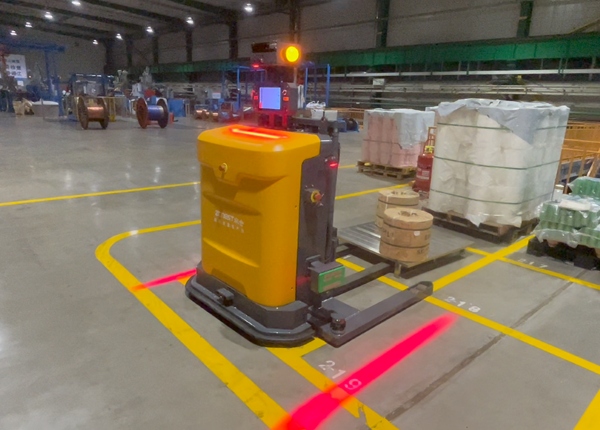
To safely bridge the gap when human workers and autonomous vehicles first share floor space, operators apply temporary protective measures. These include lowering vehicle travel velocities, creating clear physical walkways, and running supervised shifts until the facility adapts to the new traffic patterns.
True deployment readiness means the floor team understands the automated equipment’s behaviors, turning characteristics, and emergency stop protocols. This focus on behavioral change management is what secures long-term operational continuity.
Plan Your Operational Continuity Framework
A seamless, zero-downtime automation integration depends on how smoothly your facility manages operational transitions. Share your layout and operational parameters with our deployment engineering team to design a custom rollout roadmap:
Outline your current facility footprint:
💡Automation Insights & Guides
📖 AGV Forklift Guide — Essential manual for selection and safety.
⚙️ How AGV Systems Work — A deep dive into navigation and logic.
⚖️ AGV vs. AMR Comparison — Choosing the right technology for your facility.
💰 AGV Cost and ROI — Evaluating investment and payback periods.