

As global logistics shifts toward full automation, choosing the right AGV (Automated Guided Vehicle) forklift manufacturer has become a critical decision for operational efficiency. A high-quality manufacturer does not just provide a vehicle; they provide a complex integration of robotics, mechanical engineering, and software.
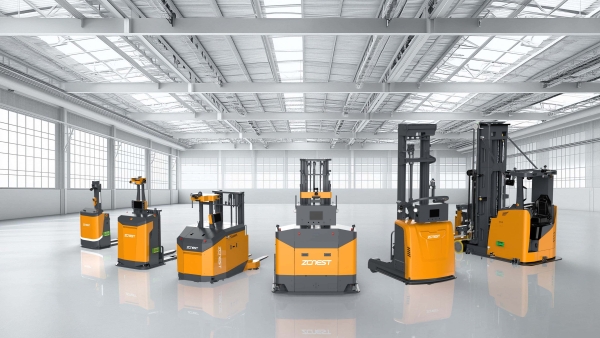
When vetting a manufacturer, the primary consideration is the maturity of their autonomous navigation algorithms. Leading manufacturers own their core software stack rather than just assembling third-party hardware.
SLAM vs. Reflector Navigation: Top-tier vendors (such as Linde or Hyster-Yale) offer hybrid navigation solutions, allowing forklifts to maintain precise positioning in highly dynamic environments without the need for physical reflectors.
Perception Redundancy: Check if the manufacturer utilizes multi-layer sensing, including 3D LIDAR and depth cameras, to recognize pallet pocket openings or overhead obstacles in real-time.
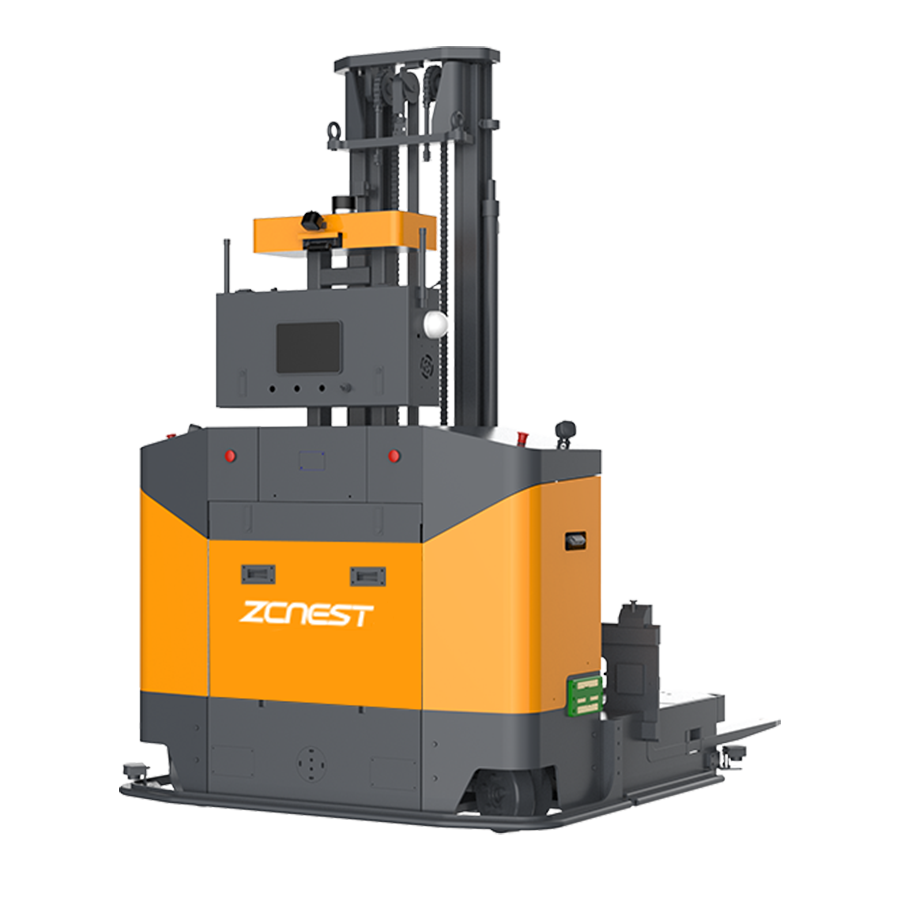
A superior AGV forklift manufacturer must have deep roots in mechanical engineering. An effective AGV forklift must first be a durable, high-performance forklift.
Chassis Stability: Leading manufacturers use reinforced steel chassis to ensure that during high-level lifting (e.g., above 6 meters), the mast does not sway, which could otherwise lead to positioning errors.
Hydraulic & Servo Control: Observe whether the manufacturer uses high-precision servo motors for fork control. This determines the "tolerance" of the vehicle when inserting forks into pallets under tight margins.
Component Standardization: Top manufacturers use standardized industrial parts, ensuring that if a sensor fails, the vehicle can still be operated manually and spare parts remain easily accessible.
An AGV forklift is not an island; its true value lies in digital synchronization. When evaluating a manufacturer, you must inspect the compatibility of their Fleet Management System (FMS).
Real-time Interfaces: Excellent manufacturers support direct integration with a facility’s WMS (Warehouse Management System) or MES via APIs, enabling a fully automated flow from order placement to pallet storage.
Traffic Management: Powerful algorithms coordinate dozens or even hundreds of forklifts in narrow aisles to prevent deadlocks and automatically assign the nearest vehicle based on task priority.
Dynamic Rerouting: If an aisle is blocked by debris, the software should instantly calculate an alternative route rather than simply triggering an error and stopping.
In environments where humans and machines mix, a manufacturer’s commitment to safety standards is a key brand differentiator.
360° Safety Envelopes: Qualified manufacturers deploy multi-level laser scanners that dynamically adjust sensing zones based on speed (slowing down for distant objects and emergency stopping for close ones).
Load Detection: Forklifts should be equipped with pressure sensors to prevent risks associated with overloading or pallet slippage.
Global Certifications: Confirm whether the manufacturer complies with international safety standards such as ISO 3691-4 or ANSI/ITSDF B56.5, which are essential for global supply chain integration.
The purchase of an AGV forklift is only the beginning. The manufacturer’s support capabilities determine your long-term Return on Investment (ROI).
On-site Mapping & Commissioning: Reliable vendors send engineers for weeks of on-site environment simulation to ensure vehicles adapt to specific floor friction and lighting conditions.
Remote Diagnostics: Check if the manufacturer offers cloud-based monitoring to predict battery degradation or motor wear through data analytics before a failure occurs.
Staff Training: Leading suppliers provide comprehensive training programs, empowering warehouse staff to perform simple system resets and basic maintenance, reducing dependency on the factory.





 Chinese
 English