


When an AGV stalls in a narrow aisle or on a production line, clearing the path quickly is critical to maintaining throughput.
Here is the standardized protocol for recovering a stalled AGV:
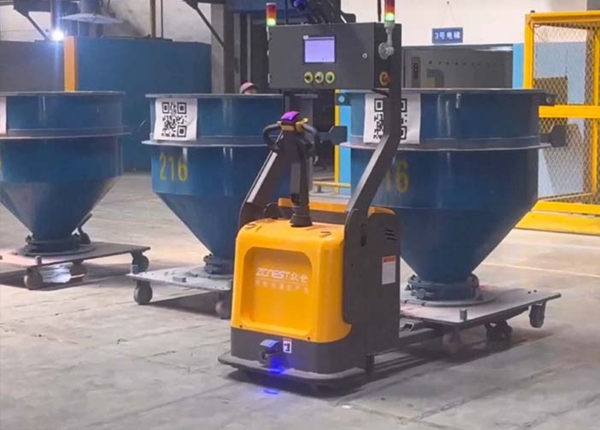
Yes, this is a mandatory feature for all industrial-grade AGVs.
Mechanical Lever/Knob: Most AGVs feature a manual handle or pull-cord near the drive wheel to physically disengage the electromagnetic brake.
Electronic Release: Some models include a "Brake Release" switch on the control panel. Caution: Only use this on level ground to prevent the AGV from rolling away and causing an accident.
In narrow aisles where space is restricted, use the following methods:
Tow Bars: Manufacturers typically provide specialized tow bars to connect the stalled unit to another AGV or a manual forklift.
Dolly/Jack: For AGVs with seized wheels, use an ultra-low profile hydraulic jack or dolly to lift the unit and move it out of the aisle.
Manual Mode (Joystick): If the motors are functional but navigation has failed, you can plug in a handheld controller to drive the AGV out like a remote-control vehicle.
Follow these four steps for a safe recovery:
Press E-Stop: Immediately secure the area and prevent accidental restarts.
Diagnose: Check the AGV’s onboard screen or the central Fleet Management System (FMS) for error codes (e.g., "Laser Obscured" or "Comm Loss").
Clear Obstacles: Inspect sensors for debris or the path for foreign objects.
Reset & Resume: Once safe, release the E-Stop, tap "Reset" on the HMI, and attempt to resume automatic operation.
Yes, but it is limited to "Soft Reboots" and diagnostics.
Mobile App Access: By 2026, most major suppliers offer tablet or smartphone apps. You can remotely view fault logs and perform software resets or clear minor alarms.
Safety Restrictions: Due to safety regulations, releasing physical brakes or high-speed operation usually cannot be done via phone. These actions require an onsite operator to confirm the physical environment is clear.











 Chinese
 English




