


In the era of Industry 4.0, the global supply chain is facing an unprecedented transformation. Rising labor costs, the explosion of e-commerce, and the demand for 24/7 operational throughput have pushed traditional material handling to its limits. This guide explores the sophisticated world of Autonomous Forklifts (AGVs and AMRs), providing a deep dive into the technology, applications, and strategic advantages offered by leading manufacturers. Whether you are automating a small distribution center or a massive manufacturing plant, understanding the synergy between hardware and autonomous intelligence is the key to unlocking future productivity.
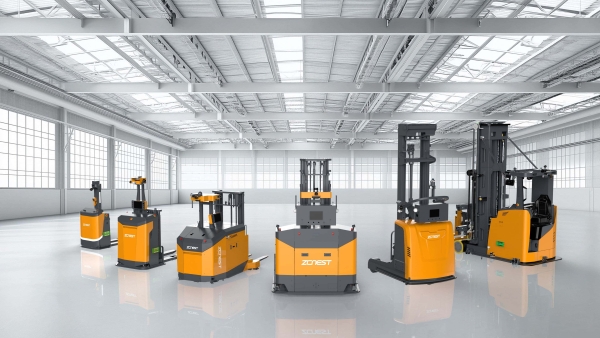
To make an informed investment, it is essential to distinguish between the two primary categories of autonomous forklifts.
Traditional AGVs operate on a "fixed-path" logic. They navigate using infrastructure-based markers such as magnetic tape, QR codes, or laser reflectors.
Predictability: AGVs are highly reliable in structured environments with repetitive tasks.
Cost-Effectiveness: For simple point-to-point transfers, the hardware is often more accessible.
Safety: They follow a strict path, making them easy for human workers to predict.
AMRs represent the "next generation" of intelligence. Utilizing SLAM (Simultaneous Localization and Mapping) technology, AMRs do not require physical markers.
Dynamic Navigation: If a pallet or a person blocks the path, an AMR forklift will calculate a new route in real-time.
Flexibility: They are ideal for facilities where the layout changes frequently.
Intelligence: AMRs use AI to learn the environment, optimizing travel speed and battery consumption based on historical data.
As a manufacturer, the quality of an autonomous forklift is determined by the integration of seven critical subsystems:
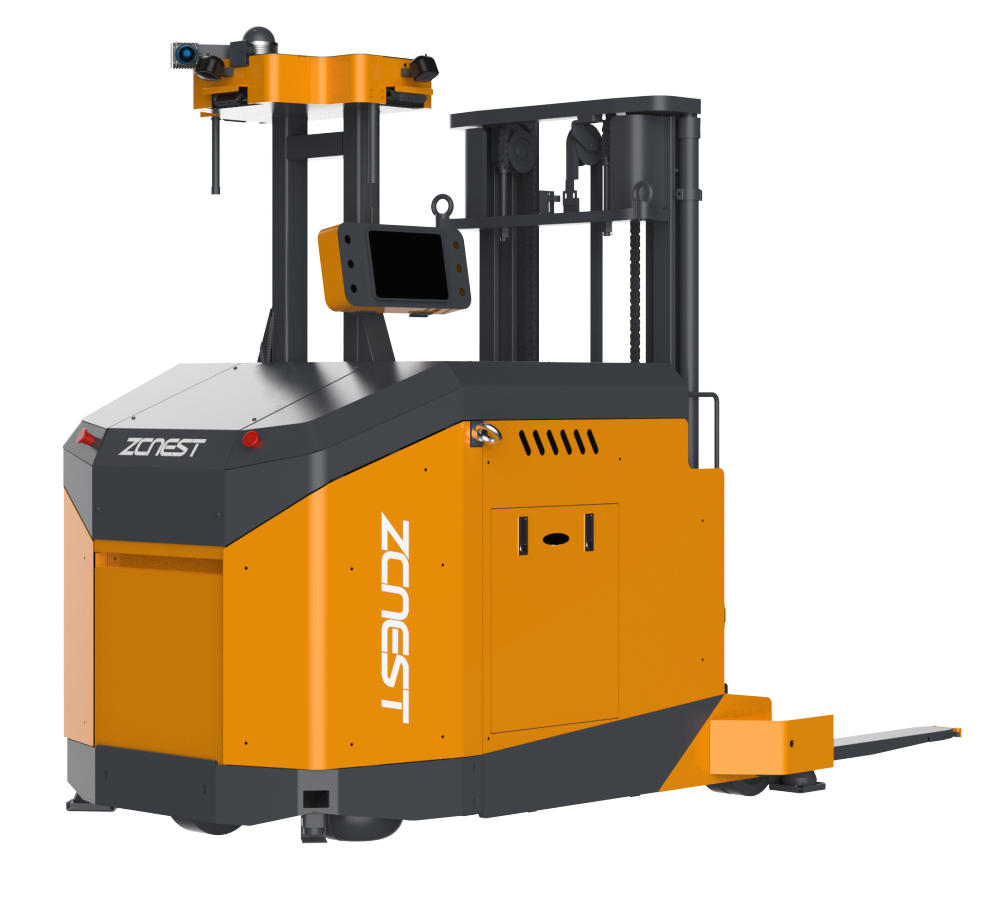
Modern units utilize LiDAR (Light Detection and Ranging) sensors to create a 360-degree digital map. By pulsing laser beams thousands of times per second, the system calculates the distance to walls, racks, and obstacles with millimeter precision.
The drive system must handle heavy payloads (often exceeding 2,000kg) while maintaining smooth acceleration. Brushless DC motors paired with high-precision encoders allow the vehicle to position its forks with an accuracy of $\pm 5$ mm, crucial for high-reach racking.
Unlike lightweight service robots, an autonomous forklift chassis is built from reinforced industrial steel. It must withstand the stresses of constant lifting and potential minor impacts in a warehouse environment.
The shift to Lithium-Ion (LiFePO4) batteries has revolutionized AGV uptime.
Opportunity Charging: Vehicles can return to charging pads during 15-minute breaks.
High Cycle Life: Modern batteries provide over 3,000 charge cycles, significantly lowering the Total Cost of Ownership (TCO).
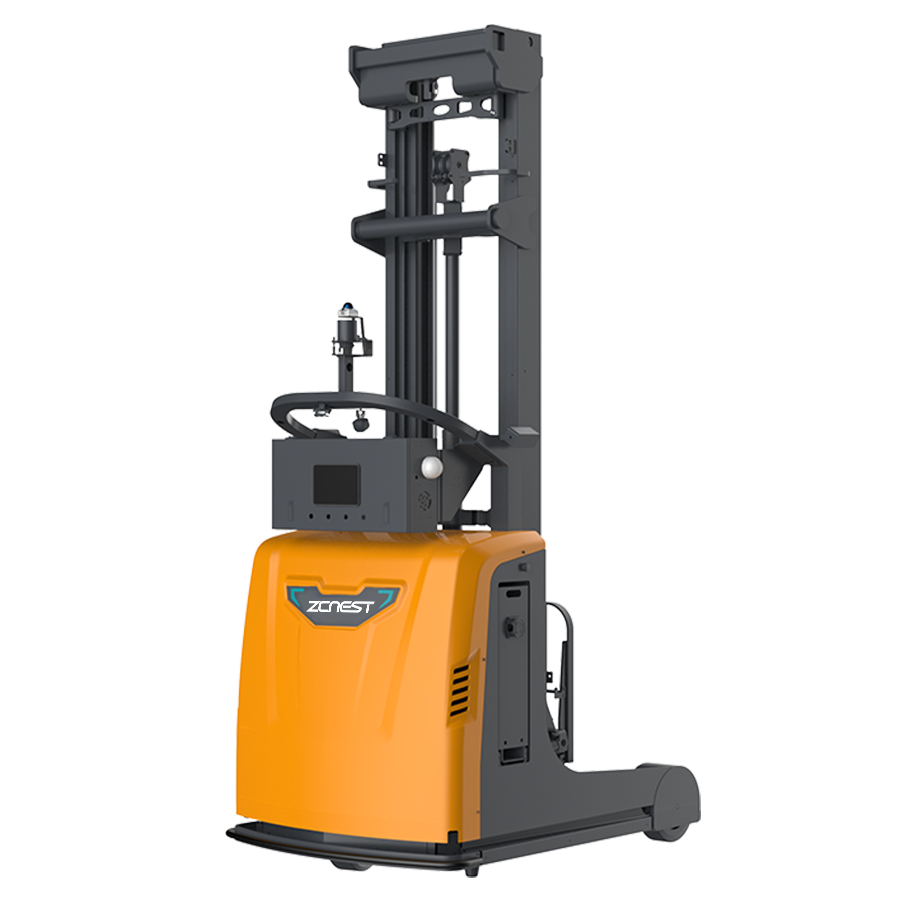
Whether it’s a counterbalanced forklift, a reach truck, or a pallet jack, the lifting mechanism is controlled by sophisticated hydraulic or electric actuators. These systems are integrated with sensors that detect if a pallet is correctly seated or if the weight exceeds safety limits.
Safety is non-negotiable. Autonomous forklifts are equipped with:
Safety Laser Scanners: Creating "Safety Fields" that slow or stop the vehicle.
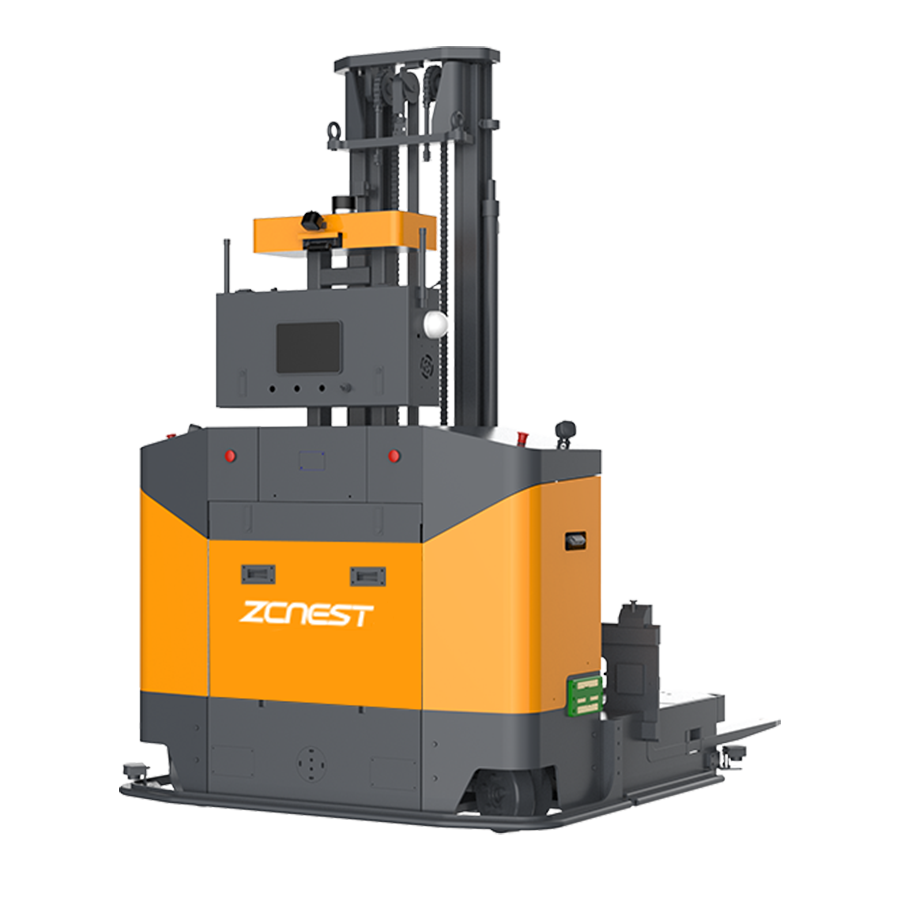
Emergency Stops: Physical buttons accessible from all sides.
Acoustic/Visual Alarms: Blue lights and sirens to alert nearby personnel.
Autonomous forklifts are no longer restricted to simple transport. They have mastered complex tasks:
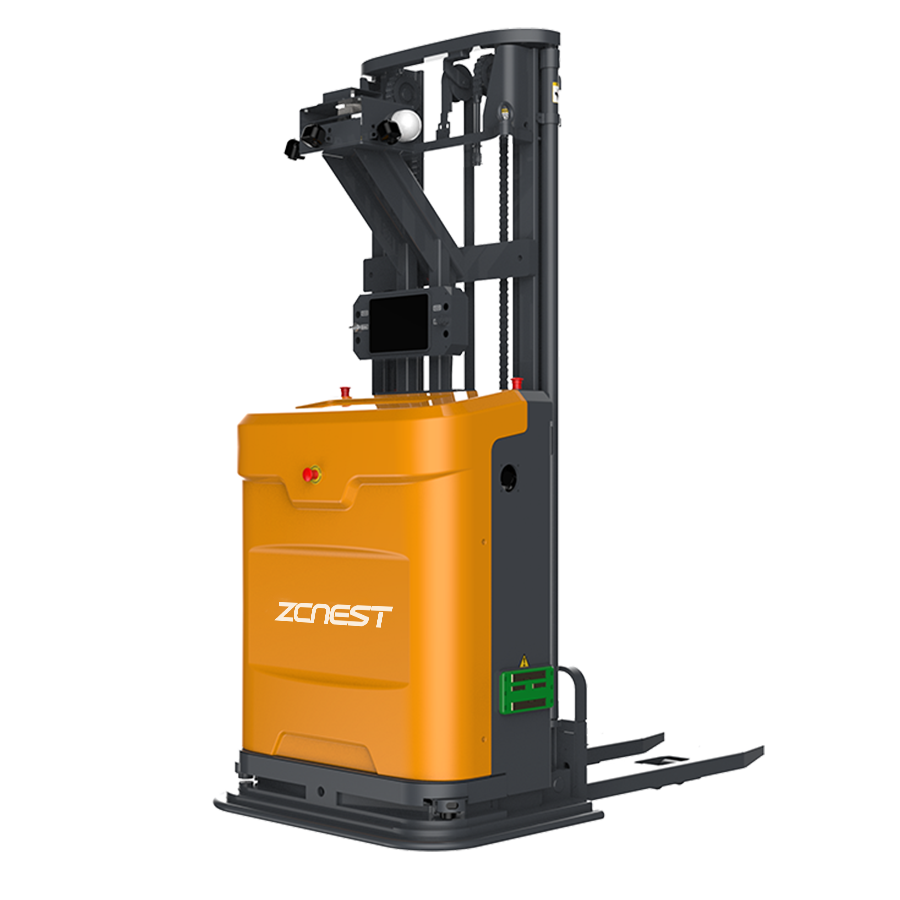
Equipped with high-reach masts, AGVs can autonomously place pallets into racks up to 10 meters high. The system communicates with the WMS (Warehouse Management System) to know exactly which bin location is empty.
In fast-paced logistics hubs, AMRs can move goods directly from the receiving dock to the shipping lane, bypassing storage entirely to reduce handling time.
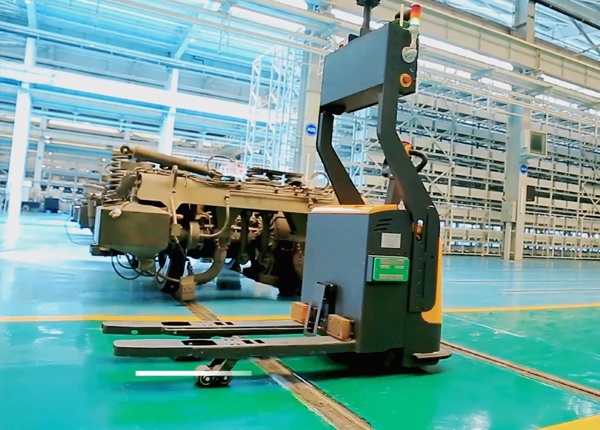
Tugger AGVs or forklift AMRs deliver raw materials to production lines on a "Just-in-Time" (JIT) basis, ensuring that assembly workers never run out of components.
Human workers struggle in sub-zero temperatures. Autonomous forklifts are built with specialized heating components and sealed electronics to operate in environments as cold as -30°C, maintaining high efficiency where humans cannot.
A world-class manufacturer doesn't sell a "product"; they sell a "solution." Customization is the heartbeat of autonomous material handling.
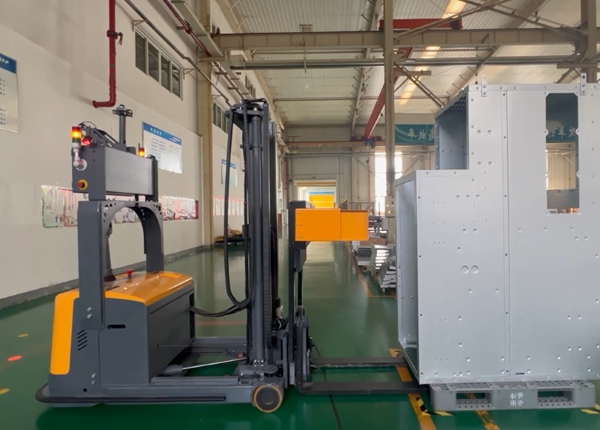
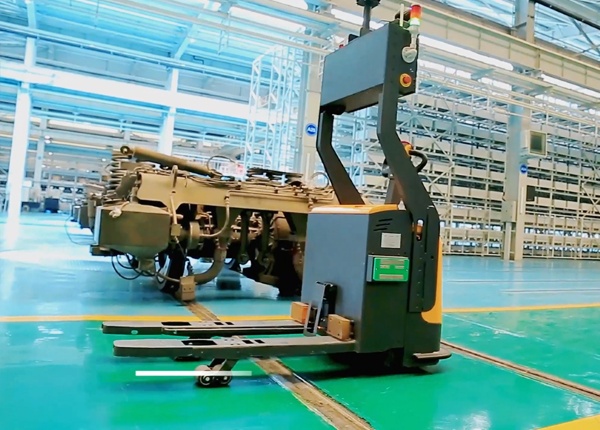
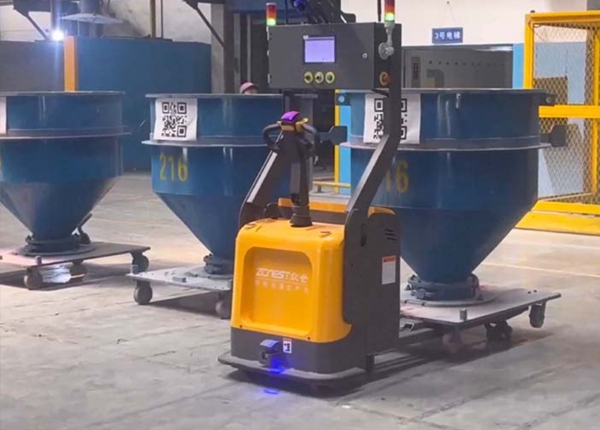
Standard pallets are common, but many industries deal with non-standard loads—paper rolls, automotive engines, or chemical vats. Manufacturers must design specialized fork attachments and clamping mechanisms to ensure stability.
Leading manufacturers provide a Fleet Management System (FMS). This software acts as the air traffic control for the warehouse, coordinating multiple robots, managing battery levels, and providing real-time heat maps of warehouse congestion.
Investing in autonomous forklifts is a financial strategy as much as a technological one.
With the shrinking pool of certified forklift operators, automation fills the gap. An AGV does not require sick leave, insurance, or overtime pay. Typically, companies see a return on investment (ROI) within 18 to 24 months.
Human error is the leading cause of warehouse damage. Autonomous forklifts follow precise paths and use sensors to avoid hitting racks or dropping pallets. This can reduce product damage costs by up to 90%.
AGVs do not get tired. They maintain a consistent pace from the start of the shift to the end, ensuring that the "bottlenecks" associated with human fatigue are eliminated.
To provide an honest assessment, one must acknowledge the hurdles of implementation.
Initial Capital Expenditure: The upfront cost of an autonomous forklift is significantly higher than a manual one.
Environment Preparation: While SLAM AMRs are flexible, extremely dusty environments or floors with large cracks can interfere with sensor accuracy.
Cybersecurity: As networked devices, AGVs must be protected by robust firewalls and encryption to prevent unauthorized access to the facility's network.
When selecting a partner, evaluate the following:
Experience in Your Industry: A manufacturer specialized in pharmaceuticals may not understand the rigors of a steel mill.
Scalability: Can the manufacturer add 50 more robots to your fleet next year without crashing the local network?
Local Support: Automation is only as good as the technician who can fix it. Ensure your manufacturer has a local or remote support team capable of 24/7 response.
We are entering the age of Collaborative AMRs.
AI Vision: Instead of just detecting a "blockage," future forklifts will use AI to distinguish between a "discarded box" (which it can push) and a "person" (which it must avoid).
5G Connectivity: With ultra-low latency, hundreds of robots can share high-definition data instantly, creating a perfectly synchronized "swarm" of vehicles.
Predictive Maintenance: Manufacturers are using machine learning to predict when a motor will fail before it happens, scheduling maintenance during off-peak hours.
The transition to Autonomous Forklift AGVs and AMRs is no longer a luxury—it is a competitive necessity. By integrating high-strength industrial hardware with cutting-edge SLAM navigation and AI-driven software, manufacturers are enabling businesses to achieve levels of safety and efficiency that were previously impossible.
As you look toward 2025 and beyond, the question is not if you should automate, but how fast you can integrate these intelligent workhorses into your operation.
For buyers currently in the procurement phase, ensure your manufacturer meets the following criteria:
Navigation: LiDAR SLAM with $\pm 10$ mm docking accuracy.
Safety: ISO 3691-4 compliant.
Integration: REST API/OPC UA support for WMS/ERP.
Charging: Automatic docking with $<1$ hour full-charge capability.
Are you ready to transform your facility?
Contact our expert engineering team today for a customized site assessment and a comprehensive ROI analysis. Let us build the future of your warehouse, one autonomous pallet at a time.





 Chinese
 English