


Checking load capacity isn't just about the number on the sticker; it’s about understanding the "physics of the lift." When you're moving heavy gear with an AGV, you want to be 100% sure the robot won't tip or drop your product.
Here’s the lowdown on how we verify those heavy-duty ratings.
This is a huge point of confusion. In the forklift world, we talk about "Residual Capacity." An AGV might be rated for 2 tons, but as that mast goes up, the capacity goes down. If you need to lift a 2-ton load to a 6-meter rack, you actually need a machine rated for about 3 or 3.5 tons at the base. We verify this using a Load Chart. Before you sign off, we run tests at the maximum lift height with the maximum intended weight to ensure the mast doesn't flex and the center of gravity stays safe.
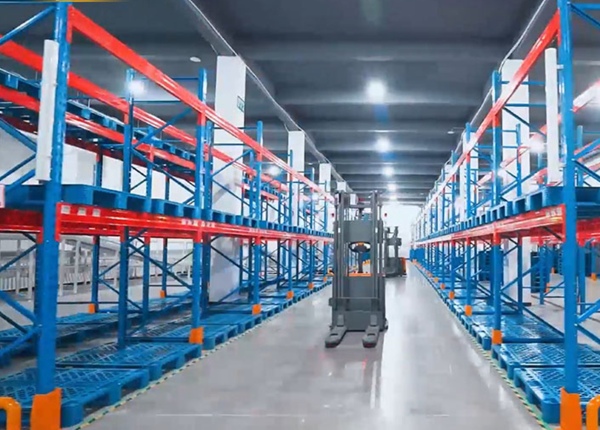
Yes—in fact, they are usually more reliable than a human operator. Modern AGVs use a "Stability Triangle" calculation in real-time. They have sensors on the drive motor and the mast that monitor:
Load Weight: Built-in scales.
Tilt Angle: Gyroscopes that detect if the chassis is leaning.
Speed: Automatically slowing down the turn if a heavy load is high in the air.
If the sensors detect the center of gravity shifting outside the "safe zone," the AGV will simply refuse to move or lower the load to a safe height automatically.
When you get into the 5-ton (11,000 lbs) range, the AGV changes from a "scooter" to a "tank."
For these heavy hitters, we don't just use standard forks. We often use heavy-duty counterbalanced chassis or straddle legs that physically wrap around the load to widen the base. We also use "soft-start" and "soft-stop" programming. You can’t just slam the brakes on 5 tons of moving steel, or the momentum will carry the load right off the forks. The software calculates a gradual deceleration curve based on the weight.
In the AGV industry, we don't play it "close to the edge." Most structural components are engineered with a safety factor of at least 1.5 to 2.0.
This means if an AGV is rated for 2 tons, the steel frame and hydraulic seals are technically tested to handle 3 or 4 tons without snapping. However, the software will lock you out at 2.1 tons. This "mechanical headroom" ensures that even with wear and tear over 5 or 10 years, the machine remains structurally sound.
Quick Tip: Always ask for the Static vs. Dynamic load test results. A robot might be able to hold 5 tons while standing still (Static), but you need to know it can steer and stop that weight (Dynamic) on your specific floor.





 Chinese
 English