


Navigating the international shipping of high-tech industrial equipment can be complex. When importing Automated Guided Vehicles (AGVs), the challenge isn't just the physical logistics, but ensuring that all regulatory, fiscal, and safety documentation is in perfect order to avoid costly port delays.
For global buyers looking to integrate Chinese automation technology, understanding the customs framework is essential for a smooth "door-to-door" experience.
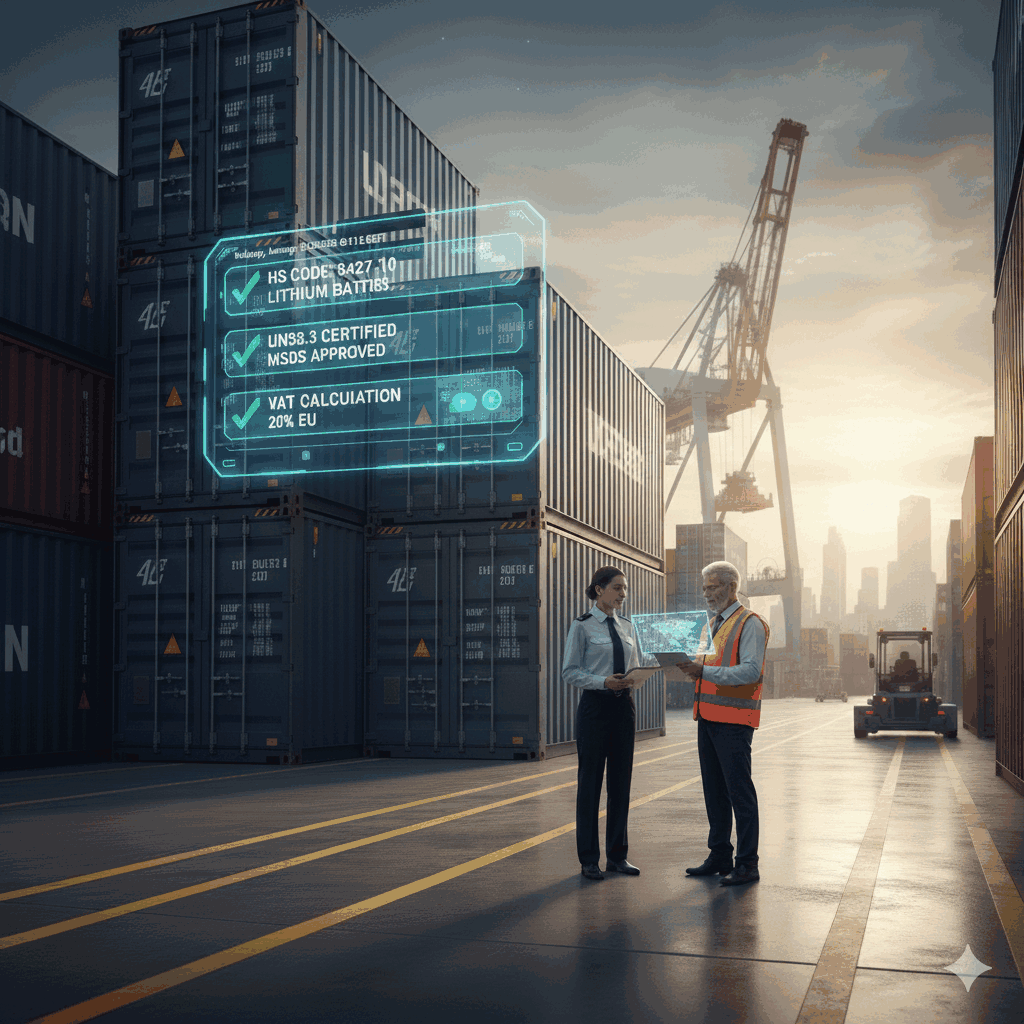
The Harmonized System (HS) Code is the universal language for customs.
HS Code: 8427.10 – Specifically for self-propelled trucks powered by an electric motor.
Sub-classification: Depending on the specific design (e.g., forklift-type vs. load-carrier), it may also be classified under 8428.90 (Other lifting, handling, loading, or unloading machinery).
Note: Always verify with your local customs broker, as "smart" robots are sometimes classified under high-tech machinery codes which may carry different incentive or duty structures.
Anti-dumping duties (ADD) are country-specific and change frequently. Currently, the landscape for AGVs is as follows:
US and EU Markets: While certain traditional steel products or basic machinery from China face ADD, high-tech Automated Guided Vehicles are typically classified as advanced technology and often fall outside general anti-dumping categories.
Section 301 (US): For US importers, be mindful of Section 301 tariffs, which may apply an additional percentage on Chinese-origin machinery.
Compliance Tip: Always request a "Country of Origin" certificate (CO) from the manufacturer to help your broker apply for any available trade agreement exemptions.
This is the most critical safety hurdle. Because AGVs use high-capacity Lithium batteries, they are classified as Class 9 Dangerous Goods. To clear customs and board a ship or plane, the following are mandatory:
UN38.3 Test Report: This proves the battery has passed rigorous safety tests (vibration, shock, short circuit, etc.).
MSDS (Material Safety Data Sheet): A detailed document outlining the battery's chemical composition and emergency handling procedures.
Sea/Air Freight Appraisal: A certificate issued by third-party agencies (like DGM) confirming the packaging meets international "Dangerous Goods" standards.
In addition to import duties, you will be responsible for local consumption taxes at the port of entry:
VAT (Value Added Tax) / GST (Goods and Services Tax): This is usually calculated based on the CIF value (Cost + Insurance + Freight) plus the duty paid.
Rates: These vary by country (e.g., 20% in the UK, 10% in Australia, or 7% in various SE Asian countries).
Tax Recovery: If your business is VAT-registered, you can typically claim this amount back as an input tax credit, making it a "wash" for your company’s long-term finances.
Professional Advice: We highly recommend shipping under DAP (Delivered at Place) or CIF (Cost, Insurance, and Freight) terms if you are a first-time importer. This ensures the manufacturer handles the complex export side, leaving you to only manage the final local customs entry with your broker.





 Chinese
 English