


Testing is the "insurance policy" for your automation investment. Before a fleet of robots arrives at your facility, you need to be certain they can handle your specific environment, loads, and safety requirements.
Here is how professional buyers validate AGV performance across borders.
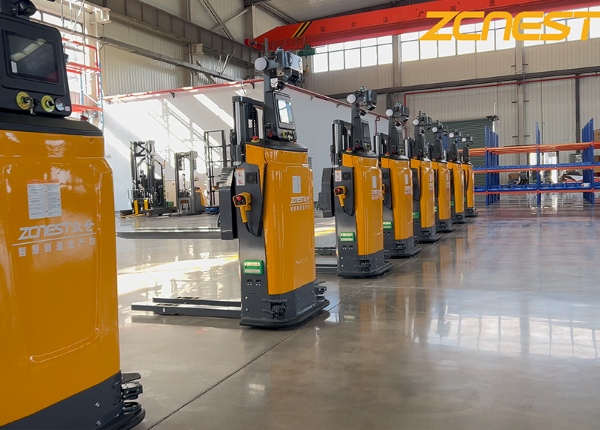
Yes, but it usually involves a "Paid Pilot" or a "Try-Before-You-Buy" agreement.
The Demo Unit: Most manufacturers won't ship a free sample due to high freight costs and the specialized setup required. Instead, they offer a short-term rental or a 1-month paid pilot program.
Showroom Testing: A more common approach is to send your actual pallets or specialized containers to the manufacturer’s local showroom or headquarters. They will run your specific materials through a course and send you the data.
Refundable Deposits: For large projects, some vendors will ship a unit to your site under a deposit scheme—if the project moves forward, the cost is deducted from the final bill.
Remote Factory Acceptance Testing (FAT) is now the global industry standard.Instead of flying to China, you can verify the build quality via a structured virtual session:
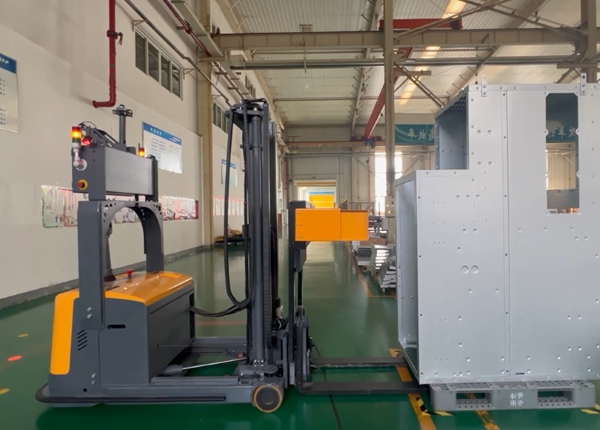
Multi-Angle Live Feed: The factory sets up fixed and handheld cameras to show the chassis, the internal wiring, and the software dashboard simultaneously.
Checkpoint Validation: The engineer follows a pre-agreed checklist—lifting the max load, testing emergency stops, and navigating tight corners.
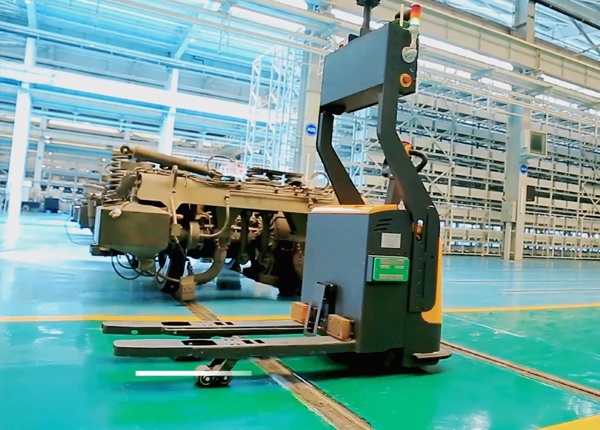
System Log Review: Through screen sharing, you can see the real-time sensor data and LiDAR "map view" as the AGV moves, ensuring the positioning is stable.
Absolutely, and it is better than any marketing video.Request a 1-on-1 live session rather than a pre-recorded demo. This allows you to "stress test" the machine spontaneously:
The Obstacle Test: Ask them to step in front of the moving AGV to verify the safety laser's reaction speed.
The Precision Check: Ask them to zoom in on the floor markings after a drop-off to see the actual placement accuracy.
The "Under the Hood" View: Have them open the maintenance panels to inspect the battery terminals and cable management.
Yes. Never sign a contract without specific Key Performance Indicators (KPIs).A reputable AGV partner will guarantee the following:
Throughput Rate: The number of "missions" or pallet moves completed per hour.
Uptime Guarantee: Usually set at 98% or higher for industrial-grade fleets.
Positioning Accuracy: A guarantee that the AGV will stop within ±5mm to ±10mm of the target.
Retention Payment: Standard practice is to hold 10–20% of the total contract value as a performance bond, payable only after the site acceptance test (SAT) is successfully completed at your facility.
Pro Tip: During the remote FAT, ask the manufacturer to run the AGV at Full Speed with Max Load. A robot that looks smooth while empty might vibrate or lose traction when carrying 2 tons on a real-world floor.





 Chinese
 English