


Testing an AGV system before deployment is one of the most important stages of warehouse automation. You are not simply purchasing equipment — you are introducing a new automated workflow into your facility.
Poor testing can lead to navigation failures, integration issues, production delays, or unexpected downtime after installation.
Before signing a contract, evaluate:
Can the AGV handle your real floor conditions?
Will it integrate with your WMS or ERP?
Can the navigation system handle obstacles and traffic?
Does the supplier provide measurable performance guarantees?
→ Request Your AGV Testing Consultation
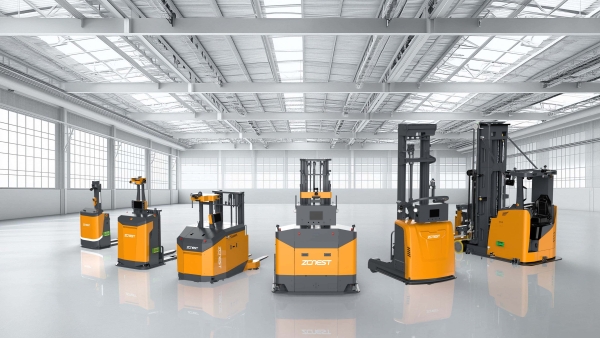
Yes — but industrial AGV testing is usually handled through a structured Proof of Concept (PoC) program rather than a simple equipment rental.
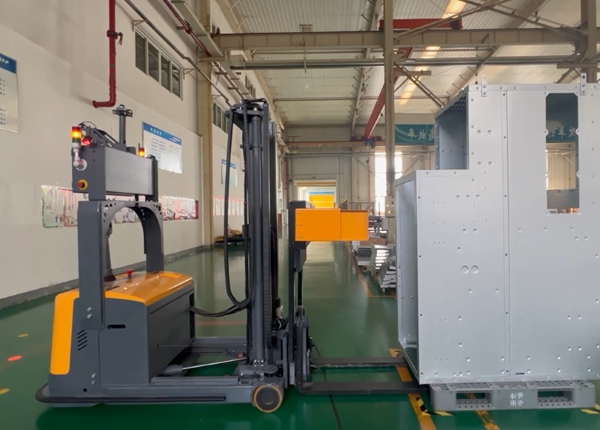
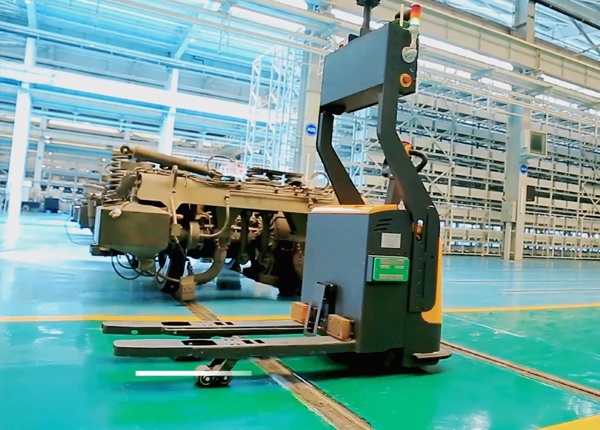
Verify navigation stability, pallet handling, obstacle avoidance, and floor adaptability under real conditions.
Setup requires engineering support for warehouse mapping, route configuration, and safety commissioning.
Remote FAT has become standard for international projects. However, it must be more than a video call.
Load handling
Emergency stops
Battery endurance
Nav accuracy
Obstacle response
Software comms
Request at least three live video views: a wide overview, an HMI screen close-up, and a follow-camera. Demand real-time telemetry data (speed logs, path deviation, etc.) to evaluate the "brain" of the system.
Don't rely on scripted demos. Ask the supplier to place unexpected obstacles, test mixed traffic (forklifts/pedestrians), and verify rerouting behavior in real-time.
Ensure your contract specifies measurable targets compliant with ISO 3691-4 standards:
System Uptime: Target 98%–99% availability.
Cycle Time: Defined task completion timing.
Accuracy: Positioning specified within ±10 mm.
Simulation: Can you provide a Digital Twin simulation to identify bottlenecks?
Software: Has WMS/ERP integration been verified for API compatibility?
Environment: How does the sensor handle reflective surfaces or dusty floors?
Our engineering team is ready to design your secure testing and deployment roadmap.
Join 500+ Automated Facilities | ISO 3691-4 Compliant





 Chinese
 English