


A Comprehensive Guide to Secure Warehouse Automation
Worried About Data Control? For most enterprises, AGV deployment isn't just about robots—it's about cybersecurity. In high-stakes industries like pharmaceuticals or automotive, you need to know exactly where your data lives.
→ Get a Free Security Audit for Your Facility
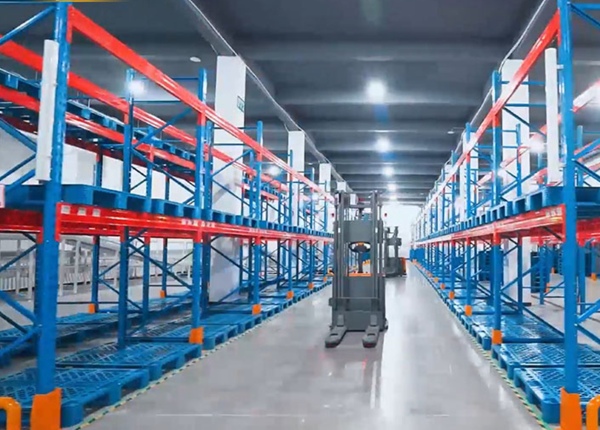
To ensure both speed and safety, ZCNEST systems utilize a dual-layer storage architecture:
Full control over mission logs and warehouse maps. No data leaves your site without permission.
Real-time SLAM and navigation data are processed locally on the AGV for zero-latency response.
Does the fleet management system need the internet? No. The Robot Control System (RCS) operates within your internal LAN.
ZCNEST SECURITY STANDARD Internal LAN Communication | Industrial Private Wi-Fi | Zero Public Internet Dependency
We recommend industrial-grade hardware to match our software's reliability:
Dell PowerEdge R250: Optimized for standard warehouse fleets.
Dell PowerEdge R450: For high-density, multi-AGV environments.
RS3110 Rackmount: Enterprise-level redundancy and uptime.
We secure every byte of data through:
WPA3 Wireless: The highest standard for industrial Wi-Fi security.
TLS/SSL (MQTTS): End-to-end encryption for all vehicle-to-server traffic.
Don't let security concerns hold back your efficiency. Let our engineers design a private, encrypted architecture for you.











 Chinese
 English




