

When shipping an AGV forklift overseas, packaging is more than just "protection"—it directly impacts sensor calibration stability, warranty claims, and customs clearance. AGVs are sensitive systems that require industrial automation-grade packaging, far beyond standard machinery shipping.
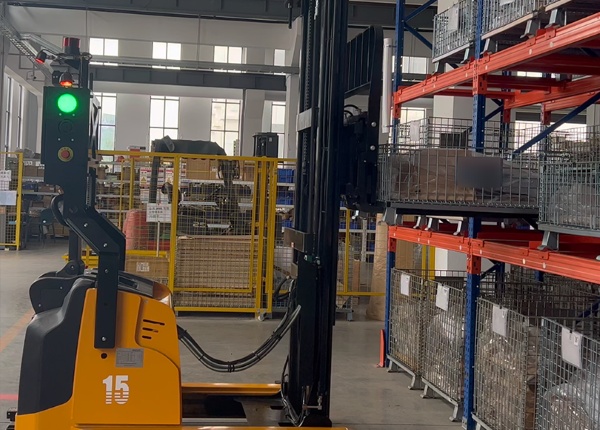
Ocean freight involves high humidity and constant vibration. A professional AGV export package must include:
Structural Immobilization: Heavy-duty steel or reinforced wooden base frames with shock-absorbing rubber pads to prevent micro-shifts in steering alignment.
Moisture Barrier: Multi-layer PE wrapping combined with industrial desiccant packs to maintain internal humidity below 50% RH.
Corrosion Protection: Anti-rust oil on exposed metal and protective caps for charging ports and connectors.
LiDAR systems are extremely sensitive to salt air, which can cause lens fogging and signal scattering. The best-practice strategy includes:
Double Sealing: Use a primary anti-static bag and a secondary vacuum or nitrogen-filled bag.
Lens Protection: Dedicated lens caps with no direct pressure on the scanning head.
Microclimate Control: Placing desiccant packs directly near the sensor module inside the crate.
Best for Control Boards, IPCs, and Sensors. Provides maximum moisture isolation for 30–45 day voyages.
Best for Motors and Frame Parts. Prevents corrosion without the pressure stress of a vacuum seal.
To protect your warranty and freight claims, impact monitoring is essential. Many professional importers use electronic data loggers to track:
Normal Tolerance: 2–5G
Warning Level (Forklift Impact): 10G
Damage Risk (Calibration Loss): 20G+
All wooden packaging must be Heat Treated (HT) or fumigated, carrying the official IPPC stamp. Common mistakes that cause US customs delays include missing stamps on internal supports or using non-certified plywood blocks.
Share your AGV model and weight class, and we will help you design a crate-level checklist for your supplier.
Get Export Packing Guidelines →
📖 AGV Forklift Guide — Essential manual for selection and safety.
⚙️ How AGV Systems Work — A deep dive into navigation and logic.
⚖️ AGV vs. AMR Comparison — Choosing the right technology for your facility.
💰 AGV Cost and ROI — Evaluating investment and payback periods.
FREE ENGINEERING SUPPORT Stop Gambling on Generic Platforms. Get an AGV/AMR Tailored to Your Warehouse.Buying automated guided vehicles involves complex safety standards (CE/ANSI), navigation setups (Laser SLAM), and ERP system integration. Don't risk your factory safety with middle-men. ✓ 100% Direct Factory: Customized payload up to 5 Tons. ✓ Free CAD Simulation: Send us your layout, and our engineers will simulate the optimal AGV routes. ✓ Global Support: Overseas installation guidance & local maintenance partners. |





 Chinese
 English