


As AGV and AMR deployments expand into multi-level warehouses, mezzanine facilities, and manufacturing plants, many operators ask an important question:
Will floor vibration affect AGV navigation accuracy?
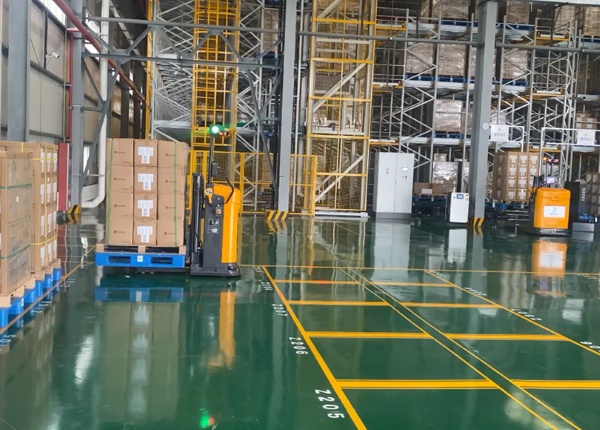
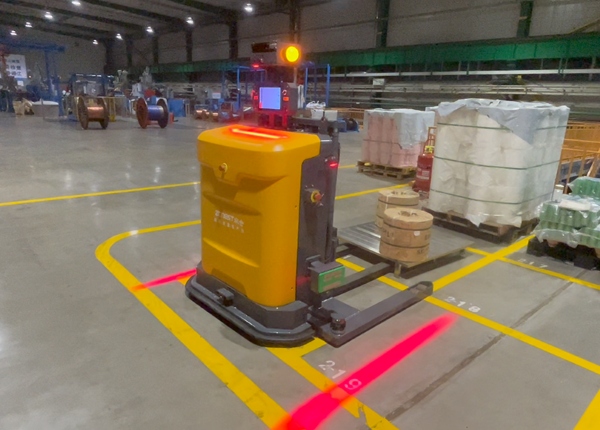
The short answer is: usually not. Modern AGVs are specifically designed to operate in industrial environments where vibration, equipment movement, and structural flex are common.
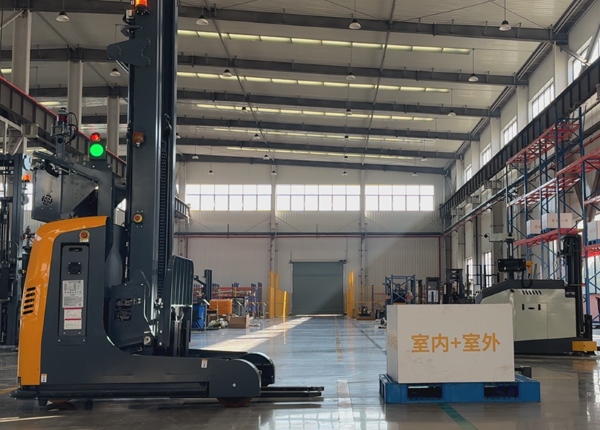
Under normal warehouse conditions, floor vibration alone rarely causes AGV navigation failure.
Modern AGVs continuously combine data from multiple sensors:
LiDAR scanners
IMU (Inertial Measurement Unit)
Wheel encoders
Motor feedback systems
SLAM localization algorithms
The control system constantly compares:
Expected Movement
↓
Measured Movement
Minor vibrations are recognized as noise and filtered automatically.
Nearby forklift traffic
Conveyor systems
Packaging machinery
Automated sortation equipment
Normal mezzanine floor flex
These operating conditions are common in warehouses and manufacturing facilities worldwide.
Modern AGVs use advanced sensor fusion technology to distinguish actual vehicle movement from environmental vibration.
The onboard IMU continuously measures:
Acceleration
Angular velocity
Pitch
Roll
Yaw
The control software applies:
Kalman Filtering
Extended Kalman Filters (EKF)
Multi-sensor fusion algorithms
| Actual Movement | Filtered Noise |
|---|---|
| Driving Forward | Floor Oscillation |
| Turning | Machine Vibration |
| Actual Position Drift | Structural Resonance |
LiDAR sensors may experience:
Micro-movements
Minor angle shifts
Temporary scan distortion
However, modern SLAM systems do not depend on a single scan. Instead, they continuously compare:
Previous scans
Current scans
Mapped environmental features
As long as vibration remains within industrial design limits, localization remains highly stable.
Glass walls
Highly reflective surfaces
Heavy dust accumulation
Steam or condensation
Poor mapping features
In real deployments, these factors often impact navigation accuracy more than normal structural vibration.
In a properly configured warehouse, manual re-zeroing is rarely required.
AGVs continuously localize themselves against mapped landmarks.
| Environment | Manual Re-Zero Frequency |
|---|---|
| Standard Warehouse | Rarely |
| Mezzanine Facility | Rarely |
| Heavy Industrial Plant | Occasionally After Maintenance |
| Major Layout Change | Remapping Required |
Many AGV fleets operate for months or years without manual localization correction.
Yes, in many cases they can.
The critical question is not navigation capability but structural capacity.
Suspended slabs introduce:
Deflection
Dynamic movement
Floor vibration
Before deployment, facilities should verify:
Floor load rating
Slab thickness
Deflection limits
Expansion joints
Vibration characteristics
| AGV Type | Typical Weight |
|---|---|
| AMR | 300–1000 kg |
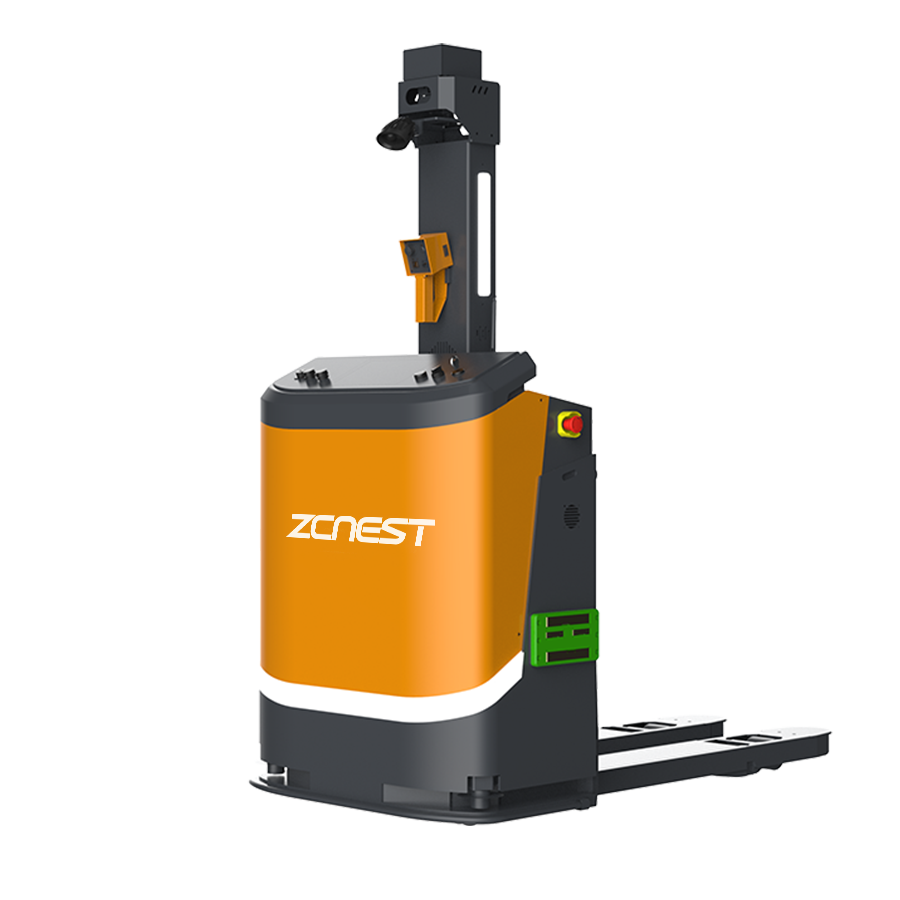
| Pallet AGV | 1000–2500 kg |
| Reach Truck AGV | 3000–6000+ kg |
Because wheel contact areas are small, AGVs generate high point loads. This is why structural assessment is often more important than navigation assessment.
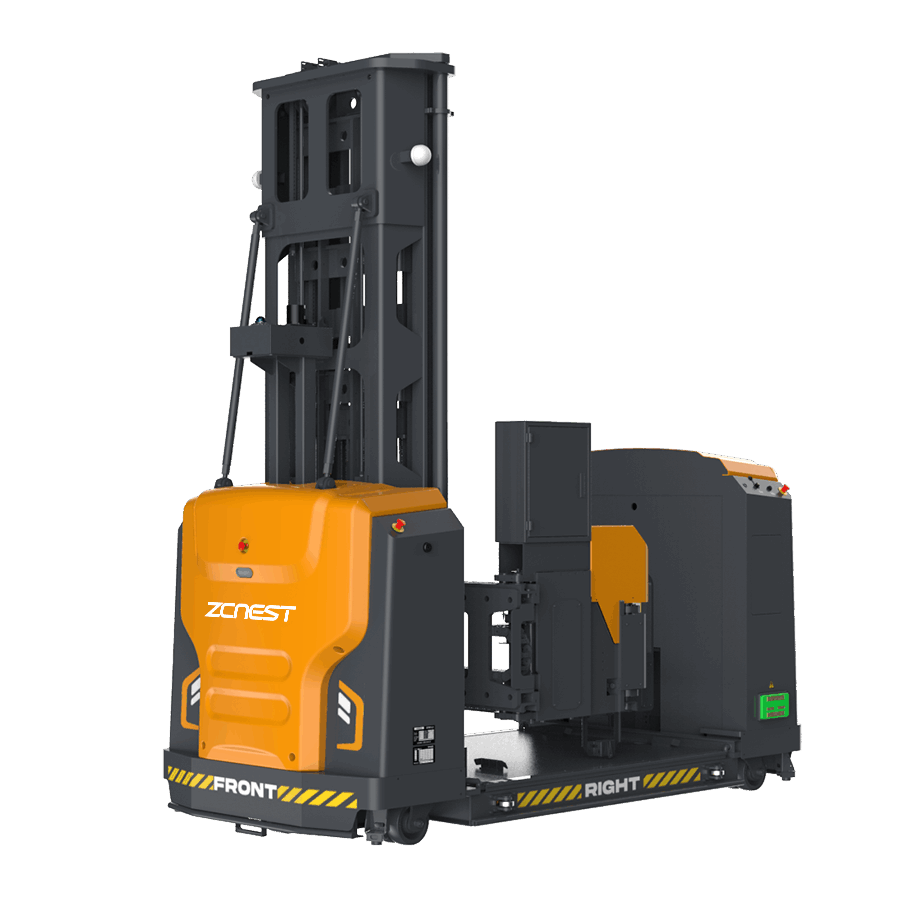
When AGVs lift pallets to heights of 8–12 meters, additional factors appear:
Mast sway
Rack movement
Floor vibration
Pallet oscillation
To compensate, modern AGV reach trucks use:
Mast position sensors
Laser height measurement
Vision-guided positioning
Load stabilization algorithms
These technologies help maintain precise pallet placement even at high elevations.
For facilities with elevated floors or suspended structures, acceptance testing should include:
Operate conveyors
Run forklifts nearby
Activate production equipment
Observe localization stability
Docking repeatability
Pallet insertion accuracy
Navigation repeatability
Measure floor deflection
Verify wheel loading
Validate braking forces under load
Maximum allowable floor vibration specification?
Which IMU model is used?
What localization filtering methodology is implemented?
What is the localization recovery time after disturbance?
What floor flatness (FF/FL) is recommended?
What maximum floor deflection is allowed?
Do you have references for mezzanine or suspended slab projects?
Modern LiDAR SLAM AGVs are specifically engineered to operate in environments with normal industrial vibration. Through the combination of LiDAR, IMU sensors, wheel encoders, and advanced sensor-fusion algorithms, most warehouses can achieve stable navigation performance without frequent manual recalibration.
For most projects, the larger concern is not navigation failure but:
Excessive floor deflection
Suspended slab structural capacity
Rack sway during high-level storage operations
Poorly characterized vibration from heavy industrial machinery
Before deploying heavy AGV reach trucks in mezzanine or high-rise facilities, a structural engineering review should be performed alongside standard AGV FAT and SAT testing to ensure long-term operational reliability and safety.
FREE ENGINEERING SUPPORT Stop Gambling on Generic Platforms. Get an AGV/AMR Tailored to Your Warehouse.Buying automated guided vehicles involves complex safety standards (CE/ANSI), navigation setups (Laser SLAM), and ERP system integration. Don't risk your factory safety with middle-men. ✓ 100% Direct Factory: Customized payload up to 5 Tons. ✓ Free CAD Simulation: Send us your layout, and our engineers will simulate the optimal AGV routes. ✓ Global Support: Overseas installation guidance & local maintenance partners. |





 Chinese
 English