


Warehouse space has become one of the most valuable resources for logistics companies, e-commerce fulfillment centers, and manufacturing warehouses. As inventory volume increases, many companies are looking for ways to increase storage capacity without expanding their existing buildings.
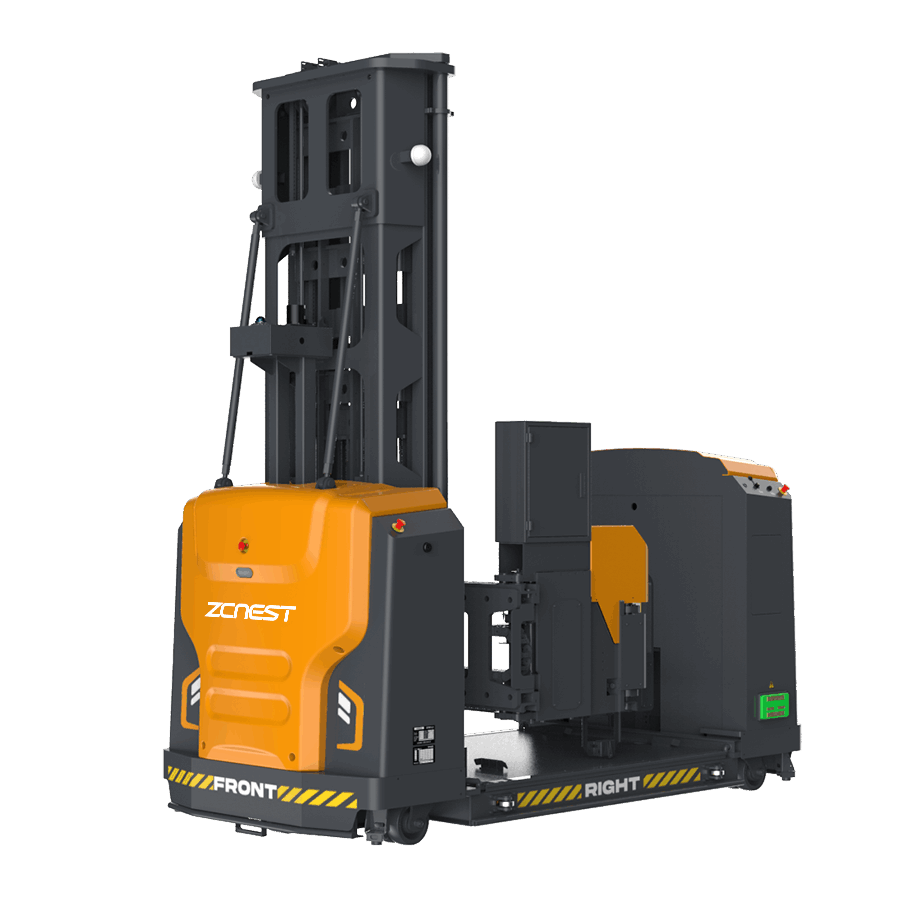
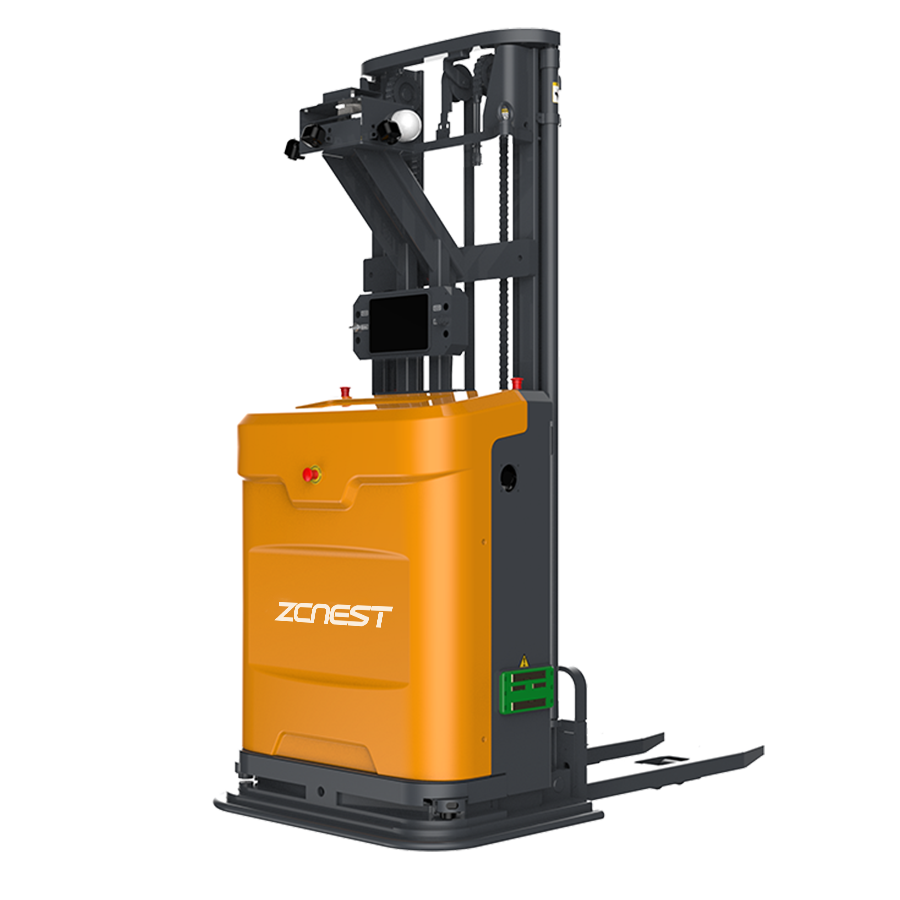
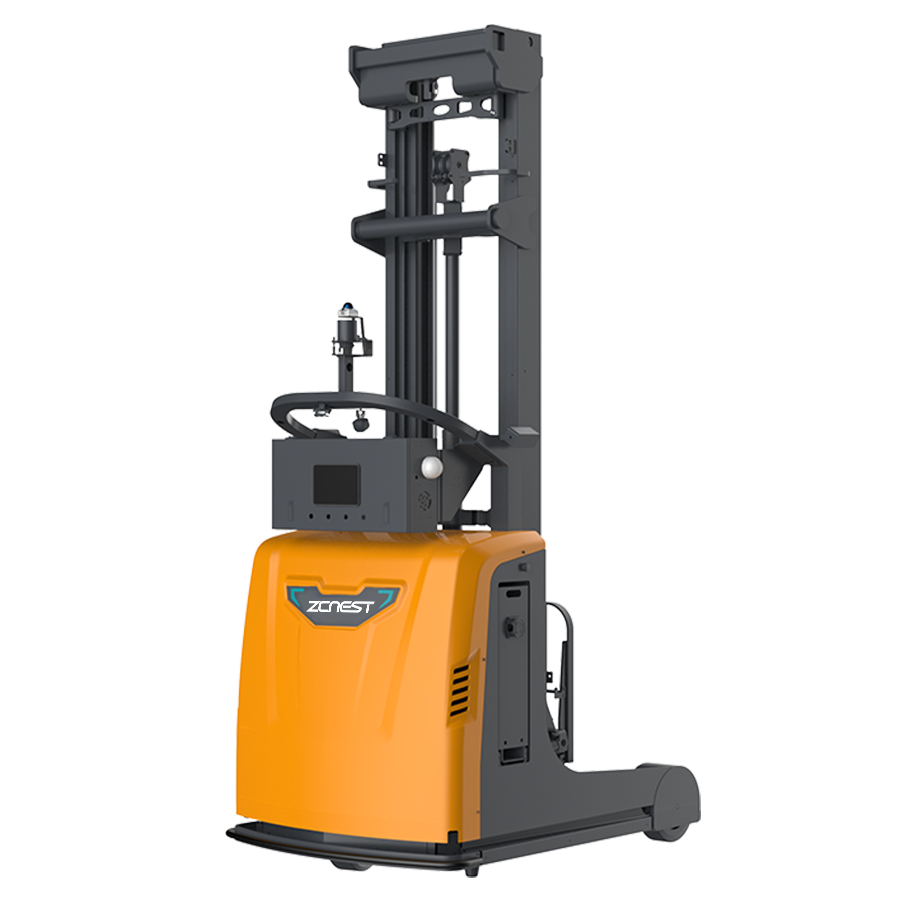
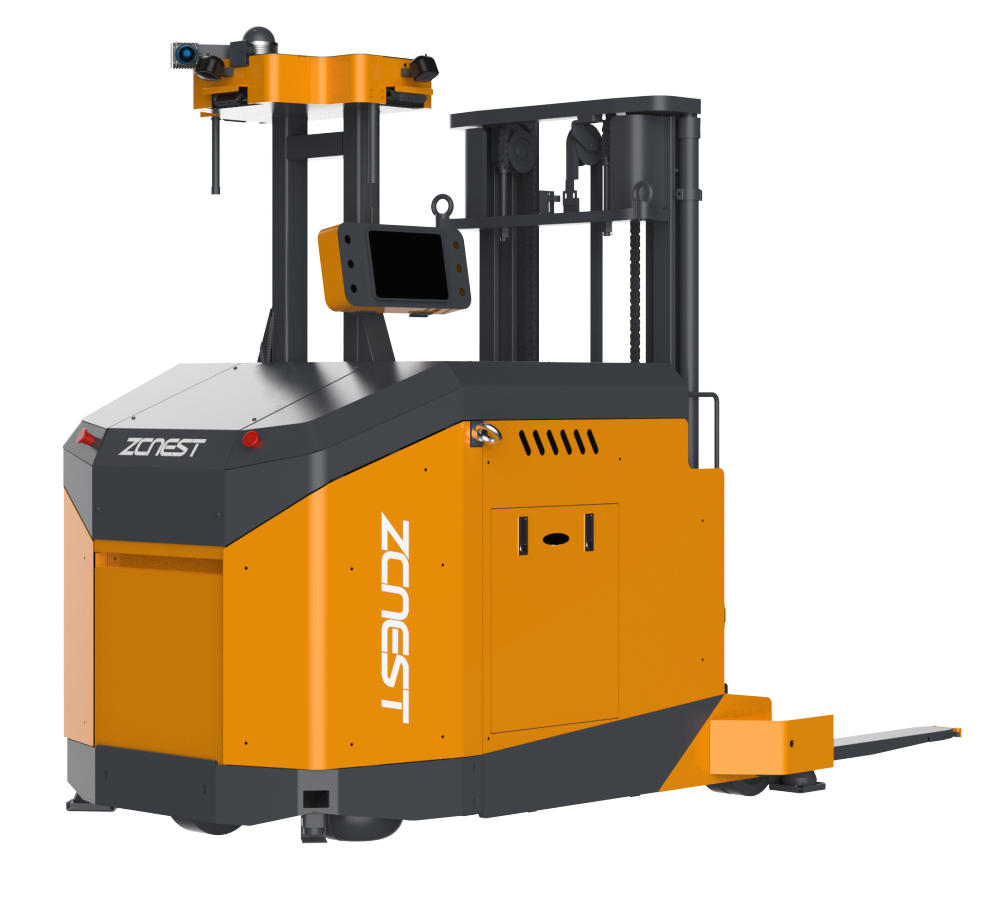
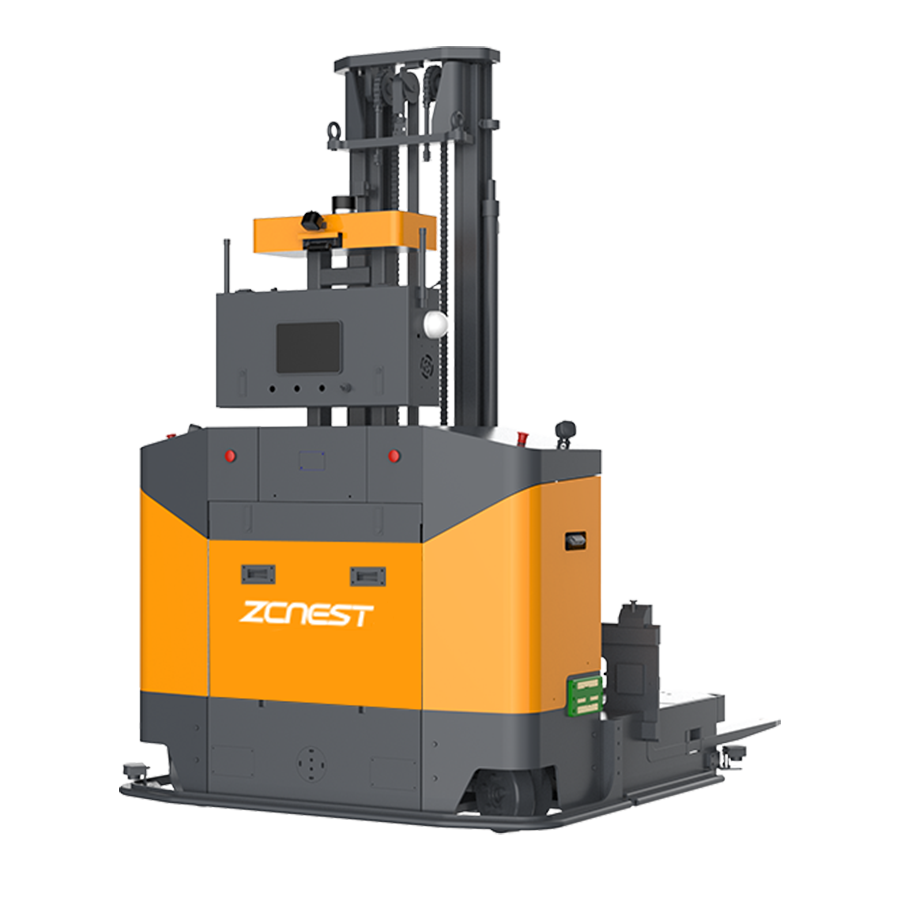
One solution is replacing traditional forklifts withChinese VNA (Very Narrow Aisle) stacking robots and autonomous forklifts.
A common question from warehouse operators is:How much floor space can I save by using a Chinese VNA AGV instead of traditional forklift equipment?
The answer depends on warehouse layout, rack height, pallet size, and equipment selection. However, VNA automated forklifts can significantly reduce aisle width and increase pallet storage density.
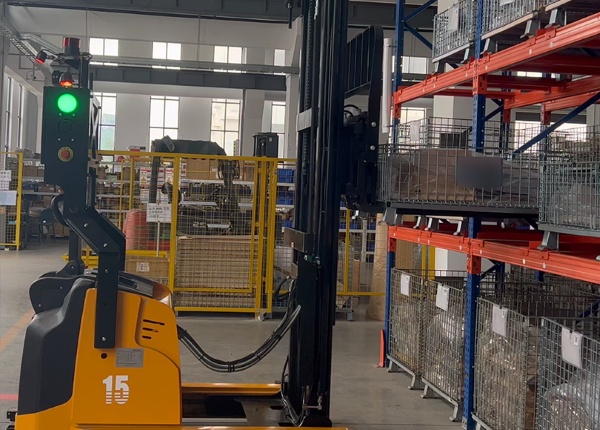
Traditional counterbalance forklifts require wider aisles because they need enough space to turn and position pallets.
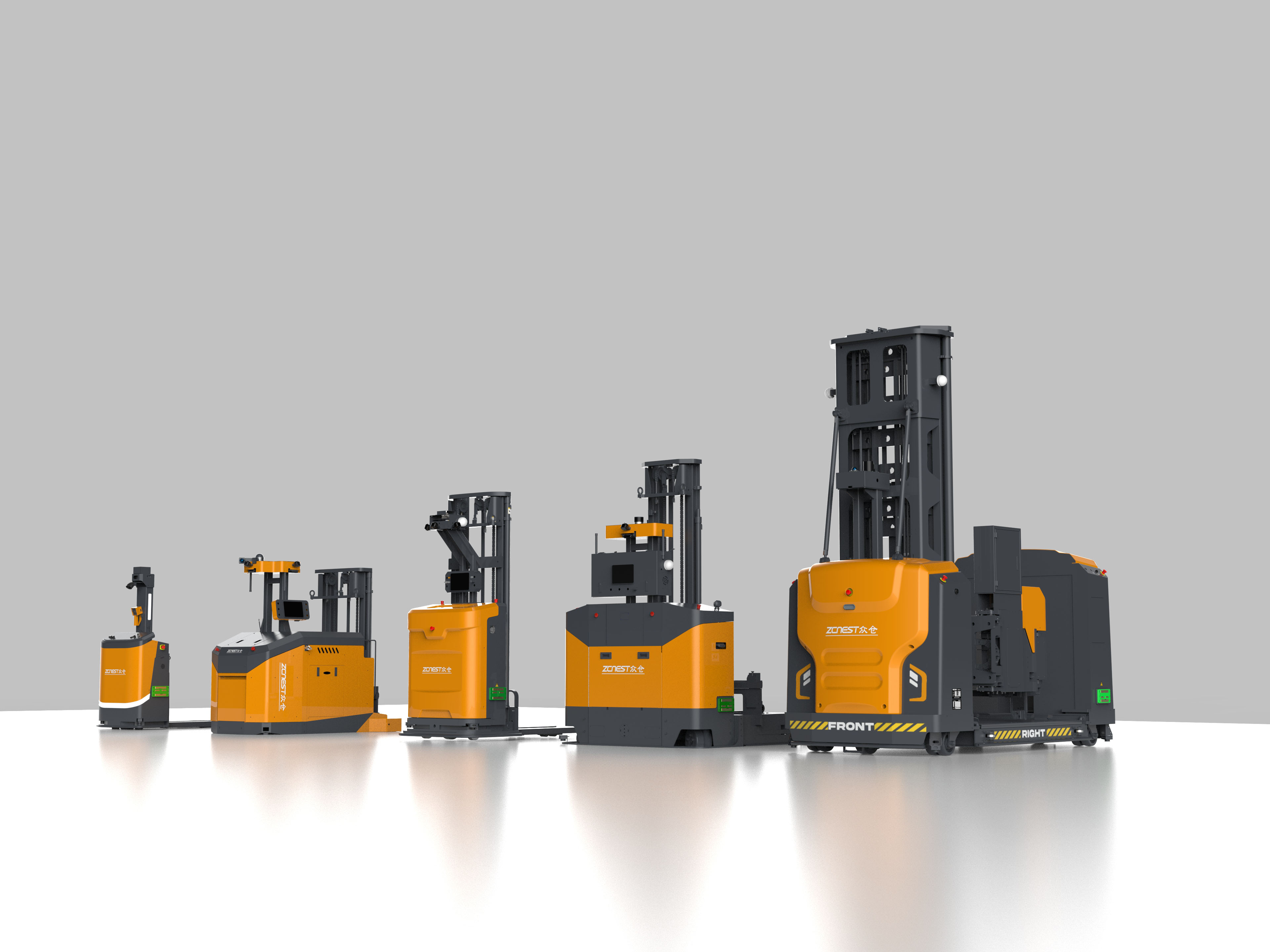
VNA automated forklifts use specialized navigation systems and narrow-body designs, allowing them to operate in much smaller aisles.
In many warehouse designs, switching to VNA solutions can increase storage capacity by30%-50% or more depending on the original layout.
Very narrow aisle systems commonly reduce working aisles from approximately 2.7-3.5 meters to around 1.5-1.8 meters, creating additional space for more rack rows. :contentReference
| Warehouse Equipment | Typical Aisle Width | Storage Density |
|---|---|---|
| Counterbalance Forklift | 3.0-4.0 meters | Lower density |
| Reach Truck | 2.5-3.0 meters | Medium density |
| VNA AGV | 1.5-1.8 meters | High density |
The biggest advantage of VNA stacking robots is their ability to eliminate unnecessary turning space inside storage aisles.
A traditional forklift must enter an aisle, turn, align with the pallet, and complete the loading operation. A VNA AGV travels straight inside the aisle and uses specialized fork mechanisms to access pallets.
Traditional forklift aisle:3,000-4,000 mm
Reach truck aisle:2,500-3,000 mm
VNA AGV aisle:1,500-1,800 mm
Some VNA systems can achieve pallet access aisles around 1.6 meters depending on pallet size, rack design, and safety requirements.
For some warehouses, VNA automation can significantly increase storage density, but doubling storage capacity depends on the original warehouse design.
A warehouse using wide aisles and low-level racks may achieve dramatic improvements after converting to:
High-density VNA racking
Automated narrow aisle forklifts
Higher vertical storage utilization
Optimized warehouse layout
The main storage improvement comes from three areas:
Less aisle area means more floor space can be converted into pallet storage locations.
VNA systems allow warehouses to use more vertical space, especially in buildings with high ceilings.
Automated robots can operate with fixed paths and accurate positioning, allowing tighter warehouse planning.
The maximum lifting height depends on the AGV model, fork structure, load capacity, rack design, and floor conditions.
| AGV Type | Typical Lift Height | Application |
|---|---|---|
| Narrow Aisle Stacker AGV | 3-6 meters | Medium height warehouses |
| VNA Forklift AGV | 8-12 meters | High-density pallet storage |
| High-Bay VNA AGV | 12-18 meters | High-rise automated warehouses |
Specialized VNA equipment can support very high storage systems, with some VNA solutions reaching around 18 meters depending on configuration.
Operating in a 1.5-meter aisle requires extremely accurate positioning. Chinese AGV manufacturers typically combine multiple technologies:
Laser SLAM navigation:Creates maps and maintains accurate positioning.
LiDAR sensors:Detect rack structures and obstacles.
Safety scanners:Protect operators and equipment.
High-precision control systems:Improve pallet placement accuracy.
Fleet management software:Coordinates multiple AGVs.
Installing VNA robots is not only about narrow aisles. The warehouse staging area must also match the output capacity of the automated fleet.
Separate receiving, storage, and shipping flows to avoid congestion.
AGVs need temporary waiting areas for:
Pallet pickup
Task scheduling
Charging cycles
Traffic management
Charging stations should be positioned based on robot travel distance and operating schedule.
A high-speed VNA system can create bottlenecks if staging areas cannot process incoming and outgoing pallets quickly enough.
| Requirement | Recommended Condition |
|---|---|
| Floor Flatness | Suitable for high-precision navigation |
| Aisle Width | Approximately 1.5-1.8 meters depending on pallet size |
| Rack Alignment | High installation accuracy |
| Wireless Network | Stable industrial Wi-Fi coverage |
| Lighting | Suitable for sensor operation |
How much storage density improvement can your VNA AGV achieve in my warehouse?
What is the minimum aisle width requirement?
What is the maximum lifting height?
What pallet sizes are supported?
Can the robot integrate with my WMS system?
How many pallets per hour can one AGV handle?
Do you provide warehouse simulation before deployment?
Chinese VNA stacking robots can help warehouses significantly increase storage density by reducing aisle widths and improving vertical space utilization.
For companies facing limited warehouse space, a VNA AGV solution may provide:
30%-50% higher storage capacity
Narrower operating aisles
Higher rack utilization
Reduced dependence on manual forklift operators
More predictable warehouse operations
However, the final result depends on warehouse dimensions, rack design, pallet specifications, floor conditions, and AGV configuration. A professional Chinese AGV manufacturer should evaluate the complete warehouse environment before recommending a VNA automation solution.
FREE ENGINEERING SUPPORT Stop Gambling on Generic Platforms. Get an AGV/AMR Tailored to Your Warehouse.Buying automated guided vehicles involves complex safety standards (CE/ANSI), navigation setups (Laser SLAM), and ERP system integration. Don't risk your factory safety with middle-men. ✓ 100% Direct Factory: Customized payload up to 5 Tons. ✓ Free CAD Simulation: Send us your layout, and our engineers will simulate the optimal AGV routes. ✓ Global Support: Overseas installation guidance & local maintenance partners. |





 Chinese
 English