


When deploying Chinese AGV forklifts, autonomous mobile robots (AMRs), and automated warehouse systems, wireless communication reliability and cybersecurity are critical factors that directly affect operational stability.
Unlike traditional forklifts, autonomous vehicles rely on continuous communication between:
AGV robots
Fleet management systems (FMS)
Warehouse Management Systems (WMS)
Industrial computers
Charging systems
Remote maintenance platforms
Many overseas customers ask:How can I ensure my warehouse Wi-Fi security meets the requirements of Chinese AGV systems while maintaining enterprise-level cybersecurity?
The answer requires evaluating wireless protocols, network architecture, firewall configuration,
and interference protection before deployment.
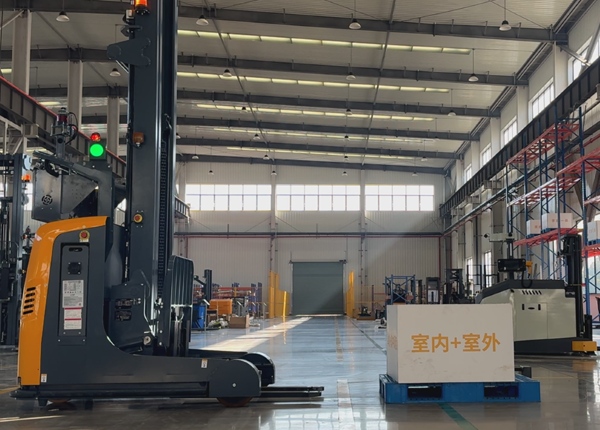
Most modern Chinese AGV forklifts use industrial wireless communication based on standard Wi-Fi technologies. Common communication methods include:
| Communication Technology | Application |
|---|---|
| Wi-Fi 5 (802.11ac) | Common warehouse AGV communication |
| Wi-Fi 6 (802.11ax) | High-density robot fleets and large warehouses |
| Industrial Ethernet | Fixed equipment and control systems |
| 5G Private Network | Large-scale autonomous logistics applications |
| VDA 5050 Communication | Standardized AGV fleet integration |
Professional Chinese AGV manufacturers usually design systems that can integrate into existing enterprise networks rather than requiring a completely separate communication environment.
The answer depends on the specific AGV hardware and communication module configuration.
Many industrial Wi-Fi modules support enterprise security standards such as:
WPA2 Enterprise
WPA3 Enterprise (with compatible hardware)
802.1X authentication
Certificate-based authentication
Encrypted communication channels
However, buyers should confirm the exact security capability before purchasing. Some cost-focused AGV models may only support WPA2-PSK authentication.
Does the AGV wireless module support WPA3 Enterprise?
Does it support 802.1X authentication?
Can the robot connect to enterprise Wi-Fi infrastructure?
Can wireless credentials be managed centrally?
Does the fleet management server support encrypted communication?
Yes, MAC address filtering can be implemented, but it should not be the only security method.
MAC filtering allows network administrators to create a whitelist of approved devices, including:
AGV robots
Fleet control servers
Industrial computers
Charging stations
However, enterprise cybersecurity teams usually consider MAC filtering as a basic security layer because:
MAC addresses can potentially be spoofed
Large AGV fleets become difficult to manage manually
Device replacement requires frequent updates
A better approach is combining:
WPA3 Enterprise authentication
Network segmentation
Device certificates
Firewall rules
Access control policies
Yes, most Chinese AGV fleet management systems can operate behind enterprise firewalls, but network configuration must be planned before installation.
| Network Layer | Function |
|---|---|
| AGV Wireless Network | Robot movement commands and status communication |
| Fleet Management Server | Task scheduling and traffic control |
| WMS/ERP Integration Layer | Order exchange and warehouse automation |
| Enterprise Firewall | Security monitoring and access control |
Before deployment, customers should confirm:
Required network ports
Communication protocols
Server location (local or cloud)
VPN requirements
Remote maintenance access method
A secure deployment normally follows the principle of minimum network access.
Create a dedicated AGV VLAN:Separate robots from office computers and guest networks.
Restrict external access:Allow only approved remote maintenance connections.
Use VPN access:Avoid exposing AGV control systems directly to the public internet.
Monitor network traffic:Detect unusual communication behavior.
Regularly update software:Apply security patches when available.
Wireless interference is one of the most common causes of AGV communication problems. A stable wireless environment is essential for continuous warehouse operation.
Nearby industrial Wi-Fi networks
Wireless scanners
Bluetooth devices
Metal structures blocking signals
Large machinery generating electromagnetic noise
High-density wireless devices
Before AGV deployment, perform a wireless site survey to evaluate:
Signal strength
Channel interference
Coverage gaps
Roaming performance
Industrial-grade access points provide:
Better coverage
Higher connection stability
Fast roaming support
Industrial environmental protection
Large warehouses may require:
802.11k
802.11r
802.11v
These technologies help AGVs maintain stable connections while moving between access points.
| Item | Recommended Requirement |
|---|---|
| Wireless Standard | Wi-Fi 5 / Wi-Fi 6 |
| Security | WPA2 Enterprise or WPA3 Enterprise |
| Network Design | Dedicated AGV VLAN |
| Authentication | 802.1X or certificate-based access |
| Coverage | No wireless dead zones |
| Roaming | 802.11k/r/v recommended |
| Remote Support | VPN-based access |
What Wi-Fi security standards does the AGV support?
Can the system work with enterprise WPA3 networks?
Does the fleet management software support local server deployment?
What firewall ports are required?
Can remote maintenance be performed through VPN?
Does the AGV support Wi-Fi roaming in large warehouses?
How does the system handle temporary communication loss?
A Chinese AGV forklift can operate securely inside an enterprise warehouse network, but successful deployment requires proper Wi-Fi planning and cybersecurity configuration.
The most reliable approach includes:
Enterprise-grade Wi-Fi security
Dedicated AGV network segmentation
Firewall-controlled communication
Stable wireless coverage
Professional interference testing
Before importing autonomous forklifts from China, companies should evaluate both robot performance and network compatibility. A secure and reliable communication environment is essential for achieving stable 24/7 automated warehouse operations.
FREE ENGINEERING SUPPORT Stop Gambling on Generic Platforms. Get an AGV/AMR Tailored to Your Warehouse.Buying automated guided vehicles involves complex safety standards (CE/ANSI), navigation setups (Laser SLAM), and ERP system integration. Don't risk your factory safety with middle-men. ✓ 100% Direct Factory: Customized payload up to 5 Tons. ✓ Free CAD Simulation: Send us your layout, and our engineers will simulate the optimal AGV routes. ✓ Global Support: Overseas installation guidance & local maintenance partners. |





 Chinese
 English