


Many AGV buyers focus on the robots themselves and underestimate the importance of the server architecture. In reality, a poorly designed RCS server can create more downtime than the AGVs.
For a typical 20-AGV deployment, the recommended architecture is:
Warehouse LAN │ ├── RCS Server │ ├── SQL Database │ ├── WMS / ERP Interface │ ├── Wi-Fi Controller │ └── Engineering Workstation
Best practice is to place the AGV system on a dedicated VLAN rather than mixing it with office traffic.
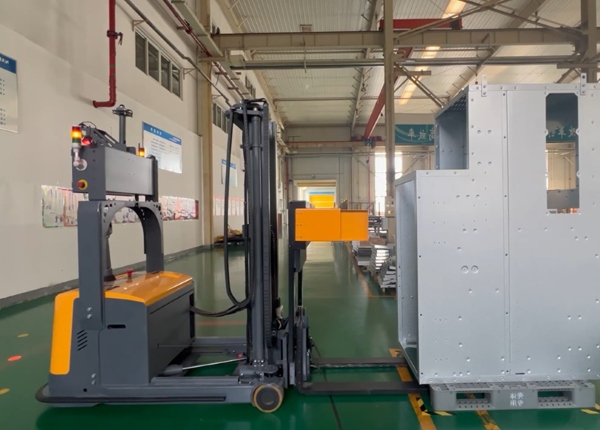
The exact requirements depend on fleet size, traffic density, mission volume, integration complexity, and database size.
| Component | Recommended |
|---|---|
| CPU | 8-Core Xeon or Equivalent |
| RAM | 16 GB |
| Storage | 500 GB SSD |
| Network | Dual Gigabit Ethernet |
| Operating System | Windows Server or Linux |
| Component | Recommended |
|---|---|
| CPU | 12–16 Core Server CPU |
| RAM | 32 GB |
| Storage | RAID SSD Storage |
| Power | Dual Power Supply |
| UPS | 30–60 Minutes Backup |
This provides capacity for future AGVs, WMS integration, reporting databases, and simulation modules.
In most cases, yes.
Many modern Chinese AGV RCS platforms support:
VMware – Widely used in industrial environments
Hyper-V – Common in Microsoft-based IT infrastructures
Virtualization Benefits
✔ Easier Backup Management
✔ Faster Disaster Recovery
✔ Hardware Independence
✔ Snapshot Capability
✔ Reduced Maintenance Downtime
Before purchasing, request written confirmation regarding supported hypervisor versions, minimum VM resources, and licensing restrictions.
A mature AGV system should not require internet access for daily operation.
AGVs ↓ RCS Server ↓ Local Database
Core fleet management functions should continue operating even if the facility loses internet connectivity.
Important Procurement Question:
Can the RCS operate indefinitely in a fully isolated or air-gapped network environment?
Internet Failure ↓ License Check Failure ↓ Potential Software Restriction
Online licensing may require periodic verification and can create operational risks.
Preferred for industrial AGV deployments.
Hardware Key
License File
Server MAC Address
USB Dongle
For mission-critical facilities, offline licensing is generally safer.
Your AGV map is often one of the most valuable project assets.
It typically contains:
Navigation Maps
Traffic Rules
Safety Zones
Charging Locations
Elevator Interfaces
Door Interfaces
Recreating these assets can require days or even weeks.
| Backup Type | Frequency |
|---|---|
| Mission Database | Daily |
| Configuration Database | Daily |
| User Permissions | Daily |
| Navigation Maps | Weekly |
| LiDAR Reference Maps | Weekly |
| Full System Backup | Monthly |
RCS Server ↓ Local Backup NAS ↓ Offsite Backup
This architecture protects against server failures, SSD failures, ransomware incidents, and accidental deletion.
| Fleet Size | Recommendation |
|---|---|
| 5–20 AGVs | Single Server |
| 20–100+ AGVs | Redundant Server |
Primary RCS ↓ Real-Time Replication ↓ Secondary RCS
Failover times can often be measured in minutes instead of hours.
Local Deployment
✔ Local Database
✔ Local User Authentication
✔ Local Backups
Remote Support Controls
✔ VPN-Only Access
✔ Approval-Based Sessions
✔ Session Logging
✔ Read-Only Diagnostics Option
Firewall Segmentation
✔ AGV Traffic
✔ Office Traffic
✔ Guest Wi-Fi
✔ Remote Support Traffic
✔ What are the official CPU and RAM requirements for 20 AGVs?
✔ Is VMware officially supported?
✔ Is Hyper-V officially supported?
✔ Can the system operate permanently without internet access?
✔ How is offline licensing managed?
✔ What database engine is used?
✔ How are backups performed?
✔ Is database replication supported?
✔ Can the RCS run in an air-gapped network?
✔ What is the recovery process after a server failure?
For a typical 20-AGV warehouse deployment, the safest architecture is:
✔ Dedicated Virtualized RCS Server
✔ 32 GB RAM
✔ RAID SSD Storage
✔ UPS Protection
✔ Daily Automated Database Backups
✔ Weekly Map Backups
✔ Offline Software Licensing
✔ Dedicated AGV VLAN
✔ VPN-Controlled Remote Support
This architecture delivers enterprise-level reliability while remaining independent from external internet services and minimizing downtime risks caused by server failures.
FREE ENGINEERING SUPPORT Stop Gambling on Generic Platforms. Get an AGV/AMR Tailored to Your Warehouse.Buying automated guided vehicles involves complex safety standards (CE/ANSI), navigation setups (Laser SLAM), and ERP system integration. Don't risk your factory safety with middle-men. ✓ 100% Direct Factory: Customized payload up to 5 Tons. ✓ Free CAD Simulation: Send us your layout, and our engineers will simulate the optimal AGV routes. ✓ Global Support: Overseas installation guidance & local maintenance partners. |











 Chinese
 English




