

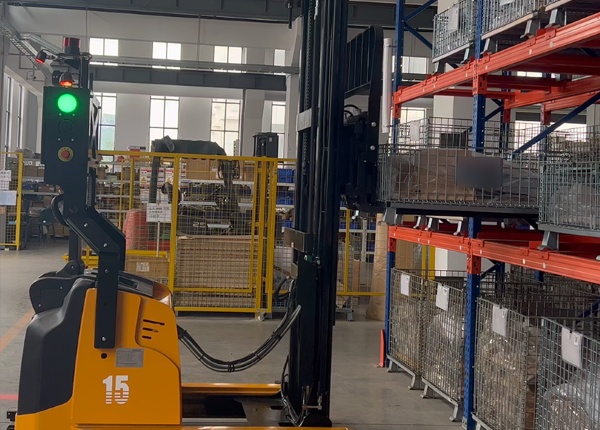
Import duties for AGV forklifts vary depending on your destination country and the exact technical classification of the equipment.
In most cases, AGV forklifts are classified under industrial machinery categories, but the final tariff rate depends on:
Local customs regulations
Product function (forklift vs mobile robot vs automated vehicle)
Navigation system type (laser SLAM, magnetic, vision-based, etc.)
Battery type and power system
Because AGVs combine robotics, logistics machinery, and electronic control systems, they may be reviewed under multiple tariff considerations rather than a single fixed category.
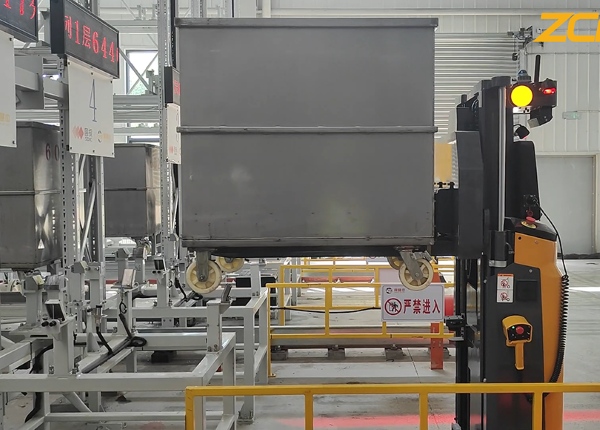
The HS (Harmonized System) code plays a critical role in determining your final import duty.
For AGV forklifts, classification may vary across jurisdictions depending on whether customs interprets the product as:
Industrial lifting equipment
Automated guided transport system
Robotics-based warehouse machinery
Electrically powered material handling equipment
Even small differences in classification can affect:
Duty rate level
Regulatory documentation requirements
Inspection likelihood at customs
Applicable trade compliance rules
Correct HS classification is therefore essential for avoiding unexpected cost adjustments or customs delays.
In some regions, additional trade measures may apply to certain categories of industrial equipment imported from China.
These may include:
Anti-dumping duties
Countervailing duties
Trade defense measures for specific machinery categories
However, these measures are not universal for all AGV or AMR products. They depend on:
Product classification
Country of import
Current trade policy environment
Whether similar domestic industries exist
Because trade regulations change over time, it is important to verify current rules with a customs broker before finalizing procurement.
A proper landed cost calculation must go beyond the factory price.
A complete cost structure typically includes:
AGV units
Charging stations
Spare parts package
Ocean freight or air freight
Insurance
Export handling
Customs duty based on HS code
Local VAT or sales tax
Possible additional trade measures
Inland trucking
Port handling fees
Customs clearance service fees
Site commissioning
Software integration (RCS/WMS/ERP)
Network and infrastructure setup
Training and onboarding
A realistic ROI model should always use total landed cost + deployment cost, not just unit price.
Some Chinese AGV suppliers do offer DDP (Delivered Duty Paid) services, but the scope can vary significantly.
In a full DDP arrangement, the supplier may handle:
Export clearance in China
International shipping
Import customs clearance
Duty payment
Final delivery to your warehouse
However, there are important considerations:
The buyer may have less visibility into:
HS code classification
Duty optimization strategy
Compliance documentation
Responsibility shifts to the seller, but delays may still impact project timelines.
Not all AGV manufacturers have:
Licensed import/export entities in your country
Local customs brokerage partners
Experience with heavy industrial machinery clearance
When importing AGV forklifts from China, the most important factors are not only tariffs themselves, but:
Correct HS code classification
Full landed cost transparency
Customs compliance planning
Supplier logistics capability (DDP vs FOB vs CIF)
For most industrial AGV projects, a hybrid approach is often safer:
Use FOB or CIF for transparency
Work with your own customs broker for classification control
Only use DDP when the supplier has proven local import capability
This ensures better control over both cost and customs risk while maintaining supply chain flexibility.
FREE ENGINEERING SUPPORT Stop Gambling on Generic Platforms. Get an AGV/AMR Tailored to Your Warehouse.Buying automated guided vehicles involves complex safety standards (CE/ANSI), navigation setups (Laser SLAM), and ERP system integration. Don't risk your factory safety with middle-men. ✓ 100% Direct Factory: Customized payload up to 5 Tons. ✓ Free CAD Simulation: Send us your layout, and our engineers will simulate the optimal AGV routes. ✓ Global Support: Overseas installation guidance & local maintenance partners. |





 Chinese
 English