

When sourcing AGV forklifts or warehouse automation systems from China, verifying whether a supplier is a genuine manufacturer is critical for reducing technical, financial, and delivery risks.
A proper factory verification process should include:
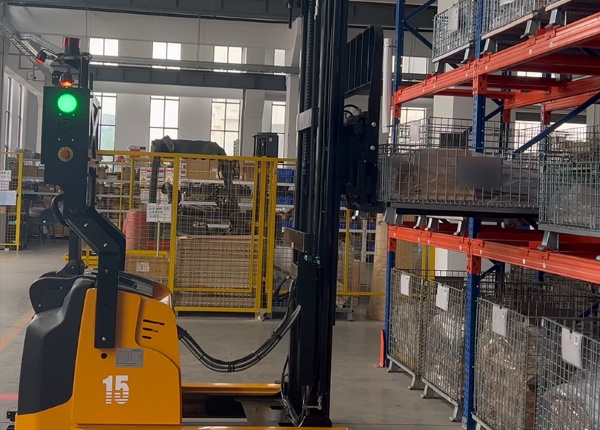
Production line inspection
Assembly workflow verification
Testing and calibration areas
Battery and electrical integration workshops
R&D or engineering department presence
In-house AGV chassis production or outsourcing
Control system development capability (RCS / navigation stack)
Software engineering team size and structure
Spare parts and component inventory system
Completed AGV deployments
Industry references (3PL, manufacturing, cold storage, etc.)
Export history to target regions
Batch testing procedures
Quality control checkpoints
FAT (Factory Acceptance Test) standards
A real manufacturer will usually demonstrate end-to-end control over hardware, software, and integration testing.
Before finalizing any large AGV automation purchase, it is important to request structural certifications that validate both compliance and manufacturing capability.
ISO 9001 (Quality Management System)
ISO 14001 (Environmental Management System)
CE certification (for European compliance, if applicable)
UL or equivalent electrical safety certifications (if targeting US market)
Battery safety certifications (UN38.3 for lithium batteries)
Functional safety compliance documentation (if available)
AGV system technical specification sheets
Navigation and control system architecture overview
Software version and release documentation
Factory Acceptance Test (FAT) procedures
These documents help confirm that the supplier operates with industrial-grade quality systems rather than ad-hoc assembly.
In the AGV and automation industry, many suppliers appear similar on the surface but have very different capabilities.
Own assembly and testing facility
In-house RCS (Robot Control System) development team
Ability to customize hardware frames and control logic
Direct access to engineering staff for technical discussions
Capability to perform FAT in-house before shipment
No visible production line or testing area
Sales-only staff with limited technical knowledge
Reliance on external OEM factories for all production
Inconsistent technical specifications across projects
Unable to modify software or control system logic
A key differentiator is whether the supplier can explain navigation algorithms, safety logic, and fleet control architecture in detail.
Yes. Independent third-party inspection services are widely used for industrial automation equipment.
Factory audit and production verification
Pre-shipment inspection (PSI)
Functional testing of AGVs
Load testing and safety validation
Software and system configuration checks
Serial number and configuration verification
SGS
TÜV
Bureau Veritas
Local China-based inspection agencies
Simulation of warehouse environments
Navigation accuracy testing
Battery performance verification
Multi-AGV coordination testing
Hiring a third-party inspector significantly reduces delivery risk and system non-conformance issues before shipment.
Large-scale AGV projects usually use milestone-based payment structures rather than full upfront payment.
Paid after contract signing
Used for engineering confirmation and production scheduling
Triggered after manufacturing progress
May align with assembly completion or internal testing
Payment linked to successful system testing
Includes software, hardware, and integration validation
Released after final inspection approval
Required before shipping documentation is issued
Held until commissioning or site acceptance
Used to ensure system performance stability
When sourcing AGV forklifts from China, the most important procurement safeguards are:
Verifying true manufacturing capability (not just sales presence)
Requiring industrial certifications and technical documentation
Using independent third-party inspection before shipment
Structuring payments around real production and testing milestones
A well-structured verification and payment system ensures that you are not just buying equipment—but securing a fully validated, production-ready automation system.
FREE ENGINEERING SUPPORT Stop Gambling on Generic Platforms. Get an AGV/AMR Tailored to Your Warehouse.Buying automated guided vehicles involves complex safety standards (CE/ANSI), navigation setups (Laser SLAM), and ERP system integration. Don't risk your factory safety with middle-men. ✓ 100% Direct Factory: Customized payload up to 5 Tons. ✓ Free CAD Simulation: Send us your layout, and our engineers will simulate the optimal AGV routes. ✓ Global Support: Overseas installation guidance & local maintenance partners. |





 Chinese
 English