


The total delivery timeline for AGV forklifts from China typically includes multiple stages, not just manufacturing.
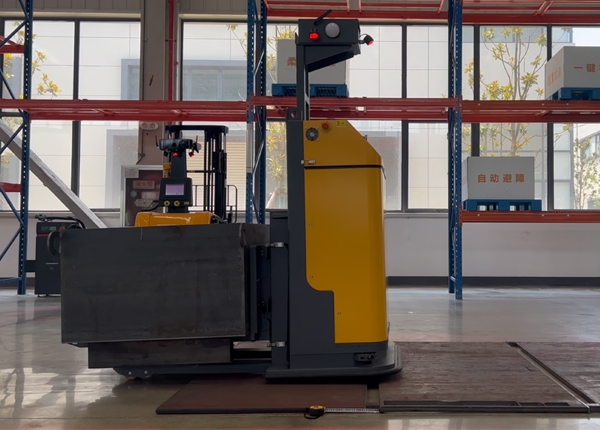
A standard project flow includes:
Requirement finalization
Layout planning and map design
Technical specification approval
Mechanical structure fabrication
Electrical system assembly
Navigation system integration
Software installation (RCS / control system)
Functional testing of AGVs
Load testing and safety verification
Multi-vehicle coordination simulation
System debugging and optimization
Packaging and reinforcement
Export documentation
Container loading and inspection
Sea transit to destination port
Customs clearance
Inland trucking to warehouse
Overall timelines vary based on customization level, fleet size, and software complexity.
For customized AMR or AGV systems, factory testing is a critical phase and often more complex than production itself.
Virtual warehouse simulation
Multi-robot traffic testing
Path optimization validation
Charging strategy testing
WMS / ERP integration verification
Emergency stop and safety system validation
Level of customization
Number of AGVs in fleet simulation
Complexity of warehouse layout
Integration with external systems
Highly customized systems require extended simulation cycles to ensure stability before shipment approval.
Ocean freight timelines from major Chinese ports depend on:
Port congestion levels
Shipping line schedules
Seasonal demand peaks
Customs inspection frequency
Destination port efficiency
Export port selection (e.g., Shanghai, Shenzhen, Ningbo)
Vessel availability and container allocation
Transit route (direct vs transshipment)
Destination customs workload
Port congestion delays
Container rollover (missed vessel booking)
Customs inspection holds at destination
Equipment-related clearance checks (battery / machinery inspection)
For industrial AGVs, documentation accuracy can significantly reduce delay risk at both origin and destination ports.
For AGV forklift projects, on-site commissioning is usually required for integration and optimization.
System configuration
Map upload and calibration
Network setup guidance
Simulation validation
AGV installation and setup
Wi-Fi / network optimization
Real warehouse mapping
System integration with WMS/ERP
Operator training
Visa and travel arrangements
Project size and number of AGVs
Warehouse readiness level
Complexity of integration
Large-scale deployments may require multiple engineers and phased deployment cycles.
In most AGV manufacturing projects, configuration flexibility decreases significantly once production has started.
Full customization possible
Hardware and software adjustments allowed
Navigation system configuration can be modified
Mechanical design changes still feasible
Minor software adjustments may still be possible
Parameter tuning (speed, logic rules, routing) can be adjusted
Hardware modifications become difficult or costly
Changes are limited to software-level tuning
Structural or navigation system changes are generally restricted
Late-stage configuration changes can lead to:
Production delays
Re-testing requirements
Increased commissioning time
For AGV forklift projects from China, the most important factor is not just production speed, but end-to-end schedule alignment, including:
Engineering confirmation before production starts
Controlled FAT and simulation phase
Clear shipping and logistics planning
Early alignment on final configuration freeze point
Pre-planned on-site commissioning schedule
A well-managed AGV project timeline is typically driven more by integration and testing complexity than by raw manufacturing speed.
FREE ENGINEERING SUPPORT Stop Gambling on Generic Platforms. Get an AGV/AMR Tailored to Your Warehouse.Buying automated guided vehicles involves complex safety standards (CE/ANSI), navigation setups (Laser SLAM), and ERP system integration. Don't risk your factory safety with middle-men. ✓ 100% Direct Factory: Customized payload up to 5 Tons. ✓ Free CAD Simulation: Send us your layout, and our engineers will simulate the optimal AGV routes. ✓ Global Support: Overseas installation guidance & local maintenance partners. |





 Chinese
 English