


When importing AGV forklifts, autonomous pallet trucks, or warehouse automation systems from China, the shipping terms you choose can significantly affect your logistics costs, risk exposure, and project control.
While equipment pricing often receives the most attention, experienced buyers understand that shipping responsibilities can have a major impact on the final landed cost of an automation project.
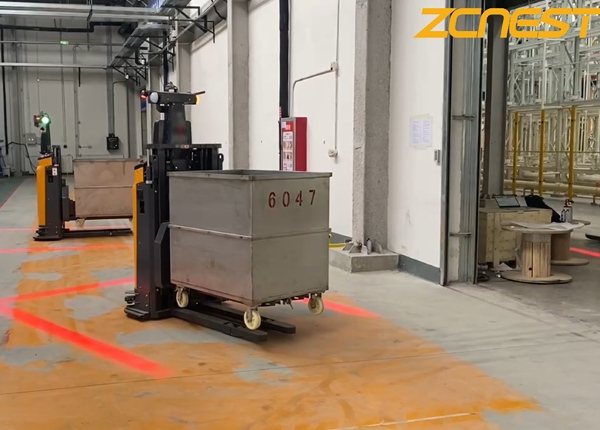
Under FOB terms, the supplier is responsible for delivering the AGVs to the departure port and loading them onto the vessel.
The buyer manages:
Ocean freight booking
Marine cargo insurance
Import customs clearance
Destination port charges
Inland transportation
✔ Greater control over shipping schedules
✔ Freedom to select your own freight forwarder
✔ Better visibility into logistics costs
✔ More flexibility when choosing customs brokers
✖ Requires more logistics coordination
✖ Buyer assumes greater transportation responsibility
Under CIF terms, the supplier arranges:
Ocean freight
Basic marine cargo insurance
Transportation to the destination port
The buyer remains responsible for:
Import customs clearance
Duties and tariffs
Destination terminal charges
Final delivery to the warehouse
✔ Simplified purchasing process
✔ Less logistics management
✔ Suitable for first-time importers
✖ Limited control over carrier selection
✖ Insurance coverage may be basic
✖ Destination fees can be difficult to estimate in advance
For most warehouse automation projects, FOB is generally the preferred option.
FOB gives buyers greater control over:
Shipping schedules
Freight provider selection
Insurance coverage
Customs clearance planning
Overall landed cost management
CIF can still be a practical choice for smaller projects or companies without established import procedures.
The quoted freight cost is only one part of the logistics budget.
Additional destination expenses may include:
Terminal Handling Charges (THC)
Port security fees
Documentation fees
Container service fees
Customs examination fees
X-ray inspection charges
Intensive examination costs
Agriculture inspections (when applicable)
Demurrage
Detention
Container storage fees
Chassis rental charges
Because AGVs commonly use lithium battery systems, additional charges may apply for:
Battery documentation review
Dangerous goods declarations
Specialized cargo handling
Not every customs broker has experience with industrial automation equipment.
Before selecting a broker, ask:
Have you previously handled AGV or AMR imports?
Are you familiar with lithium battery regulations?
Have you cleared industrial automation equipment before?
HTS code classification
Country-of-origin requirements
Product marking regulations
Battery certification documentation
Pre-arrival document review
Customs audit assistance
Inspection coordination
Duty optimization guidance
A broker familiar with warehouse automation can often help prevent avoidable delays and compliance issues.
Ocean shipping is the preferred option for most AGV projects.
Advantages include:
✔ Better suited for heavy machinery
✔ Lower transportation cost
✔ Containerized protection during transit
✔ Suitable for complete fleet deployments
Air freight is typically reserved for:
Urgent replacement units
Critical spare parts
Emergency project recovery situations
High-priority LiDAR or controller components
Modern AGVs contain advanced electronics, including:
LiDAR sensors
Industrial computers
Cameras
IMUs
Lithium battery systems
To minimize transportation risks, consider:
✔ Shock-resistant packaging
✔ Moisture protection systems
✔ Container desiccants
✔ Sensor locking procedures
✔ Container loading verification records
FOB China Port
Buyer-controlled freight forwarder
Comprehensive marine cargo insurance
Industrial equipment specialist customs broker
Pre-arrival document verification
Independent pre-shipment inspection
Container loading photos and videos
Equipment serial number verification
For most AGV forklift imports from China, FOB shipping terms provide the best balance of logistics control, transparency, and risk management.
Before signing the purchase contract, clearly define:
✔ Freight responsibilities
✔ Customs clearance obligations
✔ Destination port charges
✔ Marine insurance coverage
✔ Lithium battery transportation requirements
The most successful AGV projects are rarely determined by the lowest equipment price. They are usually the result of careful logistics planning, clear responsibility allocation, and a well-managed import process from factory to warehouse.
FREE ENGINEERING SUPPORT Stop Gambling on Generic Platforms. Get an AGV/AMR Tailored to Your Warehouse.Buying automated guided vehicles involves complex safety standards (CE/ANSI), navigation setups (Laser SLAM), and ERP system integration. Don't risk your factory safety with middle-men. ✓ 100% Direct Factory: Customized payload up to 5 Tons. ✓ Free CAD Simulation: Send us your layout, and our engineers will simulate the optimal AGV routes. ✓ Global Support: Overseas installation guidance & local maintenance partners. |





 Chinese
 English