


When importing AGV forklifts, autonomous pallet trucks, or warehouse automation equipment from China, cargo insurance should be viewed as part of your overall risk-management strategy—not merely a shipping formality.
Modern AGVs contain sensitive electronics, navigation sensors, lithium batteries, industrial computers, and software-controlled systems that may be expensive and time-consuming to replace if damaged during international transportation.
Understanding insurance coverage before shipment can help prevent disputes, project delays, and unexpected financial losses.
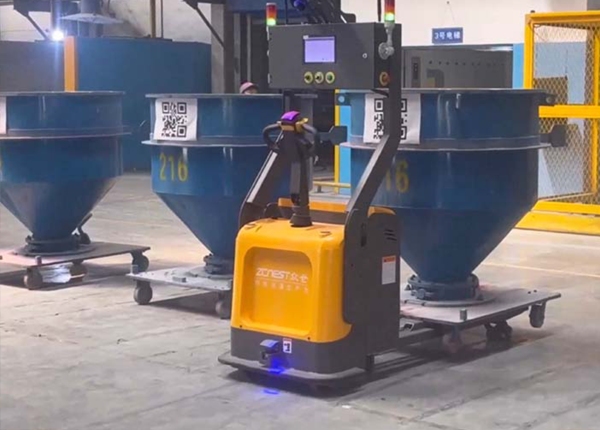
Unlike traditional industrial equipment, AGVs combine mechanical systems with sophisticated electronic components.
A suitable cargo insurance policy should address risks such as:
Physical impact during loading and unloading
Container accidents during transit
Severe weather during ocean transportation
Theft or pilferage
Moisture exposure and condensation
Inland trucking risks after arrival
When reviewing coverage, confirm whether protection extends from the supplier's factory all the way to the final delivery location, rather than covering only the ocean freight segment.
Not necessarily.
Many buyers assume that all electronic components are automatically protected under basic cargo insurance policies.
In reality, insurers often distinguish between transportation damage and product defects.
Transit-related physical damage such as:
Cracked LiDAR housings
Damaged industrial cameras
Broken industrial PCs
Controller damage caused by impact
These incidents are generally easier to support during a claim.
Equipment failures unrelated to transportation, including:
Software malfunctions
Manufacturing defects
Component failures caused by product quality issues
These situations are usually handled under the supplier's warranty rather than through cargo insurance.
Before shipment, verify whether the policy specifically covers transportation-related damage to AGV electronic systems and control components.
If damage is discovered upon arrival, immediate documentation is essential.
Check for:
Crushed packaging
Forklift impact marks
Water intrusion
Structural deformation
Damaged crates or pallets
Collect:
High-resolution photographs
Delivery inspection reports
Packaging condition records
Container condition photos
Promptly inform:
Insurance company
Freight forwarder
Shipping carrier
Equipment supplier
Many insurance policies require notification within a specific timeframe.
For structural damage such as a bent mast or damaged chassis, a typical claim package may include:
Commercial Invoice
Packing List
Bill of Lading
Arrival inspection report
Photographs
Independent surveyor report (if required)
Repair quotation
Replacement parts estimate
Technical evaluation from the manufacturer
The insurer will determine whether the damage occurred during covered transportation activities before approving compensation.
Many importers insure only the invoice value of the AGVs.
However, warehouse automation projects often involve additional costs that should be considered.
Potential insured value may include:
Equipment value
Freight charges
Packaging expenses
Insurance premiums
Related logistics costs
For AGV projects, the financial impact of damaged equipment often extends beyond hardware replacement and may affect installation schedules, commissioning timelines, and warehouse operations.
The insured amount should reflect your total financial exposure, not just the purchase price.
Under standard CIF (Cost, Insurance and Freight) terms:
The seller typically arranges:
Ocean freight
Marine cargo insurance
Freight booking
up to the named destination port.
The buyer generally remains responsible for:
Import customs clearance
Duties and taxes
Inland transportation
Additional insurance coverage beyond the CIF policy
An important consideration is that CIF insurance may provide only the minimum coverage required by the sales contract.
For high-value AGV projects, many buyers purchase supplemental cargo insurance for additional protection.
Before the shipment leaves China, clarify the following:
✔ Is coverage door-to-door or port-to-port?
✔ Are lithium batteries included in the coverage?
✔ Are AGV electronics protected against transit damage?
✔ What exclusions apply?
✔ Is there a deductible?
✔ What documentation is required for claims?
✔ Is inland trucking covered after port arrival?
✔ Who appoints the surveyor if damage occurs?
Before shipment:
Review policy coverage carefully
Verify protection for electronic components
Document equipment condition before container loading
Photograph serial numbers and packaging
Establish a clear arrival inspection process
Understand claim procedures before shipment departs
For AGV forklift imports, the greatest insurance risk is often not the steel structure itself—it is the combination of electronics, sensors, batteries, and project schedules that depend on the equipment arriving in operational condition.
A well-structured cargo insurance strategy can help protect:
Your AGV investment
Project implementation timelines
Installation schedules
Warehouse automation deployment plans
Overall supply chain continuity
The most successful AGV import projects treat cargo insurance as an integral part of procurement planning rather than an afterthought once the equipment is ready to ship.
FREE ENGINEERING SUPPORT Stop Gambling on Generic Platforms. Get an AGV/AMR Tailored to Your Warehouse.Buying automated guided vehicles involves complex safety standards (CE/ANSI), navigation setups (Laser SLAM), and ERP system integration. Don't risk your factory safety with middle-men. ✓ 100% Direct Factory: Customized payload up to 5 Tons. ✓ Free CAD Simulation: Send us your layout, and our engineers will simulate the optimal AGV routes. ✓ Global Support: Overseas installation guidance & local maintenance partners. |





 Chinese
 English