


Container planning is often overlooked during AGV procurement, yet it directly affects freight costs, customs declarations, unloading arrangements, and overall project timelines.
The actual number of AGVs that fit into a container depends on several factors, including:
Forklift dimensions
Mast height
Battery type
Packaging method
Charging equipment
Export crate design
For accurate budgeting and logistics planning, suppliers should provide a detailed container loading plan before shipment.
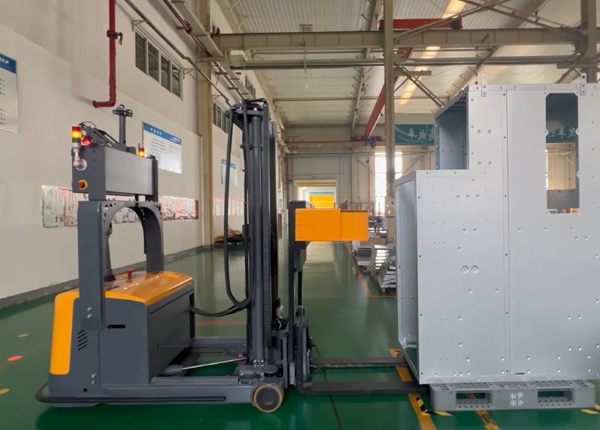
A standard 40ft High Cube (40HQ) container provides approximately:
| Specification | 40ft HQ Container |
|---|---|
| Internal Length | 12.03 m |
| Internal Width | 2.35 m |
| Internal Height | 2.69 m |
| Volume | ~76 m³ |
| Maximum Payload | ~26–28 tons |
A 1.5-ton AGV reach truck commonly measures:
Length: 2.4–2.8 m
Width: 1.2–1.4 m
Height: 2.1–2.4 m
Weight: 2,000–3,500 kg
Depending on mast configuration and packaging requirements:
Compact Packaging
4–6 AGV reach trucks per 40HQ container
Standard Export Packaging
3–5 AGV reach trucks per 40HQ container
Heavy Packaging with Spare Parts
2–4 AGV reach trucks per 40HQ container
In many cases, the weight limit is reached before the volume limit when shipping heavy AGV forklifts.
In most projects, the answer is yes.
It is common to ship the following items together:
AGV forklifts
Charging stations
Spare parts kits
Safety accessories
Documentation packages
A separate shipment may be necessary when:
Multiple charging cabinets are ordered
Opportunity charging infrastructure is extensive
Fast chargers require specialized packaging
The project includes a large AGV fleet
For small and medium-sized projects, chargers are typically consolidated with the AGVs.
Not necessarily.
The decision is usually based on equipment dimensions rather than weight alone.
Overall height remains within container limits
Forks and mast can be secured properly
Equipment width fits through container doors
Many 5-ton AGVs can still be transported in:
40ft High Cube containers
40ft Standard containers
Mast height cannot be reduced
Equipment width exceeds container dimensions
Weight concentration exceeds floor loading limits
Oversized attachments are installed
Examples include:
Heavy-duty counterbalanced AGVs
Container handling AGVs
Specialized steel coil handling vehicles
✔ Easier loading of oversized equipment
✔ Reduced dismantling requirements
✖ Higher freight costs
✖ Increased cargo exposure
✖ Additional lashing and securing requirements
Many buyers underestimate packaging weight during logistics planning.
| Packaging Component | Typical Weight |
| Steel Base Frame | 150–500 kg |
| Export Wooden Crate | 200–800 kg |
| Shock Protection Materials | 20–100 kg |
| Moisture Protection & Securing Materials | 10–50 kg |
| Packaging Type | Additional Weight |
| Minimal Export Packing | 5–10% |
| Standard Export Packing | 10–15% |
| Heavy-Duty Crated Packing | 15–25% |
AGV Net Weight:
3,000 kg
Packaging Weight:
400 kg
Estimated Shipping Weight:
Approximately 3,400 kg
This additional weight affects:
Ocean freight calculations
Inland trucking costs
Crane capacity requirements
Customs declarations
Before cargo leaves the factory, request the following information from your supplier.
The plan should include:
AGV positions
Charger locations
Spare parts placement
Container utilization percentage
For every item, confirm:
Length
Width
Height
Gross weight
Net weight
Request photos showing:
Fork securing methods
Mast locking procedures
Charger protection measures
Shock prevention arrangements
Typically shipped in one 40HQ container.
Usually require multiple 40HQ containers.
A detailed container loading study is strongly recommended.
Before finalizing freight quotations, ask the supplier to provide a Container Load Calculation Report. This allows buyers to compare:
Standard container shipping
High Cube container shipping
Flat-rack transportation
Partial-container versus full-container loading
and avoid unexpected logistics costs after production is completed.
For most warehouse automation projects, a 40ft High Cube container is the most economical solution for shipping AGV reach trucks, charging stations, and spare parts together.
However, oversized 5-ton counterbalanced AGVs may require special loading arrangements or flat-rack transportation.
Before booking freight, obtain:
✔ Detailed packing dimensions
✔ Gross and net weights
✔ Container loading drawings
✔ Charger packaging specifications
✔ Freight forwarder loading confirmation
A proper container utilization study can often reduce total logistics costs by 10–20% compared with shipping arrangements made at the last minute.
FREE ENGINEERING SUPPORT Stop Gambling on Generic Platforms. Get an AGV/AMR Tailored to Your Warehouse.Buying automated guided vehicles involves complex safety standards (CE/ANSI), navigation setups (Laser SLAM), and ERP system integration. Don't risk your factory safety with middle-men. ✓ 100% Direct Factory: Customized payload up to 5 Tons. ✓ Free CAD Simulation: Send us your layout, and our engineers will simulate the optimal AGV routes. ✓ Global Support: Overseas installation guidance & local maintenance partners. |











 Chinese
 English




