


Power compatibility is one of the most overlooked risks in AGV projects. While buyers often focus on navigation systems, software integration, and warehouse layouts, electrical compatibility issues can delay commissioning, increase installation costs, and even prevent a project from passing local inspections.
Before placing an order, procurement teams should verify not only the AGV itself, but also the charging infrastructure, battery system, and facility power requirements.
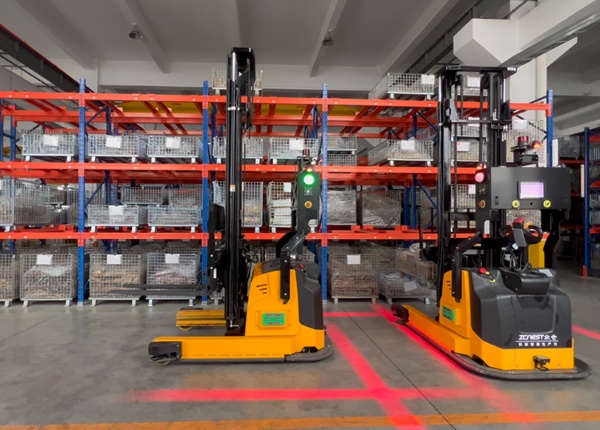
Electrical mismatches are among the most common causes of deployment delays.
Potential issues include:
Incorrect charger voltage
Incompatible frequency requirements
Non-compliant grounding methods
Insufficient breaker capacity
Local certification requirements not being met
A few hours of planning during the quotation stage can prevent weeks of corrective work after equipment arrives on site.
Most AGV manufacturers can configure charging systems to match local industrial power standards.
Typical industrial voltages include:
| Region | Common Industrial Voltage |
|---|---|
| United States | 480V / 277V 3-Phase, 60Hz |
| Canada | 600V or 480V 3-Phase |
| Europe | 400V 3-Phase, 50Hz |
| Singapore | 400V 3-Phase, 50Hz |
| Australia | 415V 3-Phase, 50Hz |
| China | 380V 3-Phase, 50Hz |
However, chargers are often customized during manufacturing. Never assume voltage compatibility without written confirmation.
Before production begins, confirm:
Input voltage range
Operating frequency (50Hz or 60Hz)
Maximum charging current
Charger power rating
Grounding requirements
In most cases, yes.
The Battery Management System (BMS) controls:
Cell balancing
Battery protection
State-of-charge monitoring
Temperature management
Charging control logic
Many suppliers can customize charging strategies to suit local operating conditions.
Opportunity Charging
Charging during work breaks
Charging during idle periods
Reduced downtime
Utility-Aware Charging
Off-peak charging schedules
Peak-demand reduction
Multi-charger load balancing
Battery Protection Settings
Temperature limits
Maximum charge current
Depth-of-discharge restrictions
Most of these adjustments are implemented through software rather than hardware modifications.
Battery certification requirements vary by country and industry.
UN38.3 Test Report
MSDS (Material Safety Data Sheet)
Applicable IEC standards
UL Certification
ETL Certification
Recognized Component Listings
CE-related compliance documentation
A battery may have transportation approval but not local electrical certification.
Always request:
Certificate copies
Model-specific certification documents
Compliance reports matching the supplied battery
Electrical incompatibility can lead to:
Charging stations cannot be commissioned until modifications are completed.
Potential expenses include:
Transformer installation
Electrical panel upgrades
New disconnect switches
Additional cable runs
Local inspectors may reject installations that do not comply with electrical regulations.
Before manufacturing starts, provide your supplier with complete facility power information.
Voltage
Frequency
Phase configuration
Available breaker capacity
Single-line electrical diagrams
Charger installation locations
Electrical room layouts
Electrical code requirements
Preferred connectors
Grounding specifications
Site safety standards
Providing this information early allows the supplier to configure the charging system correctly before shipment.
A transformer may be required when:
Facility voltage differs from charger voltage
Existing infrastructure cannot support charger requirements
Future expansion requires a common charging standard
However, transformers also introduce:
Additional capital expense
Increased installation complexity
Energy losses
Ongoing maintenance requirements
Whenever possible, ordering chargers designed for local voltage standards is usually the more cost-effective option.
What input voltage does the charger require?
Is local industrial voltage supported?
Is both 50Hz and 60Hz operation available?
What certifications are available for the battery system?
Can certification documents be provided before shipment?
Is the battery approved for industrial applications in our market?
Recommended breaker size
Cable specifications
Grounding method
Electrical protection requirements
Request:
Electrical schematics
Charger wiring diagrams
BMS specifications
Installation manuals
Electrical compatibility should be confirmed during the quotation stage—not after the AGVs arrive.
Before approving production, make sure you have verified:
✔ Local voltage and frequency requirements
✔ Charger electrical specifications
✔ Battery compliance documentation
✔ Facility power capacity
✔ Electrical drawings and installation manuals
✔ Charger wiring requirements
The cost of correcting an electrical mismatch after shipment is often far greater than specifying the correct configuration before manufacturing begins. For most AGV projects, proper electrical planning is one of the simplest ways to reduce commissioning risk and keep deployment schedules on track.
FREE ENGINEERING SUPPORT Stop Gambling on Generic Platforms. Get an AGV/AMR Tailored to Your Warehouse.Buying automated guided vehicles involves complex safety standards (CE/ANSI), navigation setups (Laser SLAM), and ERP system integration. Don't risk your factory safety with middle-men. ✓ 100% Direct Factory: Customized payload up to 5 Tons. ✓ Free CAD Simulation: Send us your layout, and our engineers will simulate the optimal AGV routes. ✓ Global Support: Overseas installation guidance & local maintenance partners. |





 Chinese
 English