


Fire safety is one of the most critical considerations when deploying AGV forklifts, autonomous pallet trucks, and warehouse automation systems. Most modern AGVs rely on lithium-ion batteries, automated charging stations, and high-power electrical systems, making fire prevention an essential part of project planning.
A fire incident can affect:
Personnel safety
Inventory protection
Business continuity
Insurance coverage
Regulatory compliance
Rather than focusing on a single certificate, buyers should evaluate the complete battery, charging, and facility safety ecosystem.
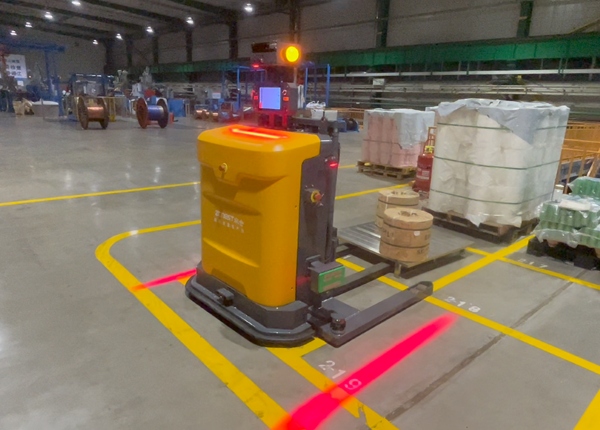
When evaluating an AGV supplier, documentation should cover three key areas:
Request:
UN38.3 transportation test report
Battery MSDS (Material Safety Data Sheet)
Battery cell manufacturer information
Battery pack safety test reports
For North American projects, many buyers also request documentation demonstrating compliance with applicable battery safety standards and testing requirements.
The charging system should include evidence of:
Electrical safety compliance
Overcurrent protection testing
Ground fault protection design
Thermal shutdown functionality
Ask whether the charger is configured and certified for installation in your target market.
Request:
Electrical schematics
Battery protection architecture
Emergency disconnect procedures
Charging system safety manuals
A qualified supplier should clearly explain how electrical faults are detected, isolated, and reported.
Modern AGV charging stations commonly incorporate multiple protection mechanisms.
Typical protection functions include:
Temperature monitoring
Overcurrent protection
Overvoltage protection
Short-circuit protection
Emergency shutdown capability
If abnormal temperature conditions are detected:
Charging current is reduced
Charging automatically stops
A fault alarm is generated
The event is recorded in the charging system
Before purchasing, confirm:
What temperature thresholds trigger shutdown?
Is monitoring performed at the charger, battery, or both?
How are charging faults reported to the RCS?
Is thermal protection documented in the charger specifications?
A properly designed AGV battery system typically uses multiple layers of protection.
Common features include:
Internal cell safety devices
Temperature monitoring
Voltage monitoring
The BMS typically manages:
Overcharge protection
Over-discharge protection
Cell balancing
Thermal monitoring
Additional safeguards often include:
Fuse protection
Contactor isolation
Emergency disconnect capability
Ask:
Who manufactures the battery cells?
What BMS platform is used?
How is thermal runaway risk managed?
What battery testing is performed before shipment?
In many AGV projects, battery quality varies more significantly between suppliers than the vehicle chassis itself.
Charging stations should be treated as dedicated industrial battery charging zones.
Whenever possible:
Create a designated charging zone
Keep combustible materials away from chargers
Maintain clear emergency access routes
Consider installing:
Smoke detectors
Heat detectors
CCTV monitoring
Alarm system integration
Develop documented procedures covering:
Battery isolation
Emergency shutdown
Personnel evacuation
Fire department notification
Employees should be trained to identify:
Unusual battery temperatures
Battery swelling
Smoke or odors
Charging faults
Physical battery damage
A dedicated charging area separated from high-value inventory is generally considered best practice.
Benefits include:
Reduced fire exposure
Easier inspection access
Improved emergency response
Installing chargers directly beside dense combustible storage may increase risk and complicate insurance reviews.
The acceptable separation distance depends on:
Local fire regulations
Facility design
Insurer requirements
Battery capacity
The answer depends on local regulations and insurance requirements.
Several factors may influence approval:
Authorities may view:
Two AGVs differently from fifty AGVs
Storage-only areas differently from active charging zones
Higher total lithium battery capacity may trigger additional requirements.
Authorities may evaluate:
Fire detection systems
Fire separation measures
Ventilation systems
Emergency access routes
In many projects, insurance requirements create more deployment challenges than the AGVs themselves.
Before purchasing AGVs, discuss:
Are lithium-powered AGVs covered under the existing policy?
Is a dedicated charging area required?
Is automatic fire suppression required?
Will additional inspections be necessary?
Are there limits on the number of AGVs that may be stored or charged in one area?
Obtaining answers before procurement can prevent costly modifications later.
Before shipment, request:
✔ Battery safety documentation
✔ Battery manufacturer information
✔ Charger protection specifications
✔ BMS architecture overview
✔ Thermal shutdown procedures
✔ Emergency disconnect instructions
✔ Charging station installation requirements
✔ Fire risk assessment recommendations
✔ Electrical safety schematics
✔ Battery testing records
To evaluate suppliers consistently, include the following questions:
What battery cell manufacturer is used?
What battery safety certifications are available?
How is thermal runaway risk mitigated?
Does the charger include thermal shutdown protection?
What fault conditions trigger charging shutdown?
How are charger alarms communicated?
What charging area requirements are recommended?
Are fire risk assessment guidelines available?
What emergency procedures should be implemented?
When importing AGV forklifts from China, fire safety should be evaluated as a complete system rather than as a battery-only issue.
A qualified supplier should be able to demonstrate:
✔ Documented battery safety testing
✔ Multi-layer battery protection architecture
✔ Battery Management System (BMS) safeguards
✔ Charger thermal shutdown capability
✔ Emergency isolation procedures
✔ Installation guidance for charging areas
✔ Clear fire safety documentation
The most successful AGV deployments involve early coordination between the supplier, facility engineer, safety manager, insurer, and local authority having jurisdiction. Addressing fire protection requirements during the planning stage is far easier and more cost-effective than modifying a facility after the equipment has already arrived.
FREE ENGINEERING SUPPORT Stop Gambling on Generic Platforms. Get an AGV/AMR Tailored to Your Warehouse.Buying automated guided vehicles involves complex safety standards (CE/ANSI), navigation setups (Laser SLAM), and ERP system integration. Don't risk your factory safety with middle-men. ✓ 100% Direct Factory: Customized payload up to 5 Tons. ✓ Free CAD Simulation: Send us your layout, and our engineers will simulate the optimal AGV routes. ✓ Global Support: Overseas installation guidance & local maintenance partners. |





 Chinese
 English