


Occupational safety compliance for AGV forklifts is not defined by the manufacturing country.
It is determined by whether the system meets local workplace safety regulations, such as:
OSHA (United States)
EU Machinery Directive / CE Framework
Singapore WSH Regulations
Other national industrial safety codes
For AGV deployments, inspectors focus less on branding and more on measurable safety behavior in real operating conditions.
| Operating Mode | Noise Range (dB) | Compliance Notes |
|---|---|---|
| Standby / Idle | 40–55 dB | Safe for long exposure |
| Normal driving | 55–65 dB | Generally compliant |
| Full-load movement | 65–75 dB | Monitor exposure duration |
| Acceleration / turning | 70–80 dB | Short-term exposure |
| Emergency braking | 75–85 dB | Peak event only |
Below 70 dB → generally safe for continuous exposure
70–85 dB → may require administrative controls (rotation / PPE)
Above 85 dB → potential regulatory threshold in many jurisdictions
Request the following:
Acoustic test report (idle + loaded + braking)
Testing standard (ISO 11201 / ISO 4871 or equivalent)
Measurement conditions (distance, load, surface type)
A compliant AGV should include:
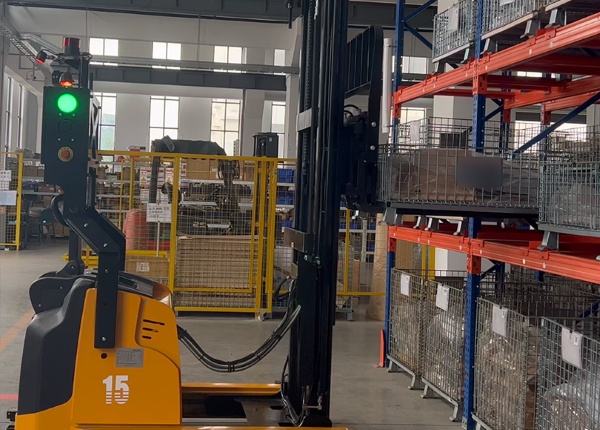
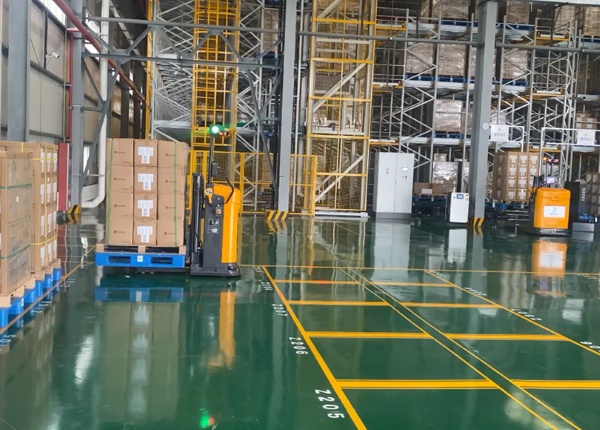
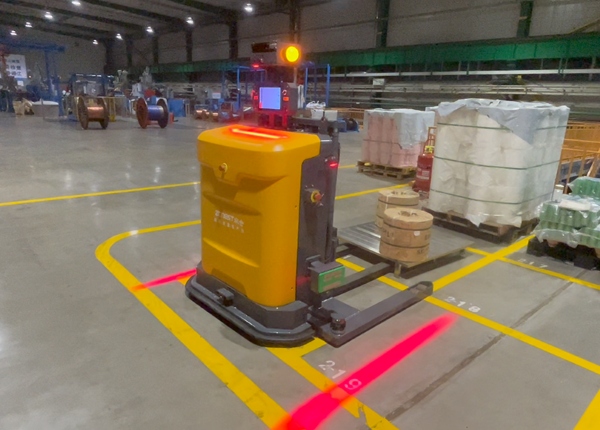
360° LED beacon light (multi-color status)
Directional movement indicators
Fault status strobe light
Load operation indicators (optional)
Mandatory alarm states:
Startup warning tone
Movement warning signal
Obstacle detection alarm
Emergency stop alarm
Alarm behavior must be state-dependent, not a single generic sound.
Visibility range: 10–20 meters minimum
Sound differentiation between states
No ambiguity between warning vs emergency signals
A compliant AGV must include:
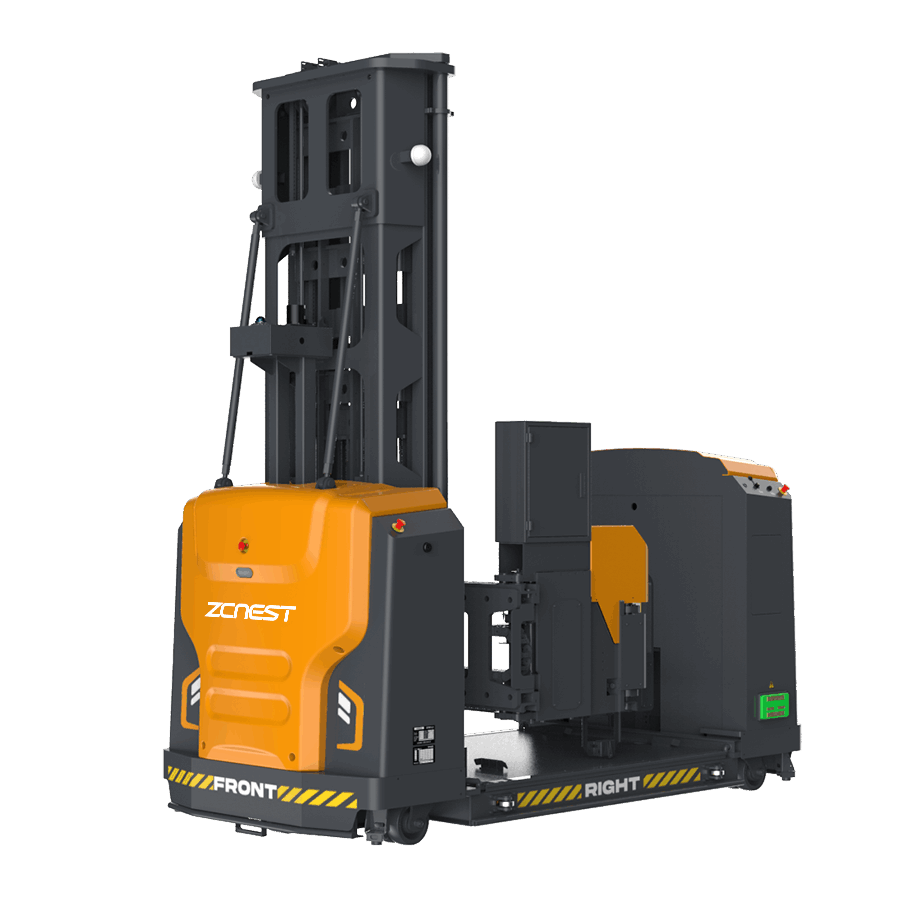
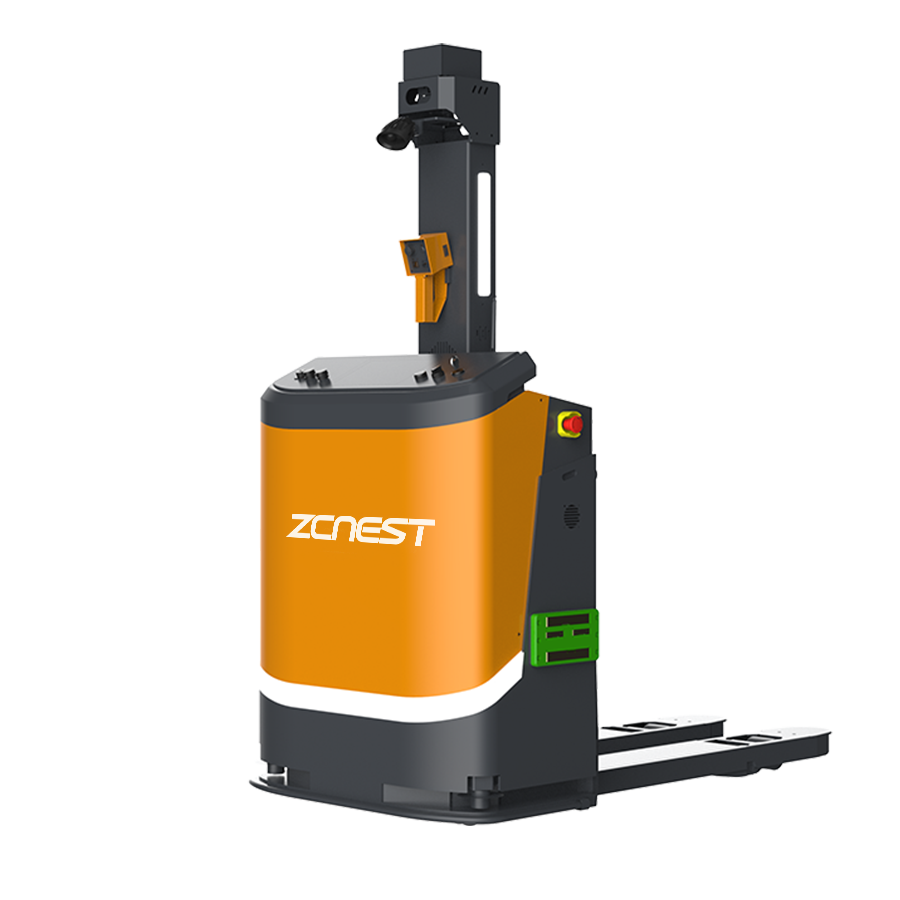
Mushroom-head emergency stop buttons (red, clearly marked)
Installed on both sides of vehicle
Reachable within 0.8–1.5m height range
Not obstructed by load or mast structure
Emergency stop system must:
Be hard-wired (not software-only)
Trigger immediate motion shutdown
Require manual reset before restart
Operate independently from main controller
Inspectors typically verify:
Response time after activation
Full motion shutdown behavior
Restart authorization procedure
Redundancy of E-stop locations
Authorities may simulate:
Pedestrian crossing AGV path
Obstacle in blind zone
Emergency stop activation
Multi-AGV traffic interaction
Restart after fault condition
Risk assessment report (ISO 12100 aligned)
Functional safety validation report
Electrical safety certification
EMC compliance documentation
Maintenance & operation manuals
Even if hardware is safe:
Missing or incomplete documentation can result in audit failure.
Inspectors evaluate:
Minimum pedestrian separation distance
Speed reduction near humans
Corner and intersection safety logic
Blind spot detection coverage
Key evaluation factors:
Average shift exposure levels
Peak noise events (braking / alarms)
PPE requirement determination
Maintenance access safety
Charging station accessibility
Manual handling touchpoints
AGV lane separation
Intersection priority logic
Pedestrian crossing rules
One-way vs mixed traffic control
No formal risk assessment documentation
CE certificate only without technical backup
No verified noise test report
E-stop circuit not independently documented
Safety zones not configurable or exportable
Generic alarm system (no state differentiation)
Before shipment, require a complete compliance package:
Noise test report (real operating conditions)
Laser scanner safety certification
Emergency stop circuit diagram
Risk assessment report
Safety PLC description (if applicable)
Alarm system specification
Safety zone maps (warning / slowdown / stop)
Human interaction logic description
Speed zoning configuration
Warehouse traffic safety layout plan
Occupational safety compliance is not achieved by the AGV alone.
It is achieved by the integration of:
Machine design
Control software logic
Warehouse layout planning
Verified safety documentation
Real-world operational validation
A properly engineered AGV system should demonstrate:
✔ Measurable noise compliance under load conditions
✔ Multi-state visual and audible warning system
✔ Fail-safe emergency stop architecture
✔ Verified human-robot interaction logic
✔ Complete audit-ready safety documentation set
FREE ENGINEERING SUPPORT Stop Gambling on Generic Platforms. Get an AGV/AMR Tailored to Your Warehouse.Buying automated guided vehicles involves complex safety standards (CE/ANSI), navigation setups (Laser SLAM), and ERP system integration. Don't risk your factory safety with middle-men. ✓ 100% Direct Factory: Customized payload up to 5 Tons. ✓ Free CAD Simulation: Send us your layout, and our engineers will simulate the optimal AGV routes. ✓ Global Support: Overseas installation guidance & local maintenance partners. |





 Chinese
 English