


For most AGV projects, the biggest challenge is not the forklift itself—it is the integration between your Warehouse Management System (WMS), AGV Fleet Management System (RCS/FMS), and facility automation equipment.
A successful deployment should allow the WMS to create transport missions automatically, while the AGV system handles task execution, traffic control, charging management, and fleet scheduling.
📥 "Planning to automate your warehouse? Send us a simple layout sketch or channel dimensions, and our engineers will design a FREE AGV Route Simulation for you."
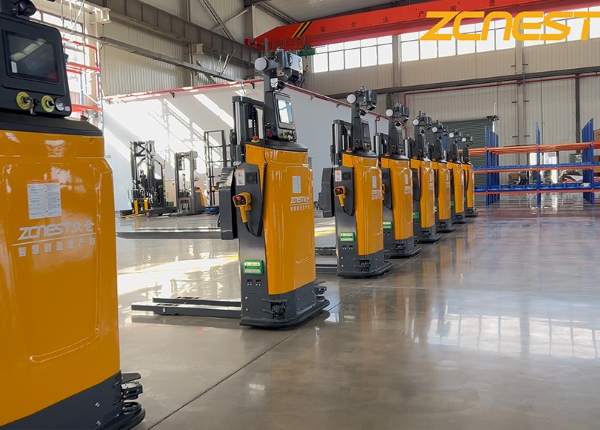
ERP
 │
 ▼
WMS
 │
 ▼
Middleware / API Layer
 │
 ▼
AGV Fleet Management System (RCS)
 │
 ├── AGV Forklifts
 ├── Automatic Doors
 ├── Elevators
 ├── Conveyors
 ├── PLC Systems
 └── Charging Stations
In this architecture:
WMS determines what needs to be transported.
RCS assigns tasks to available AGVs.
AGVs execute transport missions.
Task status and completion feedback are returned to the WMS.
Most export-oriented AGV manufacturers provide APIs for integrating with warehouse and manufacturing systems.
Common API Functions Include:
Task creation
Task cancellation
Vehicle status monitoring
Battery status reporting
Alarm notifications
Mission completion feedback
API reference manual
Authentication methods
Request/response examples
Error code documentation
Webhook specifications
Sample integration projects
Is the documentation available in English?
Is a sandbox environment available?
Are Postman collections provided?
Can source code examples be supplied?
Yes. Many industrial users prefer on-premise deployment for security, compliance, and operational reliability.
Physical industrial servers
VMware environments
Hyper-V virtual machines
Private data center infrastructure
Data remains inside the facility
Improved cybersecurity control
No dependency on public cloud connectivity
Easier integration with existing enterprise systems
Ask Your Supplier:
CPU and RAM requirements
Supported operating systems
Database architecture
Backup and disaster recovery procedures
Whether internet access is required for licensing
📥 "Planning to automate your warehouse? Send us a simple layout sketch or channel dimensions, and our engineers will design a FREE AGV Route Simulation for you."
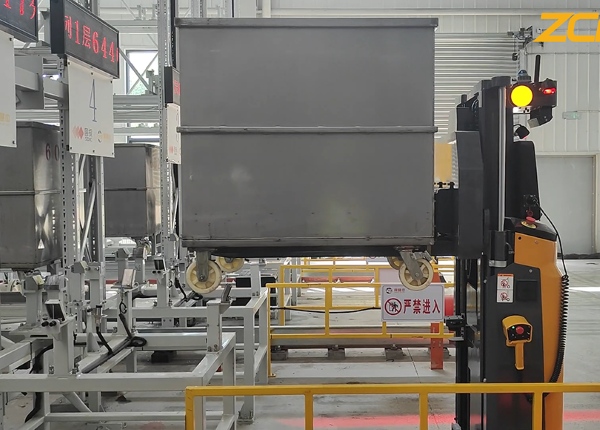
Automatic doors are typically integrated through PLCs, digital I/O, or industrial communication protocols.
AGV Approaches Door
        │
        ▼
RCS Sends Open Signal
        │
        ▼
PLC Receives Command
        │
        ▼
Door Opens
        │
        ▼
AGV Passes Through
        │
        ▼
Door Closes
Digital I/O
Relay contacts
Modbus TCP
EtherNet/IP
PROFINET
OPC UA
Most modern AGV fleet management platforms support a wide range of industrial communication protocols.
| Protocol | Typical Application |
|---|---|
| TCP/IP | Core network communication |
| Modbus TCP | PLC integration |
| OPC UA | Enterprise automation systems |
| REST API | WMS / ERP integration |
| MQTT | Event messaging |
| WebSocket | Real-time status updates |
Automatic doors
Fire alarm systems
Access control systems
Industrial elevators
Conveyors
Sortation systems
AS/RS systems
Shuttle systems
WMS
ERP
MES
SCADA
API documentation provided only after purchase
Cloud connectivity required for normal operation
No English developer documentation
No sandbox or testing environment
Custom development required for standard industrial protocols
These issues frequently become the largest source of project delays and integration costs.
Is a REST API available?
Can API documentation be provided before project kickoff?
Is an English developer guide available?
Is a sandbox environment available?
Can the RCS run entirely on-premise?
Is VMware supported?
What database platform is used?
Does the system support Modbus TCP?
Is OPC UA available?
How are doors, elevators, and PLCs integrated?
When evaluating a Chinese AGV supplier, software integration capability should be considered just as important as the forklift hardware itself.
A strong AGV platform should provide:
✔ English API documentation
✔ On-premise deployment options
✔ REST API integration with WMS and ERP systems
✔ Standard Modbus TCP and TCP/IP communication
✔ PLC, door, elevator, and conveyor integration support
✔ Sandbox environment for testing and validation
The most successful AGV projects are those where the WMS, AGV fleet, and facility automation systems operate as one coordinated ecosystem rather than a collection of isolated components connected through custom workarounds.
FREE ENGINEERING SUPPORT Stop Gambling on Generic Platforms. Get an AGV/AMR Tailored to Your Warehouse.Buying automated guided vehicles involves complex safety standards (CE/ANSI), navigation setups (Laser SLAM), and ERP system integration. Don't risk your factory safety with middle-men. ✓ 100% Direct Factory: Customized payload up to 5 Tons. ✓ Free CAD Simulation: Send us your layout, and our engineers will simulate the optimal AGV routes. ✓ Global Support: Overseas installation guidance & local maintenance partners. |





 Chinese
 English