

The navigation system is arguably the most important technical decision in an AGV project. The wrong navigation choice can create long-term operational limitations, while the right one can improve flexibility, scalability, and ROI.
When comparing AGV suppliers, buyers should focus on how the navigation technology matches
their warehouse environment—not simply which technology sounds more advanced.
📥 "Planning to automate your warehouse? Send us a simple layout sketch or channel dimensions, and our engineers will design a FREE AGV Route Simulation for you."
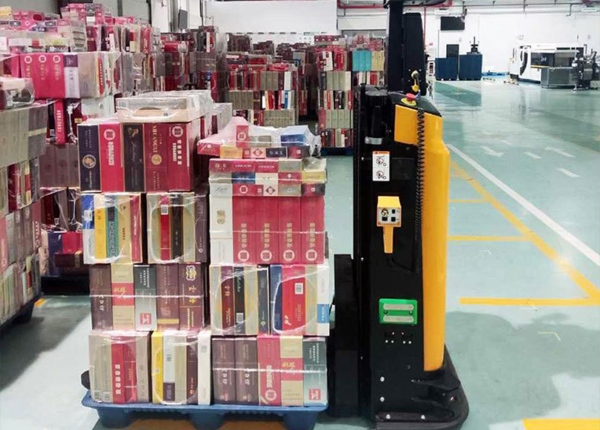
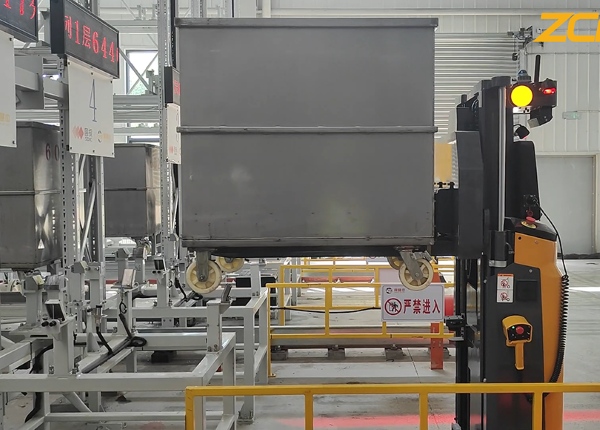
SLAM (Simultaneous Localization and Mapping) enables AGVs to build and continuously update a digital map of the operating environment.
The system typically combines:
2D or 3D LiDAR
IMU sensors
Wheel odometry
Navigation algorithms
Advantages
✔ No reflectors required
✔ Faster deployment
✔ Easy route modification
✔ Supports facility expansion
✔ Suitable for dynamic environments
Limitations
Environmental changes may require map updates
Dust, steam, and reflective surfaces can affect performance
Requires proper calibration during commissioning
Reflector-based AGVs determine their position by detecting fixed reflectors installed throughout the facility.
Advantages
✔ Extremely stable positioning
✔ High repeatability
✔ Proven industrial technology
✔ Ideal for highly structured environments
Limitations
Reflector installation cost
Less flexible when layouts change
Warehouse modifications may require reflector relocation
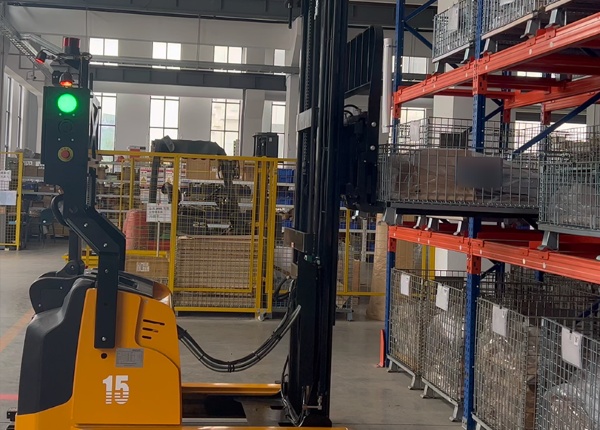
Many modern AGVs combine multiple positioning technologies:
LiDAR
Reflectors
Cameras
IMU sensors
Hybrid navigation improves localization robustness and is increasingly common in high-performance warehouse automation projects.
LiDAR SLAM is often the preferred choice because it eliminates reflector installation and simplifies future warehouse expansion.
Ideal applications include:
3PL warehouses
E-commerce fulfillment centers
Rapidly growing operations
Facilities with frequent layout changes
Reflector-based systems may offer advantages in highly repetitive production environments.
Typical examples include:
Automotive manufacturing
Fixed production lines
Heavy industrial plants
Typical Positioning Accuracy
Modern LiDAR SLAM systems commonly achieve: ±10–20 mm
positioning accuracy under suitable conditions.
Yes. This is one of the major advantages of SLAM navigation.
Instead of relying on temporary objects, the AGV uses permanent environmental features such as:
Walls
Columns
Building structures
Fixed machinery
Temporary pallet movements generally do not affect navigation performance when mapping is configured correctly.
Major rack relocation
Warehouse expansion projects
New mezzanine construction
Large equipment installations
Yes. In most projects, the limiting factor is not navigation technology but fleet management software and facility infrastructure.
Key factors include:
Fleet scheduling algorithms
Traffic management logic
Wi-Fi coverage quality
Charging strategy
WMS integration capability
A properly designed fleet can support:
Hundreds of pallet movements per hour
Multi-shift operations
Dynamic task assignment
Congestion avoidance
| Activity | Typical Duration |
|---|---|
| Site Survey | 1–2 Days |
| Mapping | 1 Day |
| Route Configuration | 1–3 Days |
| Integration Testing | 2–10 Days |
| Commissioning | Several Days to Weeks |
In most projects, mapping is one of the fastest phases. Integration and commissioning usually consume the majority of project time.
Is the system LiDAR SLAM, reflector-based, or hybrid?
What positioning accuracy is guaranteed?
How often is re-mapping required?
How many AGVs can operate on one map?
How are traffic conflicts managed?
Can customers edit maps locally?
Who performs re-mapping?
Can customer engineers update maps?
Is remote map support available?
❌ Cannot explain localization accuracy
❌ No documented map maintenance process
❌ No support for warehouse expansion
❌ No reference projects available
❌ Reliance on manual route teaching only
📥 "Planning to automate your warehouse? Send us a simple layout sketch or channel dimensions, and our engineers will design a FREE AGV Route Simulation for you."
For most modern warehouse automation projects, LiDAR SLAM and hybrid navigation systems provide the best balance of flexibility, scalability, and deployment speed.
Before selecting an AGV supplier, verify:
✔ Navigation accuracy within your aisle widths
✔ Performance in dynamic pallet environments
✔ Re-mapping procedures
✔ Fleet scalability
✔ Local map ownership and editing rights
✔ Reference projects with similar warehouse layouts
FREE ENGINEERING SUPPORT Stop Gambling on Generic Platforms. Get an AGV/AMR Tailored to Your Warehouse.Buying automated guided vehicles involves complex safety standards (CE/ANSI), navigation setups (Laser SLAM), and ERP system integration. Don't risk your factory safety with middle-men. ✓ 100% Direct Factory: Customized payload up to 5 Tons. ✓ Free CAD Simulation: Send us your layout, and our engineers will simulate the optimal AGV routes. ✓ Global Support: Overseas installation guidance & local maintenance partners. |





 Chinese
 English