


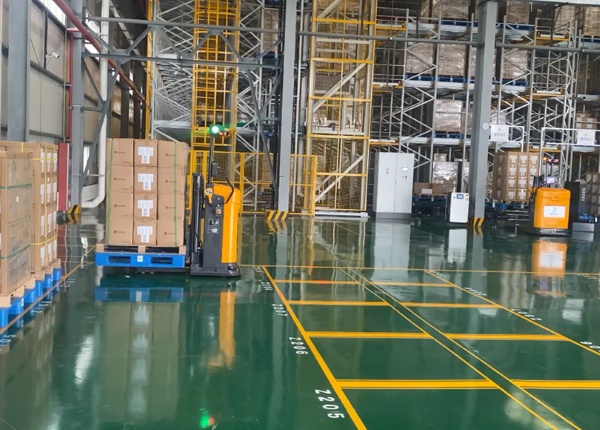
In modern AGV deployments, the Robot Control System (RCS) or Fleet Management System (FMS) functions as the warehouse's air traffic control center. Its role extends far beyond vehicle dispatching.
A mature fleet management platform is responsible for preventing deadlocks, managing congestion, optimizing routes, coordinating charging activities, and ensuring dozens of vehicles can safely operate within the same facility.
When evaluating AGV suppliers, buyers should assess the sophistication of the traffic management
software just as carefully as navigation accuracy and vehicle specifications.
📥 "Planning to automate your warehouse? Send us a simple layout sketch or channel dimensions, and our engineers will design a FREE AGV Route Simulation for you."
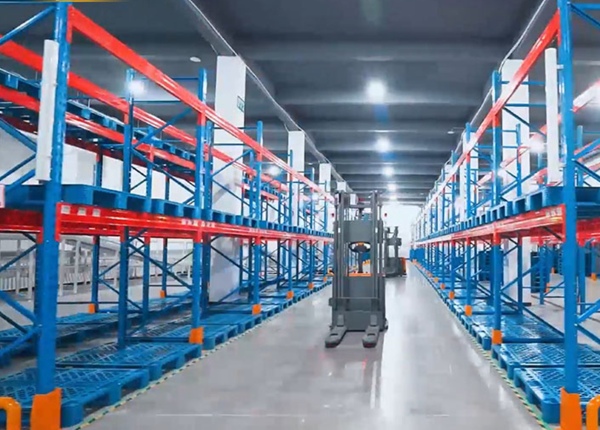
Yes—provided the platform is designed for enterprise-scale deployments.
Modern AGV fleet management systems can coordinate:
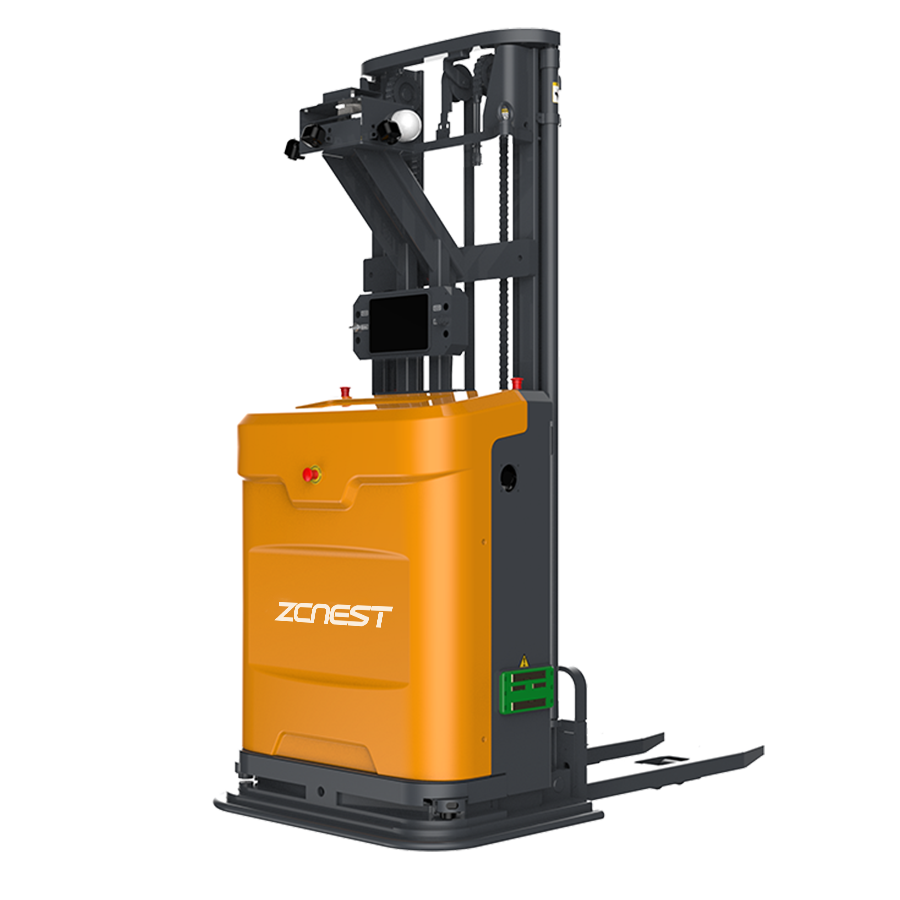
AGV Forklifts
AMRs
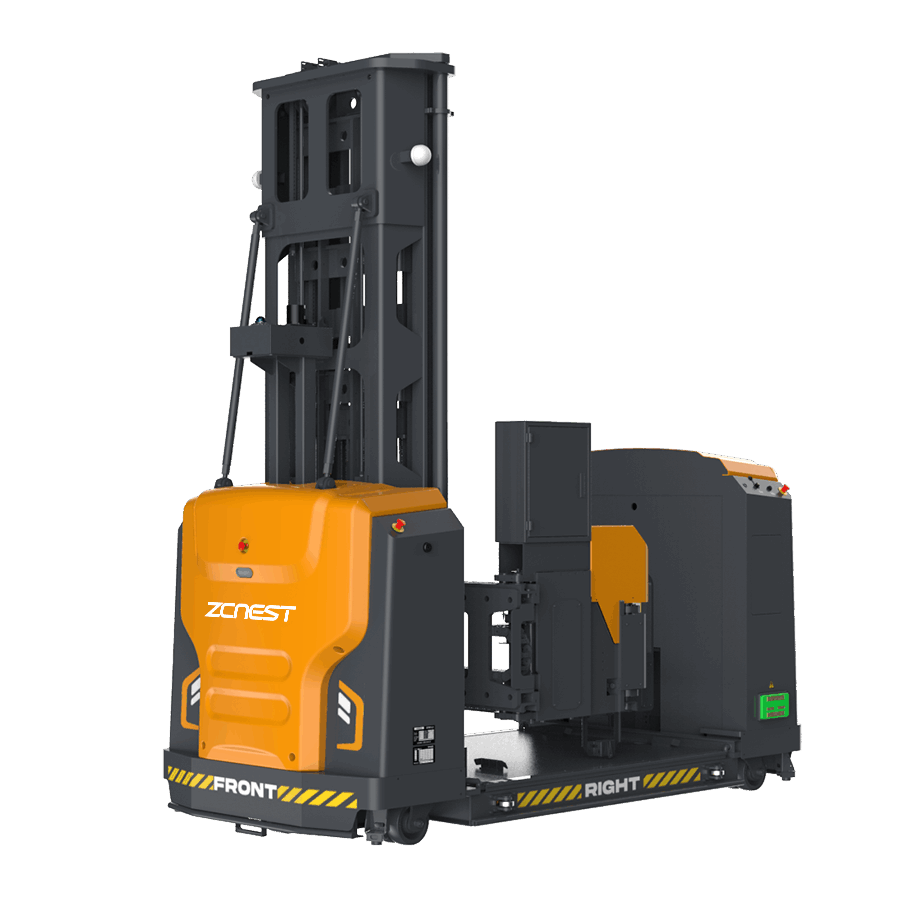
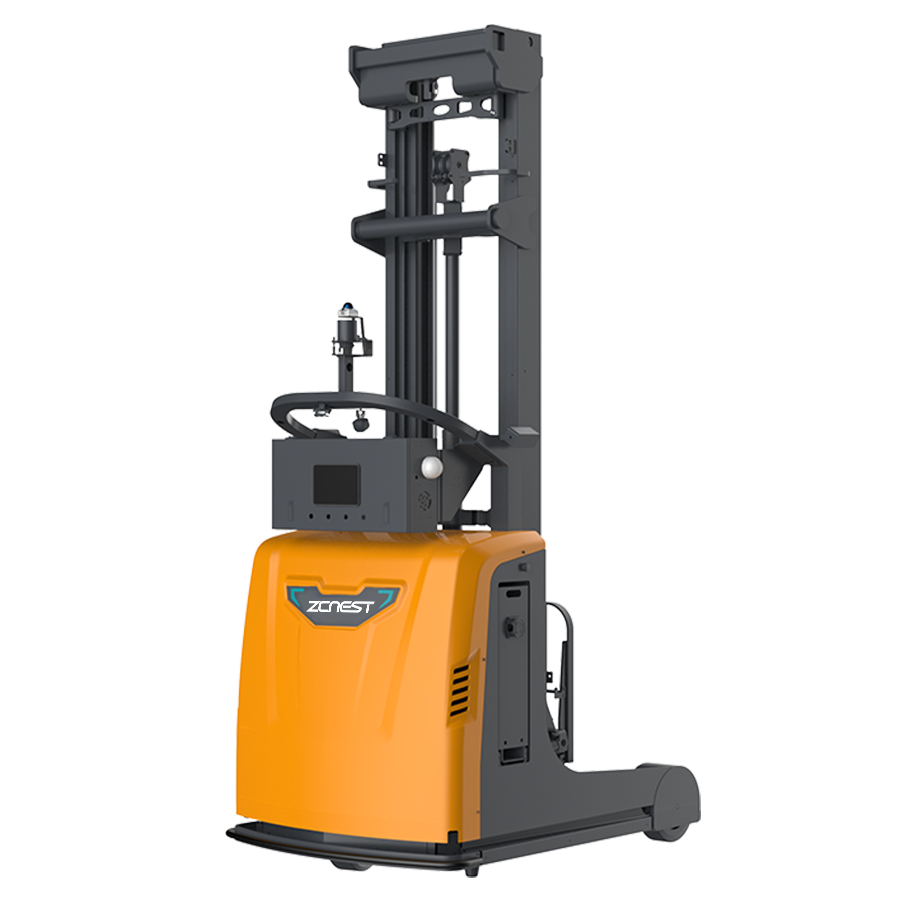
Reach Trucks
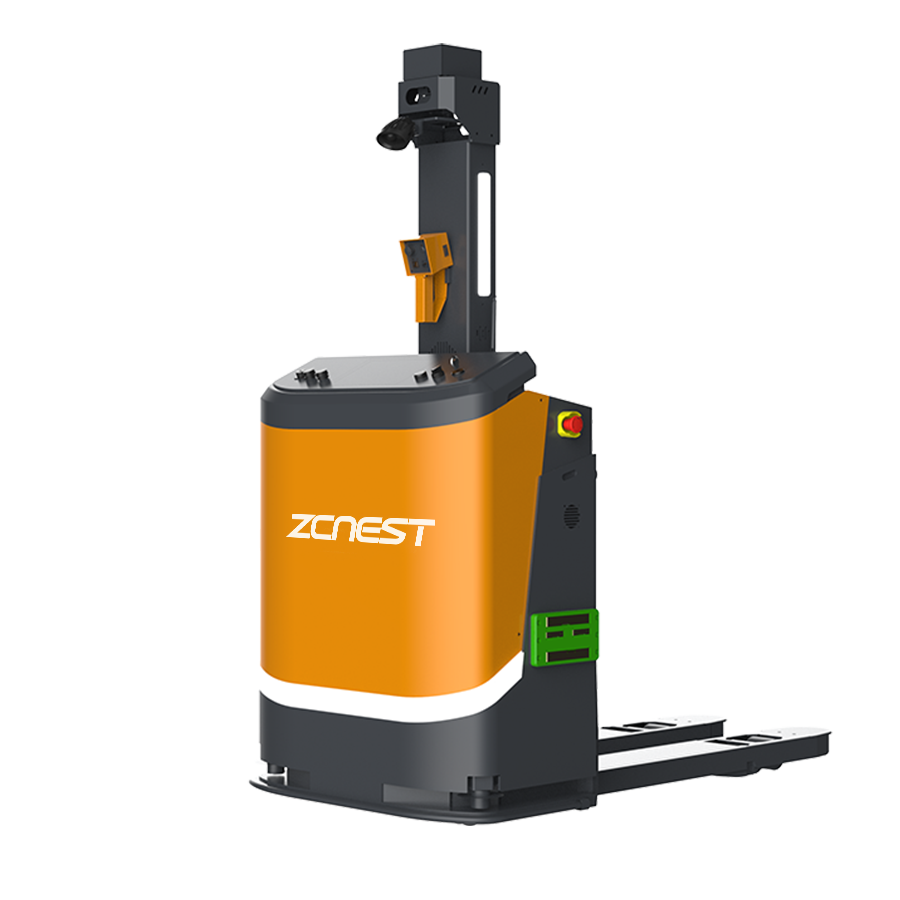
Pallet Transport Vehicles
Tugger AGVs
Core Fleet Management Functions
✔ Centralized task dispatching
✔ Fleet-wide traffic coordination
✔ Task prioritization
✔ Battery-aware scheduling
✔ Congestion avoidance
✔ Dynamic route optimization
Questions to Ask Suppliers
How many AGVs are operating in your largest live deployment?
What is the average task volume per hour?
What database architecture supports fleet scalability?
How does system performance change as fleet size grows?
This is one of the most common real-world scenarios in mixed traffic environments.
Manual Forklift Stops
↓
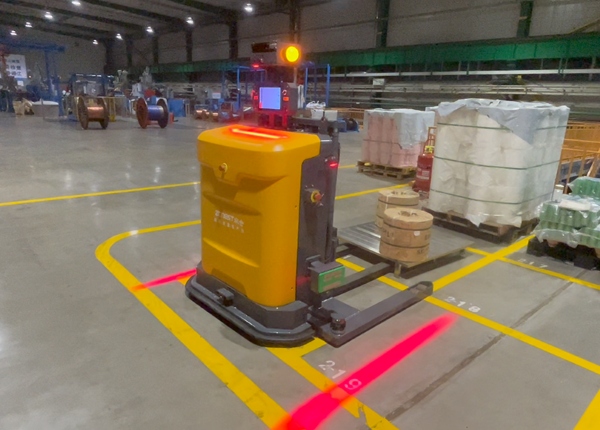
LiDAR Detects Obstruction
↓
AGV Slows Down
↓
AGV Stops
↓
RCS Evaluates Situation
The fleet management system then determines whether the AGV should:
Wait
Reroute
Generate an alarm
Close the affected area temporarily
Examples include temporary pallet handling or a forklift stopping briefly.
Operator pauses for 20–30 seconds
Pallet temporarily blocks a lane
Short-term pedestrian activity
In these situations, the AGV will typically wait rather than initiate rerouting.
For extended blockages, the RCS may automatically:
✔ Calculate an alternative route
✔ Redirect nearby AGVs
✔ Restrict traffic through affected zones
✔ Notify supervisors
Advanced AGV fleet management platforms continuously monitor route availability and traffic conditions.
Decision factors typically include:
Route availability
Traffic density
Vehicle positions
Battery levels
Task priority
Example
Original Route:
A → B → C → D
Aisle C becomes blocked.
New Route:
A → E → F → D
This process occurs automatically without requiring operator intervention.
Intelligent traffic management systems compare estimated wait time against alternative travel time.
| Situation | Typical Response |
|---|---|
| 10-second blockage | Wait |
| 2-minute blockage | Reroute |
| No alternative path | Wait and Alarm |
| Safety Incident | Zone Shutdown |
Deadlocks occur when multiple AGVs block each other from progressing.
AGV A wants Zone 1
AGV B wants Zone 2
Neither vehicle can proceed
Enterprise-grade systems prevent this through traffic reservation logic.
Traffic Reservation Process
AGV requests access to a route segment
↓
RCS reserves the segment
↓
Other AGVs must wait
↓
Segment released after completion
This approach prevents gridlock and ensures predictable vehicle movement.
Most modern RCS platforms support map-based speed control.
| Zone Type | Typical Speed |
|---|---|
| Open Warehouse | 1.5–2.0 m/s |
| Pedestrian Crossing | 0.5–1.0 m/s |
| Loading Area | 0.3–0.8 m/s |
| Rack Entry Zone | Precision Mode |
Speed can also vary according to vehicle type, traffic density, or operational priorities.
Prioritizes charging opportunities
Assigns shorter routes to low-battery AGVs
Prevents charging station congestion
Production line replenishment priority
Shipping deadline optimization
Urgent transport task acceleration
Congestion heat maps
Bottleneck analysis
Fleet utilization reports
Route efficiency monitoring
❌ Fixed-route operation only
❌ No deadlock prevention explanation
❌ Manual intervention required for blocked aisles
❌ No dynamic rerouting capability
❌ No configurable speed zones
❌ Limited experience beyond 20 AGVs
In large-scale warehouse automation projects, overall productivity is often determined more by the fleet management software than by the AGVs themselves.
A mature AGV fleet management platform should provide:
✔ Multi-vehicle traffic coordination
✔ Dynamic rerouting
✔ Deadlock prevention
✔ Zone-based speed control
✔ Obstacle-aware path planning
✔ Task-priority scheduling
✔ Battery-aware dispatching
✔ Real-time congestion management
📥 "Planning to automate your warehouse? Send us a simple layout sketch or channel dimensions, and our engineers will design a FREE AGV Route Simulation for you."
Key Takeaway
When comparing AGV suppliers, ask them to demonstrate a live scenario where a manual forklift
blocks a critical aisle. Their response to that situation often reveals more about the maturity
of the fleet management software than any brochure specification or marketing presentation.
FREE ENGINEERING SUPPORT Stop Gambling on Generic Platforms. Get an AGV/AMR Tailored to Your Warehouse.Buying automated guided vehicles involves complex safety standards (CE/ANSI), navigation setups (Laser SLAM), and ERP system integration. Don't risk your factory safety with middle-men. ✓ 100% Direct Factory: Customized payload up to 5 Tons. ✓ Free CAD Simulation: Send us your layout, and our engineers will simulate the optimal AGV routes. ✓ Global Support: Overseas installation guidance & local maintenance partners. |





 Chinese
 English