


A well-designed AGV system should ensure that operators can perform daily tasks without accidentally modifying maps, safety settings, or traffic rules.
📥 "Planning to automate your warehouse? Send us a simple layout sketch or channel dimensions, and our engineers will design a FREE AGV Route Simulation for you."
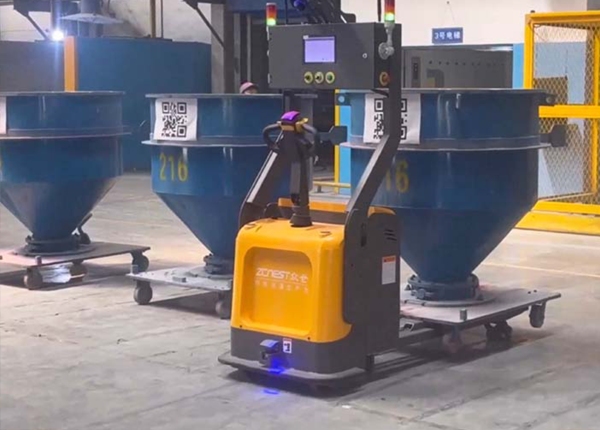
Most enterprise-grade AGV fleet management platforms use Role-Based Access Control (RBAC) to separate responsibilities and reduce operational risk.
| Role | Typical Permissions |
|---|---|
| Operator | Start/stop tasks, acknowledge alarms |
| Supervisor | Dispatch tasks, monitor fleet status |
| Maintenance Engineer | Diagnostics and recovery operations |
| Process Engineer | Route editing and workflow configuration |
| System Administrator | User management and software settings |
| IT Administrator | Server, database and network management |
Recommended Practice:
Operators should never have access to:
Safety zone configuration
Navigation map editing
Fleet traffic rules
User account management
PLC integration settings
In most modern AGV deployments, the answer is yes—but only with proper permission controls.
Enterprise AGV software often supports:
Android mobile applications
Industrial handheld terminals
Browser-based mobile dashboards
Alarm acknowledgement
Mission restart
Obstacle removal confirmation
Maintenance request submission
Safety scanner faults
Brake system alarms
Steering calibration issues
Lift system faults
A properly designed AGV system automatically enforces these restrictions to prevent unauthorized recovery actions.
Absolutely.
Every enterprise AGV deployment should include:
User authentication
Password protection
Role-based permissions
Automatic session timeout
Map editing
Route modifications
Safety zone adjustments
Speed limit configuration
Vehicle parameter changes
Charging strategy settings
Best Practice:
Separate operational interfaces from engineering interfaces.
Operational Interface: Warehouse supervisors and operators
Engineering Interface: AGV engineers, system integrators, maintenance personnel
Enterprise fleet management systems should provide complete audit trail functionality.
| Event | Logged? |
|---|---|
| User Login | Yes |
| Logout | Yes |
| Route Change | Yes |
| Task Override | Yes |
| Manual Driving Activation | Yes |
| Map Modification | Yes |
| User Creation | Yes |
| Parameter Change | Yes |
Date: 2026-06-18 14:22:15
User: John.Smith
Action: Manual Route Override
Vehicle: AGV-07
Original Route: A → B → C
Modified Route: A → D → E
Reason: Aisle blockage
| Deployment Type | Typical Retention |
|---|---|
| Local Database | 30–365 Days |
| Enterprise Database | 1–5 Years |
| Archived Logs | Custom Policy |
Regulated industries such as pharmaceuticals, aerospace, and defense often require longer retention periods.
Many enterprise-focused AGV software platforms support integration with corporate authentication systems.
Local User Database – Suitable for smaller facilities
Microsoft Active Directory – Centralized enterprise authentication
LDAP Integration – Alternative enterprise directory services
Single Sign-On (SSO) – Available on some advanced platforms
Centralized credential management
Consistent password policies
Simplified employee onboarding
Rapid user deactivation when employees leave
Reduced cybersecurity risk
How many permission levels are supported?
Can permissions be customized?
Is multi-factor authentication available?
Are password complexity rules enforced?
Do inactive sessions time out automatically?
Are route changes logged?
Are manual overrides recorded?
Can logs be exported?
Is Microsoft Active Directory supported?
Is LDAP available?
Does the platform support SSO?
Everyone shares a single administrator account
No audit logs are available
Route modifications cannot be traced
Password protection is optional
No Active Directory integration for enterprise deployments
Operators can modify safety settings
No separation between operational and engineering permissions
📥 "Planning to automate your warehouse? Send us a simple layout sketch or channel dimensions, and our engineers will design a FREE AGV Route Simulation for you."
For enterprise AGV deployments, the software platform should provide:
✔ Role-Based Access Control (RBAC)
✔ Password-Protected Administration Panels
✔ Mobile Interfaces for Operators
✔ Complete Audit Logging
✔ Exportable Event Records
✔ Active Directory or LDAP Integration
✔ Clear Separation of User Privileges
The most secure AGV software is not the one with the most features—it is the one that ensures every user can do exactly what their job requires, and nothing more. This approach significantly reduces cybersecurity risks, compliance issues, and accidental operational disruptions.
FREE ENGINEERING SUPPORT Stop Gambling on Generic Platforms. Get an AGV/AMR Tailored to Your Warehouse.Buying automated guided vehicles involves complex safety standards (CE/ANSI), navigation setups (Laser SLAM), and ERP system integration. Don't risk your factory safety with middle-men. ✓ 100% Direct Factory: Customized payload up to 5 Tons. ✓ Free CAD Simulation: Send us your layout, and our engineers will simulate the optimal AGV routes. ✓ Global Support: Overseas installation guidance & local maintenance partners. |





 Chinese
 English