

How can we ensure local mechanics and technicians are fully capable of maintaining and troubleshooting the system without relying on overseas engineers?
Unlike traditional forklifts, AGVs integrate robotics, software, sensors, and network systems. This means maintenance requires a hybrid skill set that combines mechanical knowledge with basic automation and diagnostics understanding.
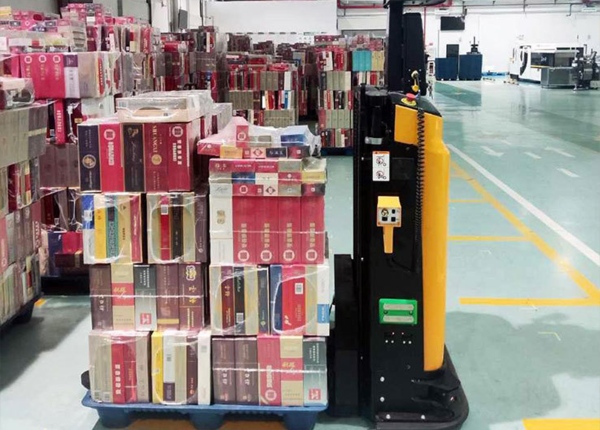
AGV systems are designed for continuous operation, often 24/7. Any unplanned downtime directly impacts warehouse productivity.
Without trained local technicians, companies risk:
Extended downtime due to delayed troubleshooting
Dependence on remote factory engineers
Higher maintenance costs
Misdiagnosis of software or sensor issues
Reduced system lifespan due to improper handling
For this reason, most successful AGV deployments include a structured training program during commissioning.
Yes. Most established AGV suppliers provide multi-format training resources in English.
Typical training materials include:
Step-by-step video tutorials
PDF maintenance manuals
Interactive operation guides
On-site commissioning training sessions
Remote online training support
Many manufacturers provide dedicated training videos for:
LiDAR calibration
Safety scanner alignment
Camera positioning adjustments
Map reconstruction procedures
These videos are typically designed for non-engineer technicians and include visual step-by-step instructions.
Modern Chinese AGVs are usually equipped with onboard diagnostic systems (ODD / HMI maintenance tools).
These tools allow technicians to identify issues without deep programming knowledge.
Common diagnostic capabilities include:
Error code display and explanation
Sensor status monitoring
Motor and drive system diagnostics
Battery health analysis
Network communication status
Navigation map integrity checks
In most cases, technicians can resolve 70–80% of routine faults using built-in diagnostic tools without contacting the factory.
Check battery level and charging status
Inspect LiDAR and safety sensors for dust
Verify emergency stop functionality
Check wheel and fork condition
Confirm navigation system status
Clean sensor lenses and safety scanners
Inspect hydraulic system (if applicable)
Check wheel wear and alignment
Review error logs in diagnostic system
Test docking and charging accuracy
Full system diagnostic scan
Map and navigation accuracy validation
Battery health evaluation
Motor and drive system inspection
Firmware update check
Following structured maintenance intervals significantly reduces unexpected downtime and extends equipment lifespan.
Yes. Most Chinese AGV manufacturers provide comprehensive technical documentation packages for maintenance teams.
These typically include:
Electrical schematics (wiring diagrams)
Hydraulic system diagrams
Mechanical assembly drawings
Sensor layout diagrams
Control system architecture
Parts identification manuals
However, documentation quality may vary between suppliers. Leading manufacturers usually provide fully English-translated technical files suitable for local maintenance teams.
For large-scale deployments, buyers should request a complete “Maintenance Engineering Package” before final acceptance.
A successful AGV maintenance training program typically includes three stages:
System overview
Safety procedures
Charging and startup operations
Daily inspection routines
Sensor cleaning and calibration
Basic mechanical maintenance
Use of diagnostic tools
Error code interpretation
Software recovery procedures
Most suppliers combine on-site training with remote follow-up support during the first 1–3 months of operation.
Does the supplier provide English training videos?
Can technicians access onboard diagnostic tools?
Is sensor calibration included in training materials?
Are maintenance manuals fully translated?
What level of troubleshooting can be handled locally?
Are remote support sessions included?
Is a full maintenance engineering package available?
How long is the initial training period?
Training local technicians is one of the most important steps in ensuring long-term success of AGV forklift deployments. With proper documentation, structured training programs, and onboard diagnostic tools, most Chinese AGV systems can be maintained effectively without continuous factory intervention.
The key is not only the quality of the machine itself, but also the quality of the knowledge transfer provided by the manufacturer.
Before importing AGV forklifts from China, ensure the supplier provides complete training materials, diagnostic tools, and engineering documentation. Strong knowledge transfer is essential for sustainable automation operations.
FREE ENGINEERING SUPPORT Stop Gambling on Generic Platforms. Get an AGV/AMR Tailored to Your Warehouse.Buying automated guided vehicles involves complex safety standards (CE/ANSI), navigation setups (Laser SLAM), and ERP system integration. Don't risk your factory safety with middle-men. ✓ 100% Direct Factory: Customized payload up to 5 Tons. ✓ Free CAD Simulation: Send us your layout, and our engineers will simulate the optimal AGV routes. ✓ Global Support: Overseas installation guidance & local maintenance partners. |





 Chinese
 English