

Mechanical failures, sensor misalignment, software bugs, or structural defects can all occur during real-world operation. At that moment, the key question becomes:
How does the warranty process actually work, and who is responsible for repair cost, shipping, and system downtime?
Understanding warranty structure in advance is critical for protecting your automation investment and avoiding unexpected operational costs.
Most Chinese AGV manufacturers offer a structured warranty model that includes hardware, software, and system integration coverage.
Standard warranty components may include:
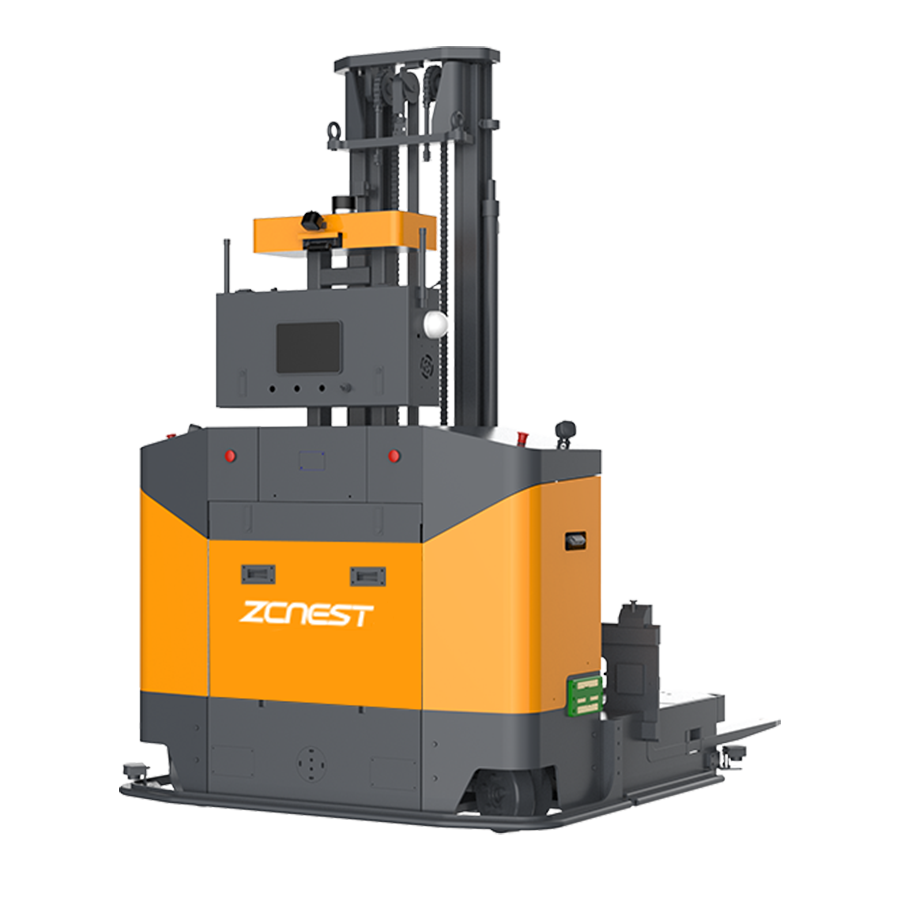
Mechanical structure (frame, mast, chassis)
Drive system (motors, wheels, transmission)
Electrical components (controllers, relays, power modules)
Navigation system (LiDAR, cameras, sensors)
Basic software functions (navigation, task execution)
However, coverage details vary significantly between suppliers and contract levels.
This is one of the most important commercial terms in any AGV purchase agreement.
In most cases, warranty shipping responsibility depends on fault classification:
| Situation | Typical Responsibility |
|---|---|
| Manufacturing defect confirmed | Supplier pays parts + express shipping |
| Customer misuse or installation error | Buyer pays all costs |
| Software bug / remote fix | Supplier provides free remote support |
| Urgent downtime situation | Often split cost or negotiated case-by-case |
In real-world projects, logistics cost responsibility should always be explicitly written into the commercial warranty agreement—not assumed.
For major defects detected during commissioning or initial acceptance testing, Chinese manufacturers typically offer one of the following solutions:
Free replacement of affected components
On-site repair support (for large projects)
Software compensation or system recalibration
In rare cases: partial financial credit or discount adjustment
Financial credits are usually negotiated only when:
Defect is confirmed as factory-level issue
Repair is not immediately feasible
Downtime impact is significant
Project is large-scale or strategic customer account
Most suppliers prefer technical correction over direct financial compensation.
Modern AGV systems usually include structured support workflows via email, cloud platforms, or dedicated service portals.
A proper high-priority ticket should include:
Device serial number and model
Software version and firmware details
Error code or system log screenshots
Video of failure scenario
Time and frequency of occurrence
Network and map environment details
P1 (Critical): System shutdown / full fleet stoppage
P2 (High): Partial function failure affecting operations
P3 (Medium): Non-critical bugs or optimization issues
P4 (Low): UI issues or minor enhancements
Most suppliers respond to P1 issues within 24 hours, often with remote diagnostics immediately.
This depends on the root cause of the issue.
Generally:
Covered: factory calibration errors, hardware sensor faults
Not covered: damage caused by collision or improper installation
Partially covered: drift caused by environmental changes or floor condition shifts
LiDAR and camera calibration is often considered a maintenance responsibility after initial commissioning unless otherwise specified in the contract.
Many suppliers include remote recalibration support, but on-site recalibration may be treated as paid service depending on warranty terms.
A well-structured warranty should clearly define:
Coverage scope (hardware + software)
Response time commitments
Spare parts shipping responsibility
On-site vs remote support conditions
Exclusions and misuse definitions
Calibration and commissioning responsibilities
Downtime compensation policies (if any)
Without clear definitions, warranty disputes often arise during critical downtime situations.
Who pays international shipping for warranty parts?
What qualifies as a manufacturing defect?
Are software bugs covered under warranty?
Is on-site support included or extra?
How are priority tickets handled?
Are sensor calibration issues covered?
Is financial compensation ever provided?
What is the guaranteed response time for critical failures?
Warranty support is one of the most overlooked but critical aspects of importing AGV forklifts from China. While most suppliers provide structured warranty frameworks, the real value lies in clarity—especially around shipping costs, fault classification, software support, and sensor calibration responsibilities.
A well-defined warranty agreement ensures that when failures occur, operations can recover quickly with minimal financial and operational disruption.
Before finalizing your AGV purchase, ensure every warranty condition is clearly defined in writing—including shipping responsibility, software support, and calibration coverage. This is the foundation of a reliable long-term automation partnership.
FREE ENGINEERING SUPPORT Stop Gambling on Generic Platforms. Get an AGV/AMR Tailored to Your Warehouse.Buying automated guided vehicles involves complex safety standards (CE/ANSI), navigation setups (Laser SLAM), and ERP system integration. Don't risk your factory safety with middle-men. ✓ 100% Direct Factory: Customized payload up to 5 Tons. ✓ Free CAD Simulation: Send us your layout, and our engineers will simulate the optimal AGV routes. ✓ Global Support: Overseas installation guidance & local maintenance partners. |





 Chinese
 English