


While much attention is given to navigation algorithms and automation software, physical sensor protection is often the deciding factor in real-world operational stability.
How long do safety sensor lenses last? Can cleaning damage them? Do discoloration and UV exposure affect detection accuracy? And can lenses be replaced separately?
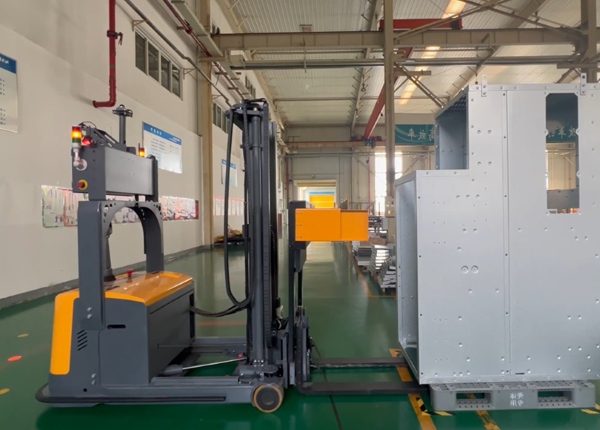
The protective lens cover of AGV safety sensors is a consumable optical component designed to shield delicate internal laser or radar systems from dust, impact, and environmental exposure.
Under normal industrial warehouse conditions, expected lifespan is:
Light-duty warehouse: 3–5 years
Standard logistics operation: 2–4 years
High-dust or high-impact environments: 12–24 months
Wear is typically not electronic failure, but optical degradation such as scratching, haze buildup, or material aging.
Yes—improper cleaning is one of the most common causes of premature sensor lens degradation.
Although AGV lens covers are made from industrial-grade polycarbonate or reinforced optical plastics, they are still sensitive to abrasion.
Risk factors include:
Dry wiping with abrasive cloths
Industrial dust particles acting as micro-abrasives
Solvent-based cleaning agents not approved by manufacturer
High-frequency cleaning cycles in dusty environments
Even microscopic scratches can reduce LiDAR accuracy by scattering laser signals and weakening detection reliability.
Proper maintenance should use microfiber cloths and manufacturer-approved cleaning fluids only.
This depends on the AGV model and sensor architecture.
In modern Chinese AGV systems, there are typically two design approaches:
Lens cover is a replaceable consumable part
Can be swapped without replacing entire sensor
Lower maintenance cost
Faster repair turnaround
Lens is permanently sealed with radar/LiDAR unit
Damage may require full sensor replacement
Higher replacement cost
For industrial buyers, modular designs are strongly preferred for long-term maintenance efficiency.
Over time, exposure to industrial lighting, UV radiation, and heat can cause lens discoloration or haze formation.
This degradation affects AGV performance in several ways:
Reduced LiDAR signal clarity
Increased false obstacle detection
Lower detection range accuracy
Delayed response in high-speed navigation
Even slight optical haze can reduce sensor precision in high-density warehouse environments where millimeter-level accuracy is required.
Preventive replacement is often more cost-effective than waiting for system errors to appear.
Yes. Many Chinese AGV manufacturers offer optional protective structures for safety sensors.
Common protection solutions include:
Metal anti-collision frames
Reinforced polycarbonate shields
Raised sensor mounting brackets
Dust-resistant sealed housings
Shock-absorbing external guards
These are especially useful in:
Narrow aisle operations
High-traffic warehouse zones
Mixed human-robot environments
Dusty or outdoor-adjacent facilities
The trade-off: stronger protection may slightly reduce sensor field-of-view if not properly designed.
To maximize AGV safety sensor lifespan, a structured maintenance plan is essential:
Daily: Visual inspection for dust or obstruction
Weekly: Gentle cleaning with approved materials
Monthly: Optical clarity check and alignment verification
Quarterly: Preventive inspection for cracks or haze
In high-dust environments, cleaning frequency may need to be increased, but must always follow correct procedures.
Are sensor lenses replaceable or integrated?
What is the expected lens lifespan in my environment?
Can protective guards be added without affecting accuracy?
What cleaning materials are approved?
How does lens wear affect detection performance?
Is preventive replacement recommended?
Are spare lens covers available locally?
What is the impact of UV exposure in long-term use?
Safety sensor lenses are small components with a major impact on AGV performance. While Chinese AGV systems are generally designed for industrial durability, real-world conditions such as dust, UV exposure, and frequent cleaning can significantly reduce optical clarity over time.
A proactive maintenance and replacement strategy—combined with protective shielding where necessary—ensures long-term stability of obstacle detection and safe autonomous operation.
Before deploying AGV forklifts from China, treat safety lenses as critical consumable components. Proper protection and timely replacement are essential for maintaining reliable and safe automation performance.
FREE ENGINEERING SUPPORT Stop Gambling on Generic Platforms. Get an AGV/AMR Tailored to Your Warehouse.Buying automated guided vehicles involves complex safety standards (CE/ANSI), navigation setups (Laser SLAM), and ERP system integration. Don't risk your factory safety with middle-men. ✓ 100% Direct Factory: Customized payload up to 5 Tons. ✓ Free CAD Simulation: Send us your layout, and our engineers will simulate the optimal AGV routes. ✓ Global Support: Overseas installation guidance & local maintenance partners. |





 Chinese
 English