

Language configuration affects everything from error response speed to maintenance efficiency and safety communication in the warehouse.
Can the system be fully translated? Are error codes understandable? Can voice alarms be localized? And how flexible is the operator interface across different countries?
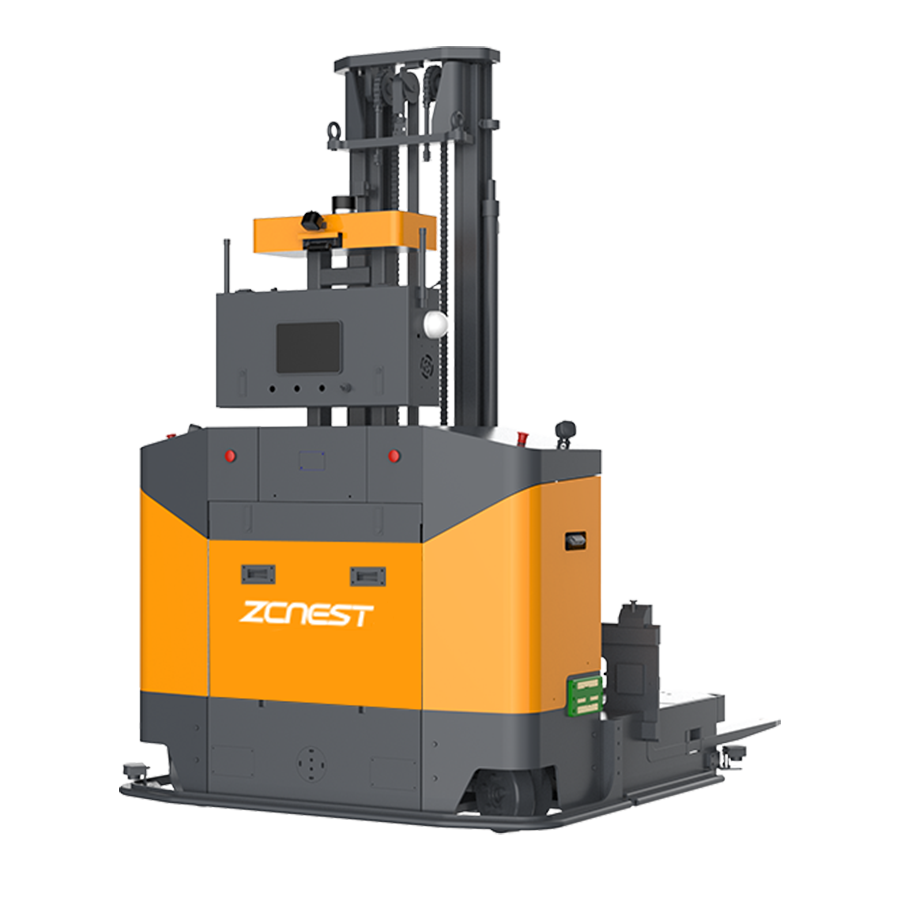
Most modern Chinese AGV forklifts are equipped with industrial HMI touchscreens that support multi-language interfaces.
Common built-in languages include:
English (standard international version)
Simplified Chinese (default factory setting)
Occasionally: Korean, Japanese, Russian
For export models, English is typically the primary operational language, while additional languages are often available as optional firmware packages.
Language quality varies by manufacturer—some systems use professional industrial translation, while lower-tier systems may contain literal or unclear wording.
Engineering-level software used for AGV configuration, mapping, and debugging is more complex than operator HMI interfaces.
Translation quality generally falls into three categories:
High-end suppliers: fully localized professional English UI
Mid-tier manufacturers: partially translated interfaces (mixed English/Chinese)
Low-cost systems: machine-translated or Chinese-only engineering tools
Key engineering modules include:
Map building and SLAM configuration
Fleet scheduling systems
Sensor calibration tools
Motion parameter tuning interfaces
For global deployments, engineering UI quality is as important as hardware reliability.
Most Chinese AGV systems include built-in voice alarm speakers for safety notifications and operational alerts.
These alerts can typically include:
Obstacle detection warnings
Emergency stop notifications
Low battery alerts
Task completion signals
In many systems, voice prompts can be customized:
Replace default Chinese voice with English or local language
Upload custom WAV or MP3 alert files
Define specific safety phrases per customer requirement
Advanced systems allow full localization of safety audio messages for compliance with local warehouse safety standards.
Industrial AGV systems rely on alphanumeric error codes to communicate faults and system status.
Typical structure:
E-series: electrical faults (motors, power modules)
S-series: sensor or navigation errors
C-series: communication or software issues
M-series: mechanical or motion-related faults
In higher-end systems, error codes are paired with:
Plain English descriptions
Repair suggestions
Severity classification (warning / critical / shutdown)
In lower-tier systems, operators may need a manual or translation table to interpret codes correctly.
Most export-ready Chinese AGVs allow master system language changes during installation or commissioning.
Common supported languages include:
English (default international version)
Spanish (in selected export configurations)
German (industrial EU deployments)
French (logistics and retail automation markets)
Language switching may require:
Firmware selection at factory stage
Activation key or license file
Reboot and system recalibration
It is important to confirm language requirements before production, as post-shipment language upgrades may be limited in some systems.
Language clarity directly affects:
Operator reaction speed during alarms
Maintenance accuracy during troubleshooting
Training efficiency for new staff
Safety compliance in multi-national warehouses
Poor translation can lead to misinterpretation of critical system alerts, increasing operational risk.
Is the HMI fully translated into professional English?
Does engineering software support multilingual UI?
Can voice alarms be customized for local language?
Are error codes clearly documented in English?
Can system language be changed after delivery?
Are all safety alerts localized or partially translated?
Is translation included in standard pricing or optional?
Will future firmware updates affect language settings?
Language configuration is a critical but often overlooked factor in AGV forklift deployment. While Chinese manufacturers increasingly offer multilingual support, the quality and completeness of translation vary significantly across suppliers.
For global warehouse operations, clear HMI interfaces, accurate engineering software translation, and customizable voice alerts are essential for safe and efficient automation.
Before importing AGV forklifts from China, confirm not only technical specifications but also language usability across operators, engineers, and maintenance teams. Clear communication is a core part of system safety and efficiency.
FREE ENGINEERING SUPPORT Stop Gambling on Generic Platforms. Get an AGV/AMR Tailored to Your Warehouse.Buying automated guided vehicles involves complex safety standards (CE/ANSI), navigation setups (Laser SLAM), and ERP system integration. Don't risk your factory safety with middle-men. ✓ 100% Direct Factory: Customized payload up to 5 Tons. ✓ Free CAD Simulation: Send us your layout, and our engineers will simulate the optimal AGV routes. ✓ Global Support: Overseas installation guidance & local maintenance partners. |





 Chinese
 English