


This introduces a new layer of complexity: how do robots safely move between floors and coordinate infrastructure across multiple building systems?
Can AGVs use elevators? How do they open industrial doors? What network infrastructure is required? And can one system manage multiple floors seamlessly?
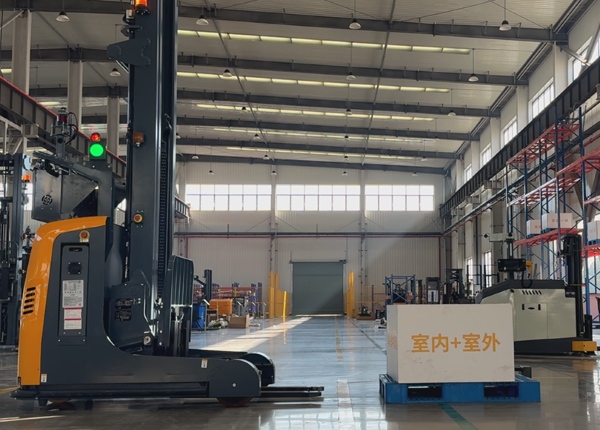
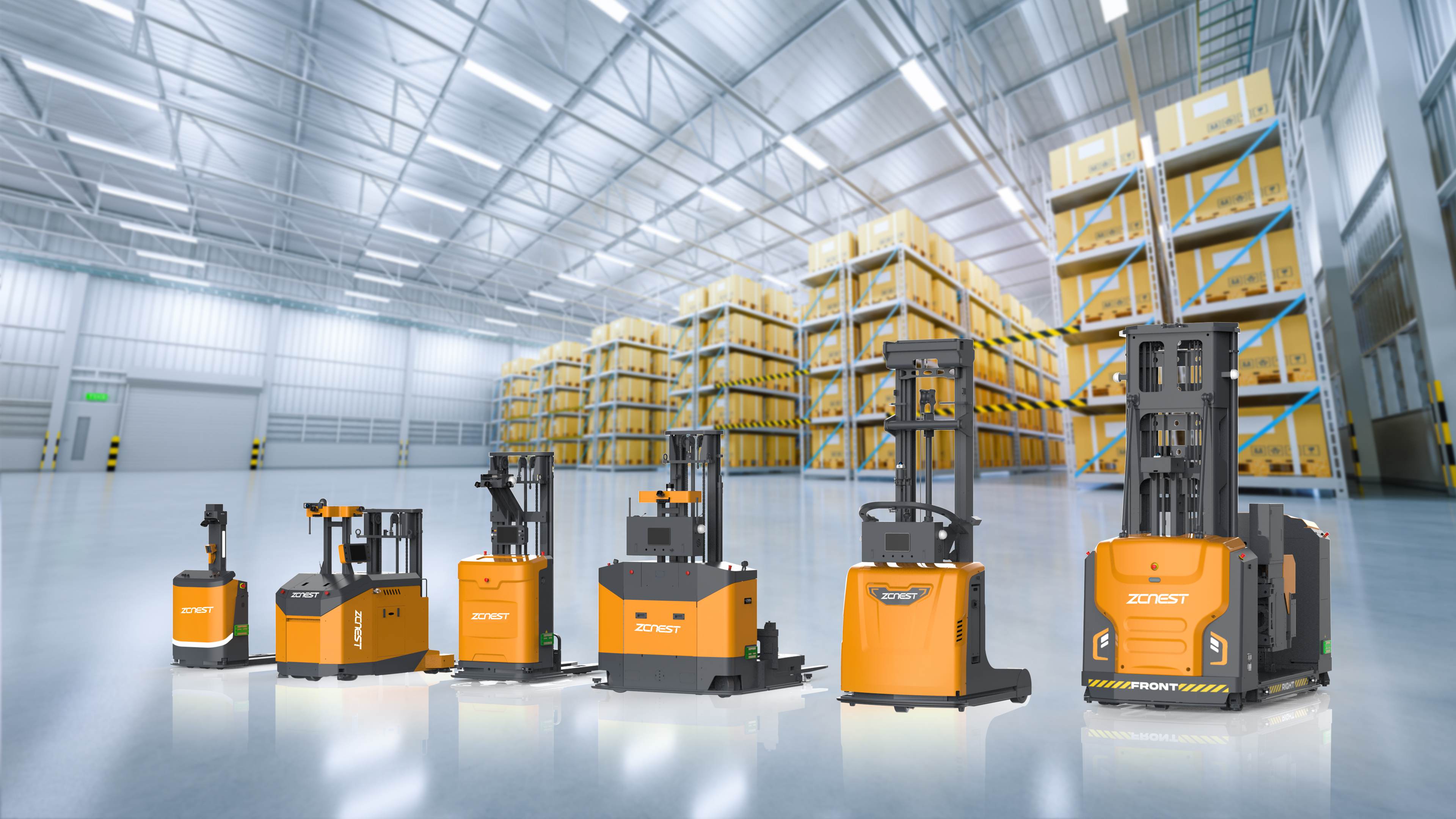
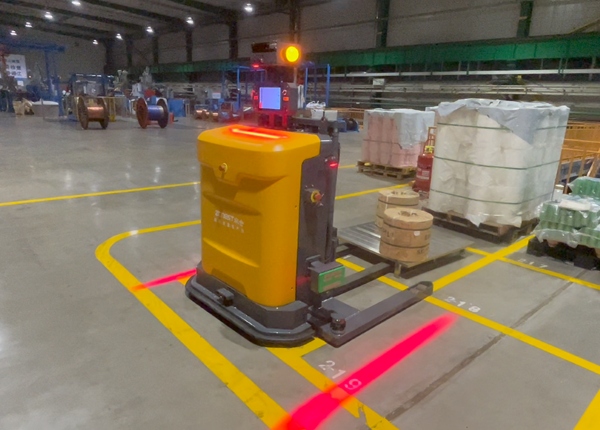
A multi-floor AGV logistics system is not a single robot function—it is an integrated ecosystem combining fleet management software, building infrastructure, and communication protocols.
Typical architecture includes:
AGV fleet units operating on each floor
Elevator integration system (call + access control)
Automatic door control modules
Central fleet management system (FMS)
Wireless network covering all floors
The key challenge is ensuring all systems communicate in real time with consistent task execution logic.
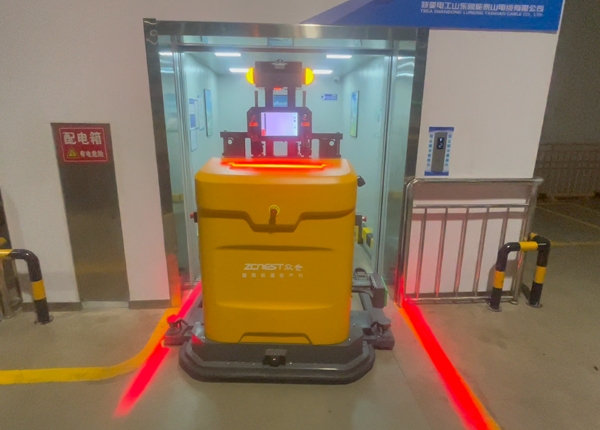
Yes, many modern Chinese AGVs can be integrated with standard freight elevators, but they do not physically “ride independently” like humans. Instead, they follow a controlled automation sequence.
Typical elevator interaction workflow:
AGV sends elevator request signal via network
Elevator control system responds and reserves floor
Door opens automatically or via control module
AGV enters elevator and aligns position
System confirms safety sensors before movement
Elevator transports AGV to target floor
Elevator integration requires strict safety interlocks to prevent human-robot collision during entry and exit.
Chinese AGVs typically interact with automatic roll-up or sliding doors using industrial communication protocols.
Common control methods include:
Digital I/O relay signals (open/close triggers)
Modbus TCP/IP communication
OPC UA industrial protocol integration
Wireless I/O modules for remote activation
When an AGV approaches, the system sends a “door open request” signal, waits for confirmation, and then proceeds through once safety sensors confirm clearance.
To enable communication between AGVs and building infrastructure, specific network modules must be installed.
Typical hardware includes:
Industrial Ethernet switches (multi-floor backbone)
Wi-Fi 5 / Wi-Fi 6 access points for roaming coverage
Edge I/O controllers for doors and elevators
PLC integration modules
Redundant network routers for stability
For large-scale deployments, VLAN segmentation is often used to separate AGV traffic from enterprise IT systems.
Stable low-latency communication is critical—door or elevator delays directly impact AGV fleet efficiency.
Yes. Modern Chinese AGV systems are designed around centralized Fleet Management Systems (FMS).
A single FMS can:
Coordinate AGVs across multiple floors
Assign tasks based on location and priority
Optimize traffic routes between elevators and zones
Prevent congestion in shared vertical transport points
Monitor real-time fleet status across the entire facility
The system essentially treats the entire building as one unified logistics map with vertical nodes.
While technically feasible, multi-floor AGV systems introduce several engineering challenges:
Elevator scheduling conflicts between robots and humans
Network latency across building floors
Synchronization delays between door and elevator systems
Safety zoning near vertical transition points
Complex map segmentation and routing logic
Proper system design is essential to avoid bottlenecks at vertical transfer points.
For reliable multi-floor automation, the following architecture is recommended:
Dedicated AGV Wi-Fi network per floor
Centralized cloud or local FMS server
Standardized elevator API integration
Pre-defined traffic rules for vertical movement
Emergency manual override system
This ensures predictable behavior even under peak warehouse load.
Can AGVs integrate with existing elevator systems?
Which communication protocols are supported (Modbus, OPC UA)?
What hardware is required for door control integration?
Can one fleet manager handle multiple floors?
How is network latency managed across floors?
Is safety interlock required for elevators?
Can humans and AGVs share elevator access safely?
What happens during network or elevator failure?
Multi-floor AGV logistics represents the next stage of warehouse automation maturity. While Chinese AGV systems are increasingly capable of integrating with elevators, doors, and centralized fleet software, success depends heavily on infrastructure design and communication reliability.
When properly engineered, a single fleet can efficiently operate across multiple floors as a unified intelligent logistics system.
Before deploying AGV forklifts from China in multi-floor environments, ensure your building infrastructure is automation-ready. Elevators, doors, and networks are not accessories—they are core components of the system.
FREE ENGINEERING SUPPORT Stop Gambling on Generic Platforms. Get an AGV/AMR Tailored to Your Warehouse.Buying automated guided vehicles involves complex safety standards (CE/ANSI), navigation setups (Laser SLAM), and ERP system integration. Don't risk your factory safety with middle-men. ✓ 100% Direct Factory: Customized payload up to 5 Tons. ✓ Free CAD Simulation: Send us your layout, and our engineers will simulate the optimal AGV routes. ✓ Global Support: Overseas installation guidance & local maintenance partners. |





 Chinese
 English