


When importing AGV forklifts from China, most procurement teams focus heavily on vehicle specifications, automation software, battery technology, and project pricing. However, one critical risk is often underestimated:
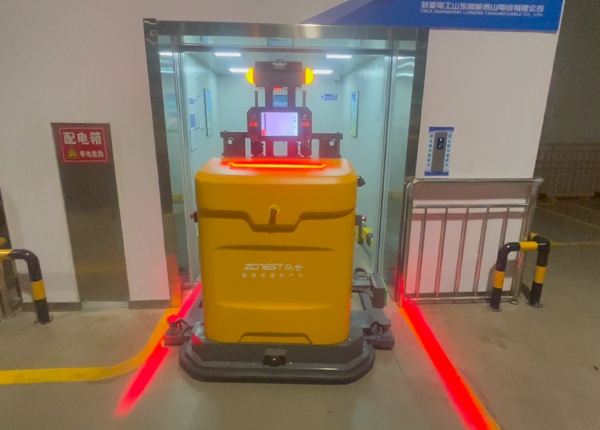
What happens if the supplier itself becomes financially unstable after your project is deployed?
Unlike traditional material handling equipment, modern AGV systems depend on long-term software support, spare parts availability, firmware updates, technical assistance, and future system expansion. Selecting a financially weak supplier can create significant operational risks long after the equipment has been delivered.
For warehouse operators, manufacturers, logistics companies, and system integrators, evaluating a supplier's financial health should be an essential part of the procurement process.
How can buyers assess a Chinese AGV manufacturer's financial strength? Is rapid growth always a positive sign? What happens if the supplier goes bankrupt? And what documentation can buyers request before signing a contract?
Purchasing an AGV fleet is rarely a one-time transaction.
Most projects require years of ongoing support, including:
Software upgrades
Navigation optimization
Technical troubleshooting
Fleet expansion
Replacement parts supply
Battery replacements
System integration updates
If a supplier experiences financial distress, customers may face:
Reduced technical support
Delayed spare parts delivery
Software maintenance interruptions
Abandoned product lines
Warranty enforcement difficulties
The biggest risk in AGV procurement is often not equipment failure—it is supplier failure.
One useful indicator of business health is revenue growth over multiple years.
Rather than focusing on a single year's performance, buyers should evaluate:
Three-year revenue trends
Revenue consistency
Customer diversification
Export market growth
Recurring service revenue
Project backlog visibility
Sustainable growth often indicates:
Strong customer demand
Operational stability
Market competitiveness
Product acceptance
However, rapid growth alone should not automatically be interpreted as financial strength.
Growth funded by excessive borrowing or aggressive expansion can introduce additional risks.
Healthy growth is generally more important than fast growth.
Many AGV companies operate under different business models.
Some manufacturers are:
Privately owned profitable enterprises
Publicly listed companies
Industrial group subsidiaries
Venture capital-backed technology firms
Each model has advantages and potential risks.
Buyers should seek to understand:
Ownership structure
Funding history
Profitability trends
Debt exposure
Expansion strategy
Particularly important questions include:
Is the company generating sustainable operating income?
How dependent is the business on future funding rounds?
Does the company have a diversified customer base?
A supplier's ability to survive market downturns can be just as important as its current product portfolio.
AGV projects increasingly depend on proprietary software platforms.
This creates a unique risk:
What happens if the supplier ceases operations?
Potential concerns include:
Loss of software updates
Discontinued technical support
Licensing complications
Fleet management disruptions
Integration maintenance challenges
Forward-thinking buyers often negotiate protections such as:
Long-term support commitments
Software escrow arrangements
Documentation requirements
Data ownership provisions
Migration support clauses
These safeguards can significantly reduce operational risk over the lifespan of the automation system.
In modern AGV projects, software continuity planning is just as important as hardware reliability.
Professional buyers often request third-party documentation to validate supplier credibility.
Common due diligence documents include:
Corporate registration records
Business licenses
Credit reports
Bank reference letters
Audited financial statements
Tax compliance documentation
Insurance certificates
The availability and transparency of these documents can provide valuable insight into management quality and corporate governance.
Suppliers accustomed to international business relationships are generally familiar with such requests.
Financial statements tell only part of the story.
Buyers should also examine:
Years in operation
Global customer references
Export experience
Installed fleet size
Research and development investment
After-sales support infrastructure
International service capabilities
A company with a large installed customer base often has stronger incentives to maintain long-term product support.
Market longevity is frequently built on operational execution rather than marketing visibility alone.
Reluctance to provide basic corporate information
Unclear ownership structure
Frequent organizational changes
Heavy dependence on a small number of customers
Inconsistent support commitments
Aggressive discounting without clear justification
Limited international references
Lack of documented financial transparency
While none of these factors automatically indicate financial weakness, they warrant further investigation before making a significant capital investment.
How has company revenue changed over the past three years?
What percentage of revenue comes from AGV-related business?
Is the company profitable?
Who owns the business?
How many AGV systems are currently deployed worldwide?
Can financial or credit verification documents be provided?
What software continuity protections are available?
How is after-sales support funded and staffed?
What percentage of revenue is invested in R&D?
What contingency plans exist for long-term customer support?
Choosing an AGV supplier is not only a technical decision—it is also a long-term business partnership decision. Evaluating financial stability, ownership structure, software continuity protections, and market longevity can help buyers reduce risk and protect their automation investment.
The strongest AGV vendors are typically those that combine solid engineering, sustainable profitability, transparent operations, and a proven commitment to customer support.
Before comparing AGV specifications, evaluate the company behind the product. A financially stable supplier is often the most important component of a successful automation project.
FREE ENGINEERING SUPPORT Stop Gambling on Generic Platforms. Get an AGV/AMR Tailored to Your Warehouse.Buying automated guided vehicles involves complex safety standards (CE/ANSI), navigation setups (Laser SLAM), and ERP system integration. Don't risk your factory safety with middle-men. ✓ 100% Direct Factory: Customized payload up to 5 Tons. ✓ Free CAD Simulation: Send us your layout, and our engineers will simulate the optimal AGV routes. ✓ Global Support: Overseas installation guidance & local maintenance partners. |











 Chinese
 English




