


Cold storage is the "Final Frontier" of automation. In environments reaching -25°C, standard hardware fails within hours. ZCNEST explores why the question isn't just about movement—it's about long-term operational survival.
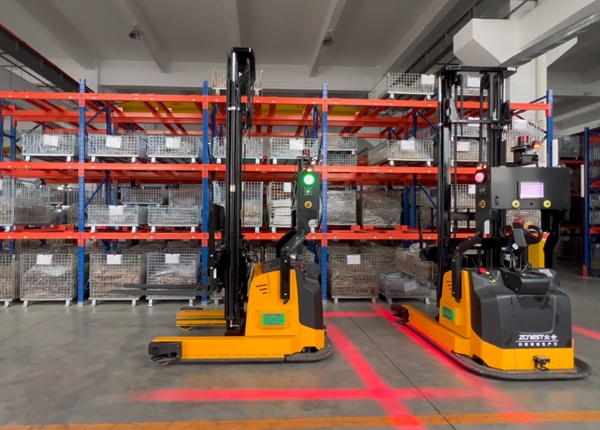
Battery Depletion
Standard lithium capacity drops by 30-50% in sub-zero temperatures. Without internal heating, the discharge rate becomes unstable.
Sensor Frosting
Moving between "Cold" and "Dock" zones causes instant condensation. Fogged LiDAR lenses lead to critical navigation blindness.
Mechanical Rigidity
Lubricants thicken and seals become brittle. Hydraulic responses slow down, affecting the precision of pallet handling.
❄️ Heated Component Modules: Specialized heating elements for LiDAR, cameras, and control CPUs to prevent "Electronic Hibernation."
🔋 Thermal-Management Batteries: Insulated battery boxes with active self-heating logic to maintain optimal 20°C internal cells.
🛡️ Stainless & Anti-Rust Hardware: Extensive use of 304/316 stainless steel to resist the corrosive nature of condensation cycles.
◈ Buffer Zones: Implement "Dehumidification Rooms" to prevent rapid temperature changes.
◈ Frequency: Increase inspection of sensor lenses for frost build-up.
◈ Start with simple pallet transfers in the coldest zone.
◈ Use hybrid fleets (AGVs for storage, manual for cross-docking).
"AGVs can thrive in cold storage, but only if they are Hardened for the environment from day one."
📖 AGV Forklift Guide — Essential manual for selection and safety.
⚙️ How AGV Systems Work — A deep dive into navigation and logic.
⚖️ AGV vs. AMR Comparison — Choosing the right technology for your facility.
💰 AGV Cost and ROI — Evaluating investment and payback periods.





 Chinese
 English