


Automation is a capital-intensive decision. To win boardroom approval, you need to look beyond "Labor Savings" and calculate the Total Economic Impact (TEI).
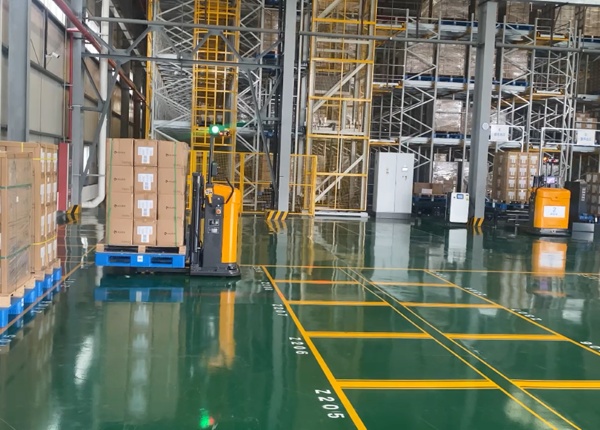
In a 3-shift operation, one AGV typically replaces 3.5 full-time employees (including benefits, training, and turnover costs). But ZCNEST clients see the biggest gains in Retention Costs—eliminating the constant cycle of hiring and re-training forklift drivers in a shrinking labor market.
These are the variables most project managers miss, but CFOs love:
Product & Rack Integrity
Manual forklift collisions cost the average warehouse $30k-$50k annually in rack repairs and damaged goods. AGVs reduce this to near zero.
Lighting & HVAC Savings
AGVs don't need high-intensity lighting or a heated warehouse to operate efficiently. "Lights-out" operations can cut utility bills by 15%.
At ZCNEST, we use a conservative TCO model to ensure your investment stands up to audit:
ROI = (Total Savings - Maintenance Cost) / Initial Investment
The 24-Month Benchmark: Most of our mid-to-large scale projects achieve full break-even within 14 to 22 months. Post-payback, the operation runs at roughly 20% of the cost of a manual fleet.
Don't forget accelerated depreciation (Section 179 in the US or similar industrial grants in Europe/Asia). These tax benefits can effectively reduce your upfront AGV cost by another 10-20% in the first year.
📖 AGV Forklift Guide — Essential manual for selection and safety.
⚙️ How AGV Systems Work — A deep dive into navigation and logic.
⚖️ AGV vs. AMR Comparison — Choosing the right technology for your facility.
💰 AGV Cost and ROI — Evaluating investment and payback periods.





 Chinese
 English